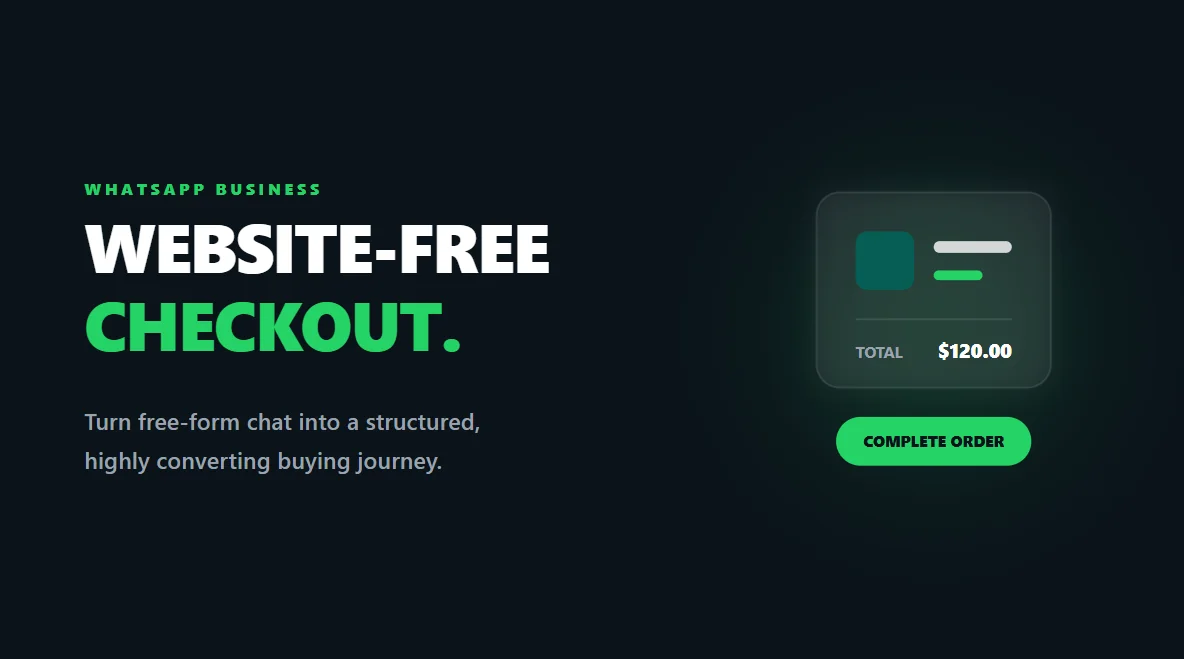
WhatsApp Business Flows allow you to turn free-form chat into a structured, highly converting buying journey without forcing the customer to leave the app.
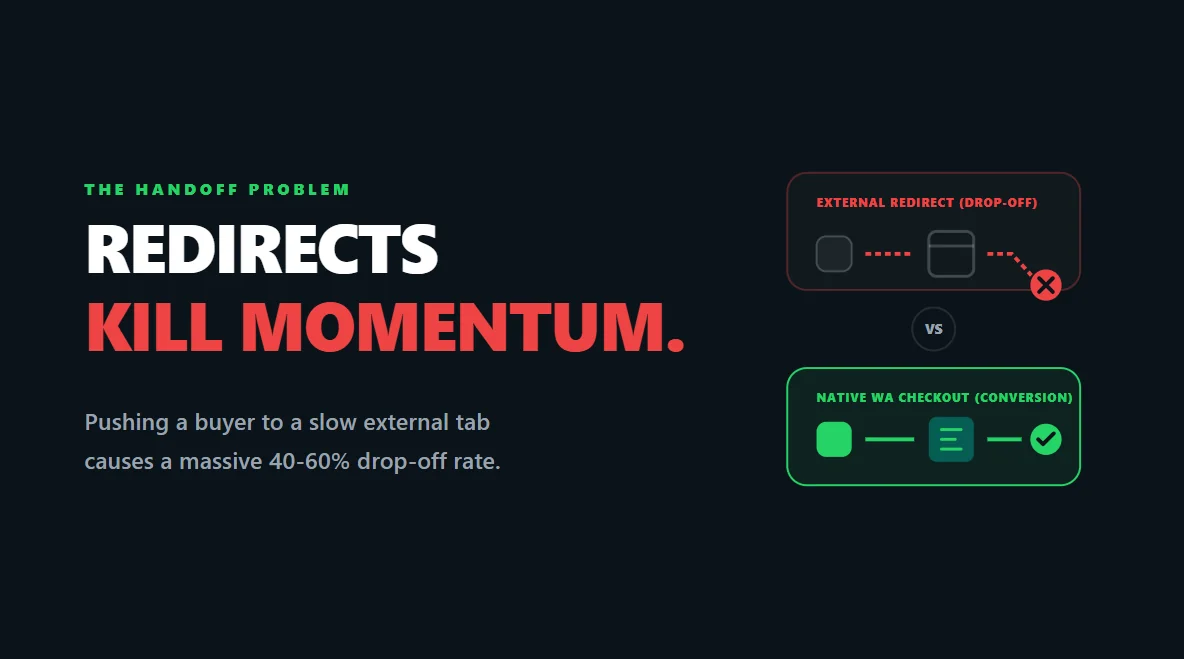
Sending a customer to an external website from a chat app introduces massive friction, often resulting in a 40-60% drop-off rate right before payment.
A website-free checkout works best when product selection, customer details, order confirmation, and payment handoff are clearly sequenced in a native mobile format.
Trust is the biggest barrier to chat-based commerce. A polished Flow, clear pricing, and strong channel social proof immediately reduce buyer hesitation.
Flows are not just for cheap products. They are highly effective for qualifying leads, booking services, and structuring high-ticket consultations natively.
Thousands of small and medium-sized brands lose sales at the exact same, painful moment every single day. A customer sees your product on social media, sends a message on WhatsApp, asks a question, gets an enthusiastic answer, and is ready to buy. Then, you send them a link to your external website to complete the checkout.
And just like that, the momentum dies. The customer is forced out of their comfortable chat environment, pushed into a slow-loading browser tab, forced to create an account, and eventually abandons the cart. Handoffs kill conversions.
What Are WhatsApp Business Flows Actually Good For?
WhatsApp Business Flows fundamentally changes how conversational commerce works. Instead of answering the same questions manually and risking messy handoffs to external sites, Flows allow you to build structured, interactive forms directly inside the chat.
They are the ultimate friction-killers. You can guide the buyer through product selection, size choices, shipping information, and order confirmation in a clean, professional, app-native way. Flows bring the power of a website checkout into a channel people already trust and open 20 times a day.
Why Does a Website-Free Checkout Appeal to Buyers?
Because mobile buyers want fewer jumps, fewer tabs, and fewer chances to get distracted. When a checkout journey stays completely inside WhatsApp, the customer feels like they are simply continuing a conversation rather than starting a complex administrative task. It radically lowers mental resistance.
In modern e-commerce, convenience often wins faster than persuasion does. If your checkout is three clicks shorter than your competitor’s, you will win the sale.
How Do You Build an E-commerce Checkout Inside WhatsApp?
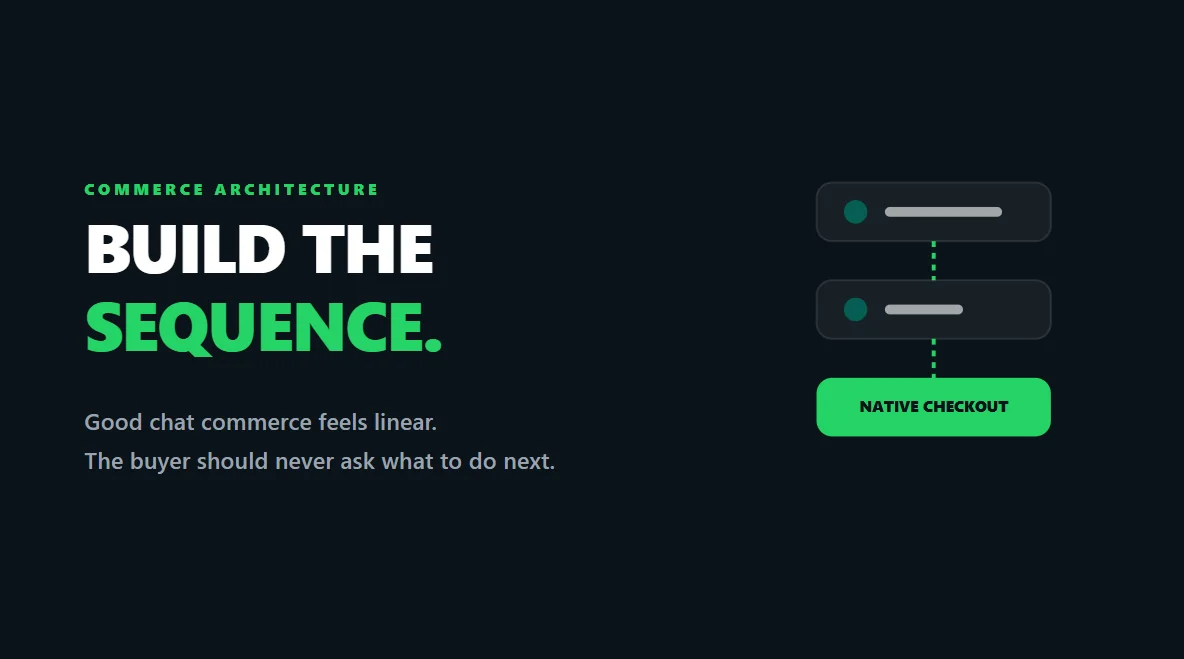
You build it as a logical sequence, not as a chaotic pile of text messages. The golden rule of WhatsApp commerce is that good chat commerce feels linear.
A strong flow typically follows this sequence:
- Product Selection: The user taps a button to open a menu of items or services.
- Customization: Choosing size, color, or appointment time natively.
- Customer Details: A clean form for name, address, and contact info (often auto-filled by the device).
- Order Review: A clear, calculated summary of the cost.
- Payment Handoff: A secure link generation or native payment integration.
The buyer should never have to type out, "What do I do now?" That question is the enemy of conversion.
The Trust Factor: Solving the Biggest Chat Commerce Barrier
The biggest hurdle to website-free checkout is not technology; it is trust. Customers are inherently skeptical of sending money through a chat app. If the chat feels messy, vague, or unprofessional, trust drops instantly. If it feels polished, structured, and highly authoritative, conversion rises.
One of the most effective ways businesses establish this immediate authority is by leveraging their WhatsApp Channel presence. A channel with zero interaction looks like a scam. To instantly bypass this buyer hesitation, top-tier brands strategically buy WhatsApp Channel followers from reputable networks like Fameviso. This establishes massive baseline social proof. When a customer sees that thousands of people already follow your brand updates, their anxiety about a "chat-based payment" vanishes. The Flow then handles the rest flawlessly.

How Should Payment Work Without a Website?
Depending on your region, payment can work through a native integrated payment step (where WhatsApp supports it), or via a seamless handoff to a secure payment link (like Stripe or PayPal) generated at the end of the Flow.
The key is absolute transparency. The customer should understand exactly what they are paying for, with no hidden delivery fees appearing at the final step. The handoff should feel like a natural continuation of the checkout, not a sudden, alarming system break.
What Types of Businesses Benefit Most?
While massive global retailers will always need websites, WhatsApp Flows are a superpower for businesses with mobile-first customers, shorter buying cycles, and conversational selling models. Local shops, beauty brands, custom product creators, service providers, and high-ticket consultants often see the strongest advantage.
For high-ticket sales, a Flow does not even need to end in payment. It can act as an elite lead-qualification tool, collecting needs, preferences, and budgets before a human closer even steps into the chat.

The Golden Rule of WhatsApp Commerce
What works is not overwhelming automation. It is guided simplicity. The best WhatsApp commerce setups move the buyer from curiosity to confidence with almost zero friction. They answer the essential questions, remove confusion, and make the next step feel obvious.

Design your Flow like a top-tier retail associate: relentlessly helpful, perfectly direct, incredibly fast, and impossible to misunderstand.