Do not panic-delete a flagged TikTok video. Deleting it removes your ability to submit a manual appeal and teaches the algorithm that you agree with the penalty.
Low-motion openings, external export artifacts, and weak metadata often trigger the automated spam filter, even if your video is 100% original.
Adding TikTok-native text and stickers during the upload process helps the AI classify your video as platform-native content rather than a recycled repost.
Early human interaction signals—specifically Shares and Saves—are the fastest way to prove to the algorithm that a flagged video actually holds value.
Recovery requires a structured 14-day testing cycle. Randomly re-uploading the exact same video with different hashtags will usually result in a permanent account shadowban.
You upload a video you genuinely poured hours of work into. The visual hook is strong. The editing is razor-sharp. The first few minutes of the upload feel completely normal, but then everything stops. Your views violently stall at exactly 0, 100, or 200, and TikTok drops the notification creators hate more than anything else: "Not eligible for the For You feed due to unoriginal, low-quality, or QR code content."
That label feels intensely personal. It feels like an insult to your hard work. It is not. In the vast majority of cases, it is simply an overconfident machine making a mathematically bad call.
TikTok's newest automated originality filter is aggressively screening videos for low-effort, recycled, or spam-like patterns. If your opening seconds look too static, your export quality looks heavily compressed, or your metadata is blank, the AI system will flag your original video before it ever gets a fair shot on the For You Page.
What Changed in TikTok's Review System Recently?
TikTok is currently waging a war to clean up its recommendation engine. They want fewer recycled podcast clips, fewer fake AI spam posts, and fewer lazy template videos flooding the FYP. The goal is entirely logical. The execution is where things get incredibly messy.
In our experience tracking volatile reach patterns across short-form platforms, the biggest problem is not stricter moderation; it is algorithmic overcorrection. When a spam filter becomes too sensitive, thousands of highly original creators get swept into the exact same punishment bucket as the lazy content farms.
This is why so many creators are seeing a sudden, hard "view ceiling" (stopping exactly at 200 views) instead of a gradual decline. The system is blocking distribution at the gate, not ranking the video lower organically.
Why Are Original Videos Getting Flagged by Mistake?
The machine is looking for binary patterns, not human intent. If your highly produced edit accidentally resembles a known spam format, the AI will treat your original work exactly like stolen content.
We have seen this happen repeatedly with expert tutorials, cinematic slow-motion cuts, talking-head explainers, and travel edits. The common thread is never bad content. It is bad machine interpretation.
Trap 1: Static Openings and Low-Motion Intros
If the first three seconds of your video barely move, TikTok's visual AI can read the file as a static slideshow, a recycled screen-recording, or a low-effort assembly. This is especially risky if the first frame is a still image, a heavy text card, or a slow, cinematic zoom.
Fast classification matters. If the opening looks passive, the review bot may permanently flag the video before it ever analyzes the rest of the clip.
Trap 2: Export Damage and Off-Platform Editing
Even without a visible watermark, external editing software (like Premiere Pro or Final Cut) can introduce invisible compression artifacts, strange edge sharpness, or rendering cadences that feel completely foreign to TikTok's native style. The AI reads these invisible metadata markers as "repurposing clues."
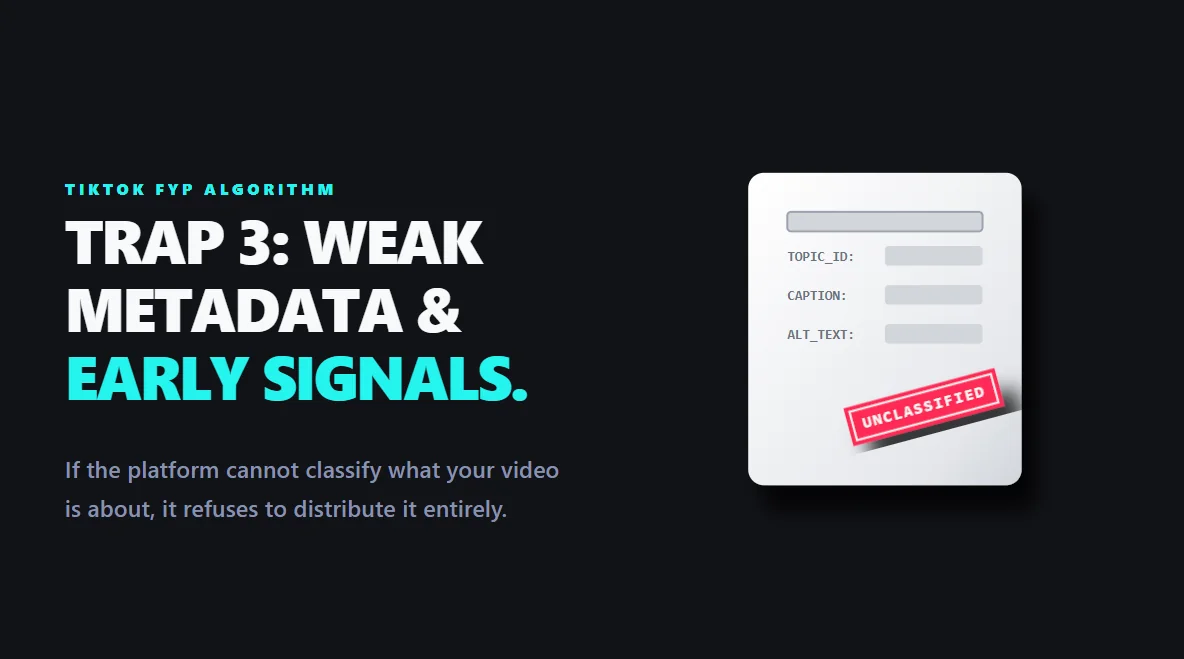
Trap 3: Weak Metadata and Ambiguous Signals
If TikTok's AI cannot instantly read your caption to understand what the video is about, the safest move for the machine is to limit distribution. Short version: Unclear content structure plus a weak early audience response equals a massive filter risk.
What Should You Do the Moment TikTok Flags the Video?
First, do absolutely nothing. Do not panic-delete the post. That is the single biggest mistake creators make. If you delete the video too fast, you lose the best evidence trail you have, and you signal to the algorithm that you agree with the penalty.
Open the warning notification. Use the "Appeal" function immediately. Then, quietly document your original project files, source footage, and upload details in case you need to re-engineer the edit for a future upload.
Why the Appeal Matters More Than You Think
When the AI gets a decision wrong, the manual appeal is your only chance to force a human review. We have seen thousands of flagged videos completely regain distribution after a manual review simply because the original machine decision was overly aggressive.
How Do You Make TikTok Trust the Video Faster?
You must reduce algorithmic ambiguity. TikTok trusts videos exponentially faster when the platform can verify the topic, detect native creation behavior, and observe immediate human validation.
Use TikTok-Native Elements Immediately
This tactical move is simple but incredibly effective. Always add a small TikTok text layer, a native sticker, or a native closed-caption block during the final upload process. It gives the AI system an undeniable reason to classify the post as "platform-native" rather than a recycled dump.
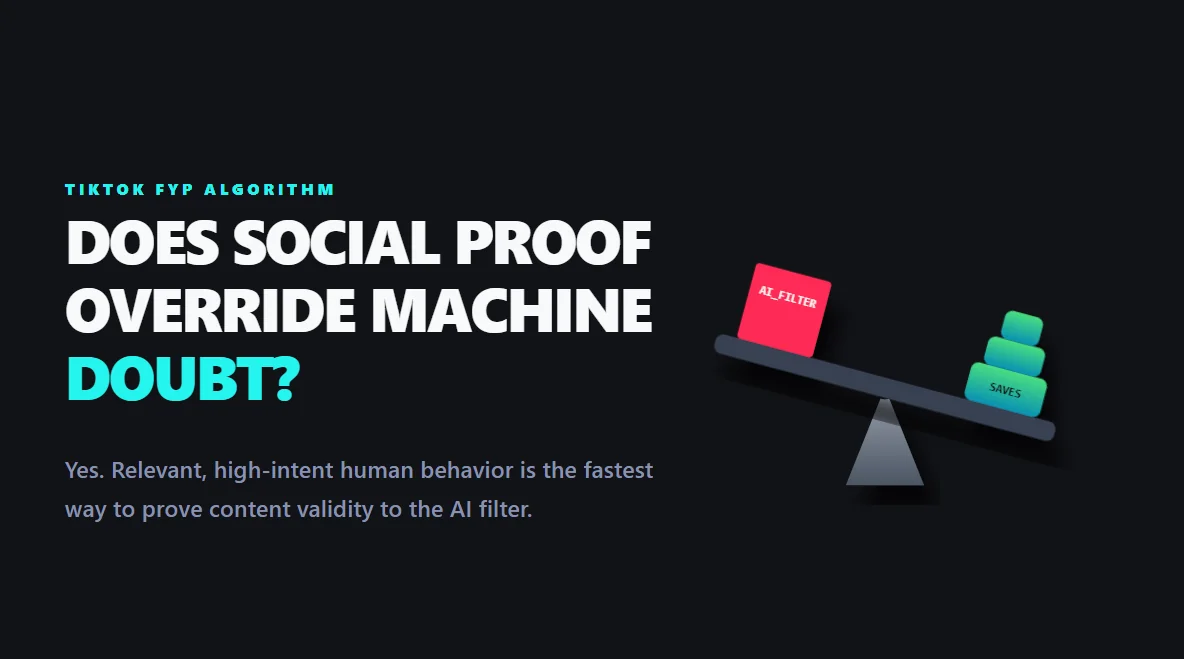
Does Social Proof Still Override Machine Doubt?
Yes, absolutely. TikTok is fundamentally obsessed with one metric: how real humans respond. If a restricted video starts earning rapid Saves, Shares, and visible interaction from profile visitors, the platform receives massive evidence that the AI was wrong.
That does not mean throwing fake views at a video works; it does not. Relevant, high-intent human behavior is what actually moves the needle.
The "Algorithmic Override" Strategy (Shares & Saves)
If a highly original video is unjustly flagged, professional creators do not just wait; they proactively reinforce the most vital trust signals. On TikTok, the ultimate indicators of human value are Saves (intent to rewatch) and Shares (intent to distribute).
To safely jumpstart this stalled momentum and prove content validity to the algorithm, many elite social media managers strategically buy TikTok shares or TikTok saves from high-quality, organic networks like Fameviso. This calculated injection of premium engagement acts as an algorithmic override. It aligns perfectly with the story the platform wants to believe: Real users found this video so valuable that they saved it for themselves and shared it with friends. This forces the AI to lift the restriction and resume FYP delivery.
What Is the Smart Recovery Plan for the Next 7 Days?
Do not rely on emotion. Rely on a strict operational framework to recover your account standing.
- Day 1: Appeal the flagged video immediately. Document your source files. Do not delete the post.
- Day 2: Audit the first three seconds of your upcoming video. Ensure there is massive visual motion and clear captioning.
- Days 3-4: Add TikTok-native text and stickers to all new uploads to verify native creation.
- Days 5-6: Optimize purely for Saves and Shares. Design your hooks around usefulness or intense curiosity.
- Day 7: Analyze the data. Check if the new posts escaped the 200-view ceiling. If they did, lock in that exact format.
The Final Takeaway: TikTok wants certainty, not just creativity. The new filter rewards originality that looks incredibly easy for a machine to verify. Clean up your intros, leverage native editing tools, inject strong early trust signals, and stop panic-deleting. That is how you escape the 0-view prison and conquer the For You Page in 2026.