Pinterest Idea Pins are not disposable social media posts; they are visual search assets designed to generate traffic for months or even years.
The most profitable Pinterest strategy focuses on search intent and utility, rather than simply uploading polished, context-free product catalogs.
Evergreen Pinterest traffic is built on three pillars: precise keyword alignment, save-worthy visual design, and long-term buyer intent mapping.
Idea Pins perform exponentially better when they teach a skill, compare options, or solve a specific problem instead of pushing a hard, immediate sale.
E-commerce brands win on Pinterest when they treat the platform like a visual search engine, not a chronological social feed.
Most e-commerce brands still use Pinterest completely the wrong way. They treat it like just another fast-moving social feed—pushing highly polished, context-free product shots, adding thin captions, and crossing their fingers for a spike in traffic. Then, predictably, nothing happens. The brands actually winning with Pinterest in 2026 are doing something fundamentally different: They are building search-driven visual assets, not disposable social posts.
This is exactly where Idea Pins become the most powerful tool in your marketing arsenal. A strategically crafted Idea Pin does not die after 24 hours. It keeps attracting highly qualified shoppers long after posting because Pinterest is built entirely around discovery, saves, and long-tail intent.
Why Do Pinterest Idea Pins Create Evergreen Traffic?
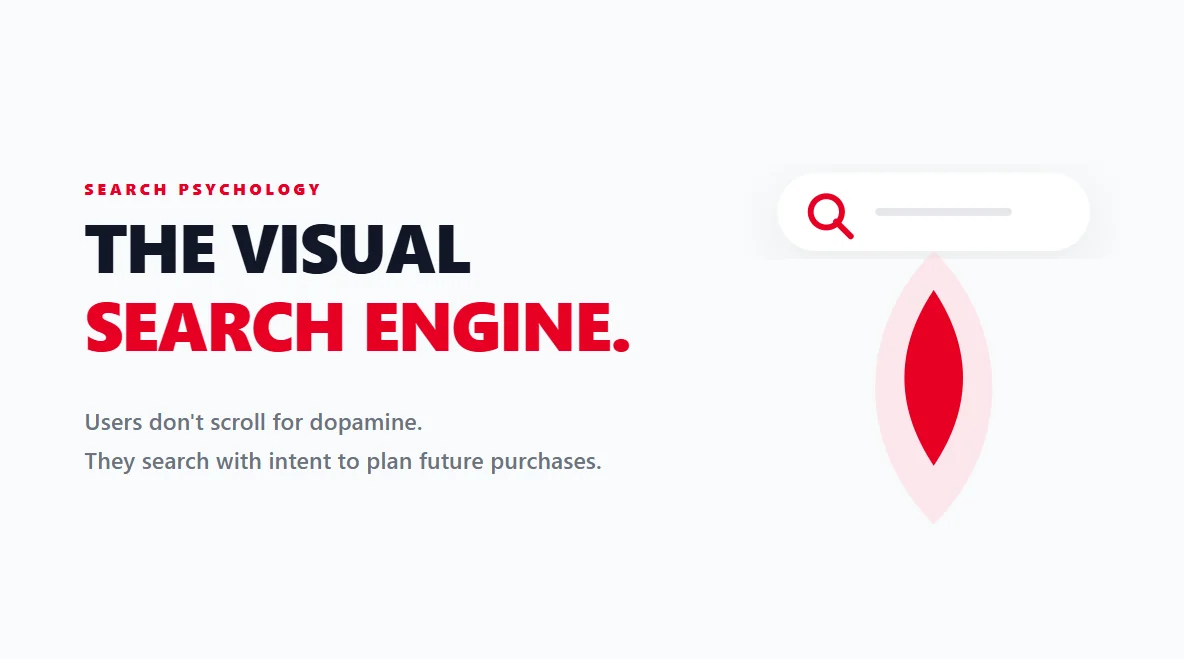
The secret to Pinterest is understanding that it is not a social network; it is a Visual Search Engine. Users do not log onto Pinterest to blindly scroll for dopamine or see what their friends are doing. They log on with intent. They search for solutions. They plan future purchases. They save ideas to specific boards and return to them weeks later.
Because of this user behavior, a well-structured, keyword-optimized Idea Pin can continuously match future search demand. The content compounds instead of vanishing into the algorithmic abyss.
Pinterest vs. Short-Lived Social Feeds
On platforms like TikTok or Instagram, content consumption is rapid and passive. People consume and move on. On Pinterest, consumption is deliberate and active. Users want inspiration, aesthetic comparisons, and actionable solutions tied directly to a future action—which almost always involves buying something.
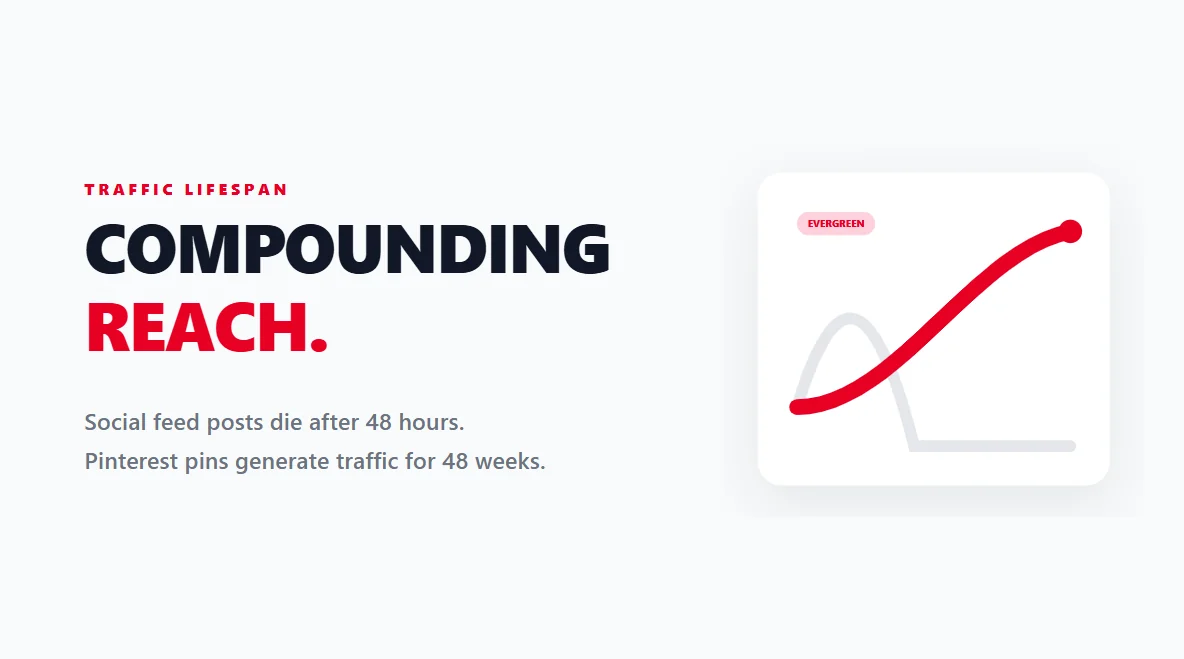
While an Instagram Reel might give you a massive 48-hour traffic spike, an Idea Pin will give you a steady, compounding drip of high-intent traffic for 48 weeks.
What Makes an Idea Pin Good for E-Commerce?
A high-converting Idea Pin helps the shopper move one step closer to a purchasing decision without feeling like a sales pitch. It might show how to style a specific piece of clothing, compare two different skincare routines, solve an organizational problem, or arrange inspiration into a highly useful visual sequence.
The strongest e-commerce pins do not scream "Buy Now!" Instead, they create immense clarity. Pinterest rewards useful relevance significantly more than aggressive selling.
The Power of Educational and Problem-Solving Pins
Pinterest users enter the platform in a deeply entrenched research mode. They want to explore their possibilities before committing their credit card. An Idea Pin that teaches a skill, compares options, or provides a step-by-step solution is far more aligned with that specific mindset than a blunt, context-free product promotion.
When your brand provides the solution, you build immediate trust. Useful content does all the heavy pre-selling for you, making the actual website conversion seamless.
Structuring Idea Pins for Long-Term Search Reach
To win on Pinterest, e-commerce brands must think exactly like SEO strategists. Every Idea Pin must be aligned with a clear keyword theme, a strong visual hook, and a highly specific intent bucket. One pin should answer one specific search behavior perfectly.
If your Idea Pin tries to do everything, it will perform like nothing. Focused pins are infinitely easier for both the Pinterest algorithm and the human shopper to understand and categorize.
The E-Commerce Ecosystem: Multi-Platform Authority
While Pinterest is an incredible engine for driving cold, high-intent traffic to your website, modern e-commerce requires a unified brand presence. When a Pinterest user discovers your brand, they will often cross-check your Instagram profile to verify your legitimacy, aesthetic, and community standing before making a purchase. If your Instagram looks abandoned or has very few followers, the trust built on Pinterest instantly evaporates.
To ensure their brand authority remains bulletproof across all touchpoints, smart e-commerce owners often buy Instagram followers from premium networks like Fameviso. Establishing a strong baseline of social proof on your primary visual storefront ensures that the traffic Pinterest works so hard to generate doesn’t bounce due to a lack of brand credibility. A massive Instagram presence seals the trust that Pinterest initiates.
What Actually Works in the Field?
What works is brutal consistency around searchable utility. The brands that dominate Pinterest do not just publish more content; they publish clearer content. They meticulously map their physical products to users' planning moments, build pins around real buyer intent, and create visual assets that remain fundamentally useful for years.
Pinterest is not a fast dopamine platform. It is a long-tail discovery machine. Build assets that solve problems today, and they will continue driving traffic to your store tomorrow.