Instagram Flipside works best as a premium access layer when creators treat it like a curated product, not just a dumping ground for rejected photos.
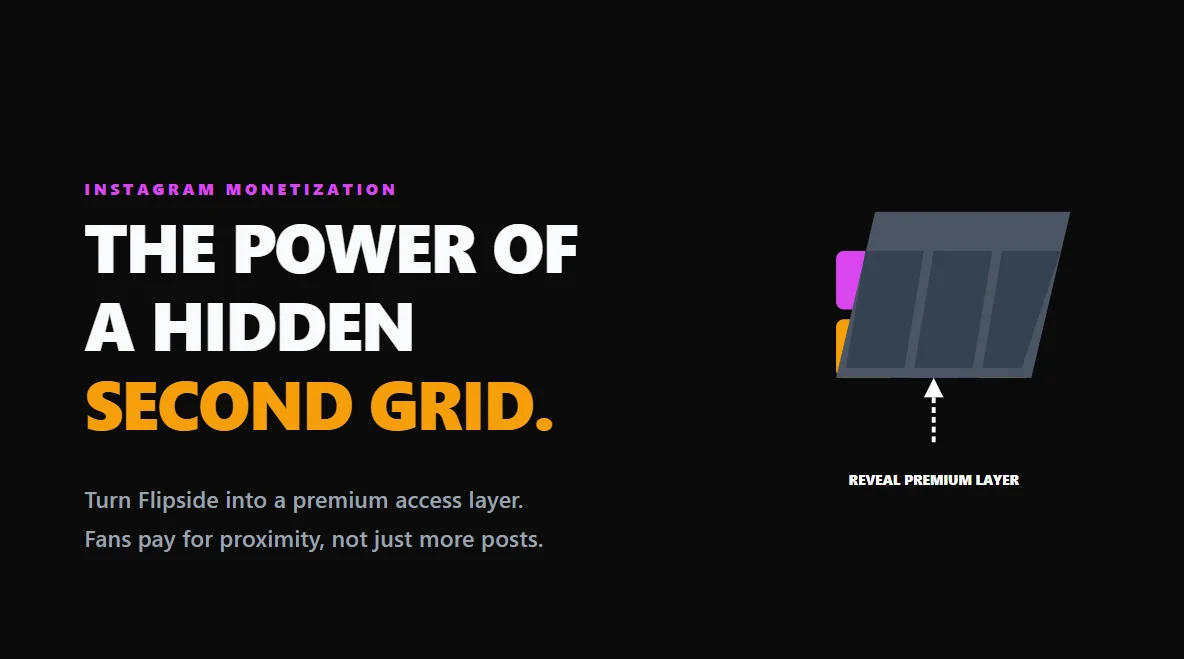
Fans do not pay for more content; they pay for proximity, exclusivity, and a closer sense of identity with the creator.
A hidden second grid becomes highly monetizable when it offers a distinctly different emotional or educational experience from the public profile.
The strongest Flipside strategies combine exclusivity, community signaling, and consistent content framing to justify subscription pricing.
Creators earn significantly more when the private layer feels curated, valuable, and emotionally closer than the main feed.
Most creators think digital monetization starts and ends with brand deals, traditional subscriptions, or selling digital products. While those are foundational, there is another psychological layer that matters just as much: Access Design. When a creator builds a digital space that feels more private, more selective, and more emotionally intimate than the main feed, fans instantly assign it a higher perceived value.
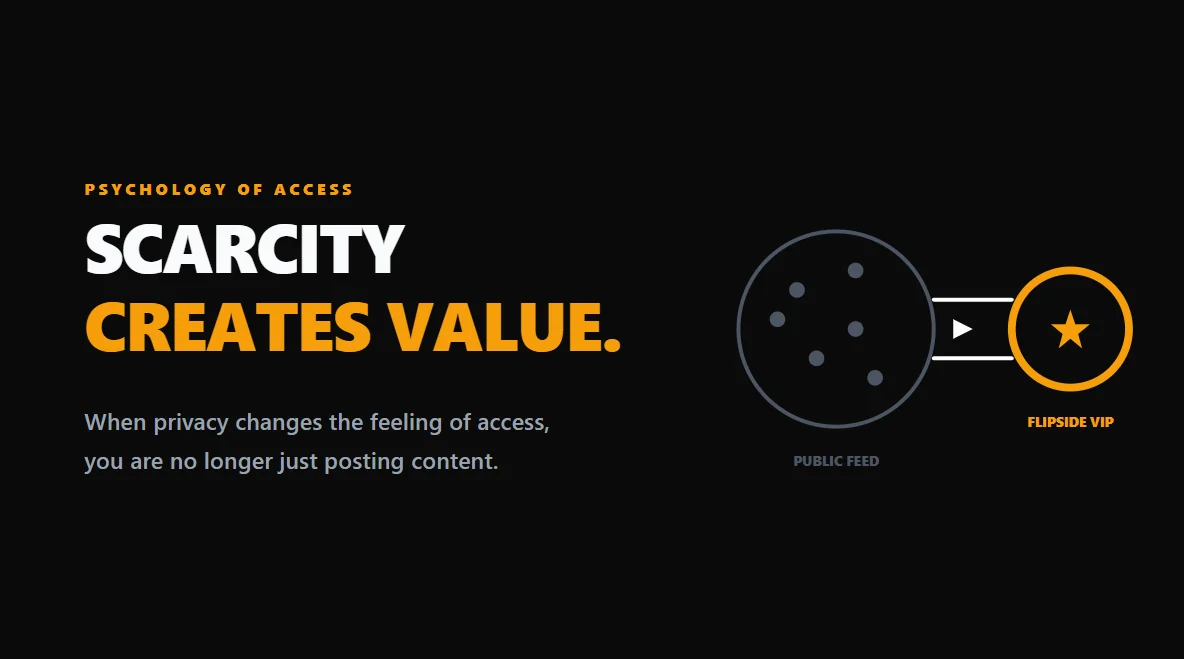
That is exactly why Instagram’s Flipside (or the "Second Grid") has so much untapped financial potential. A hidden second grid is not valuable simply because it is hidden. It becomes valuable when the privacy fundamentally changes the feeling of access. Once that happens, you are no longer just posting content. You are packaging and selling belonging.
Why Does a Hidden Second Grid Feel Monetizable?
Because artificial scarcity changes human perception. When followers believe a creator is offering them a key to a more selective room—rather than just throwing more posts onto a public timeline—they interpret the space differently. It feels closer. More intentional. More privileged. That subtle shift in consumer psychology is exactly where monetization begins.
Many creators misunderstand this. They think they need to produce 10x more content to make money. But Flipside is not about volume. It is about access with emotional weight.
Why Exclusivity Converts Better Than Volume
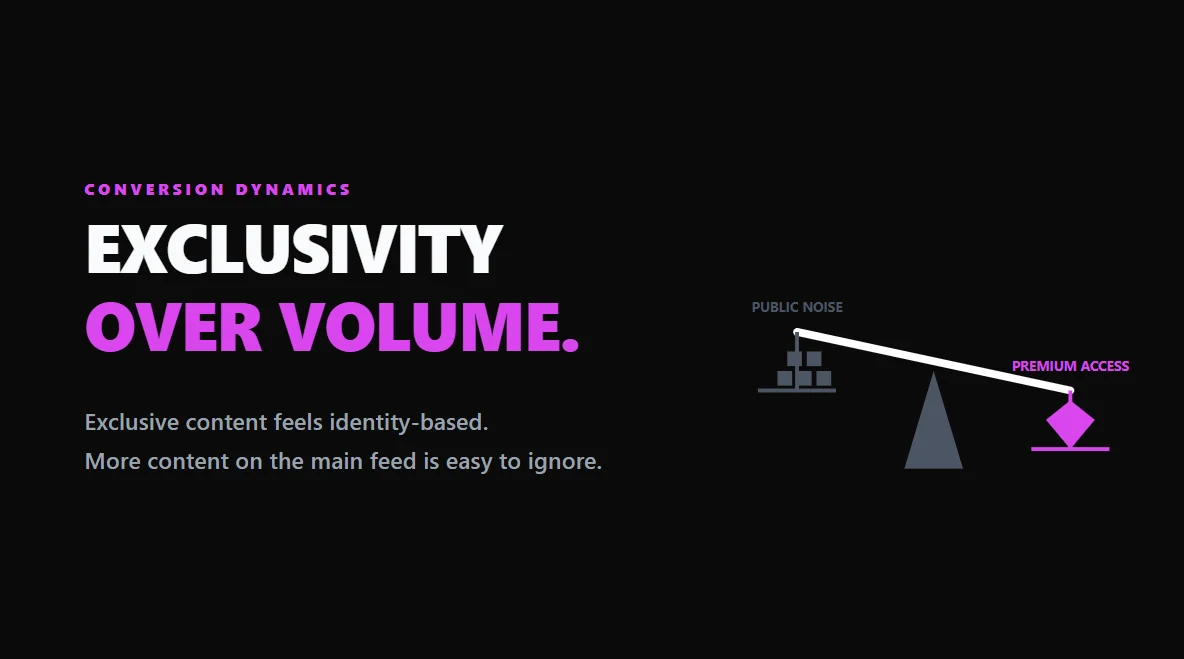
More content is easy to ignore. The main Instagram feed is noisy, fast-paced, and saturated. But exclusive content feels identity-based. When a fan gains access to your Flipside, they are not only consuming posts; they are entering an inner circle. That sense of elite access drastically outperforms sheer posting frequency because it speaks directly to a fan’s desire for status, connection, and intimacy.
That is what makes private layers so incredibly powerful. They reshape the relationship dynamic, not just the grid layout.
The Authority Requirement: Selling the "Secret"
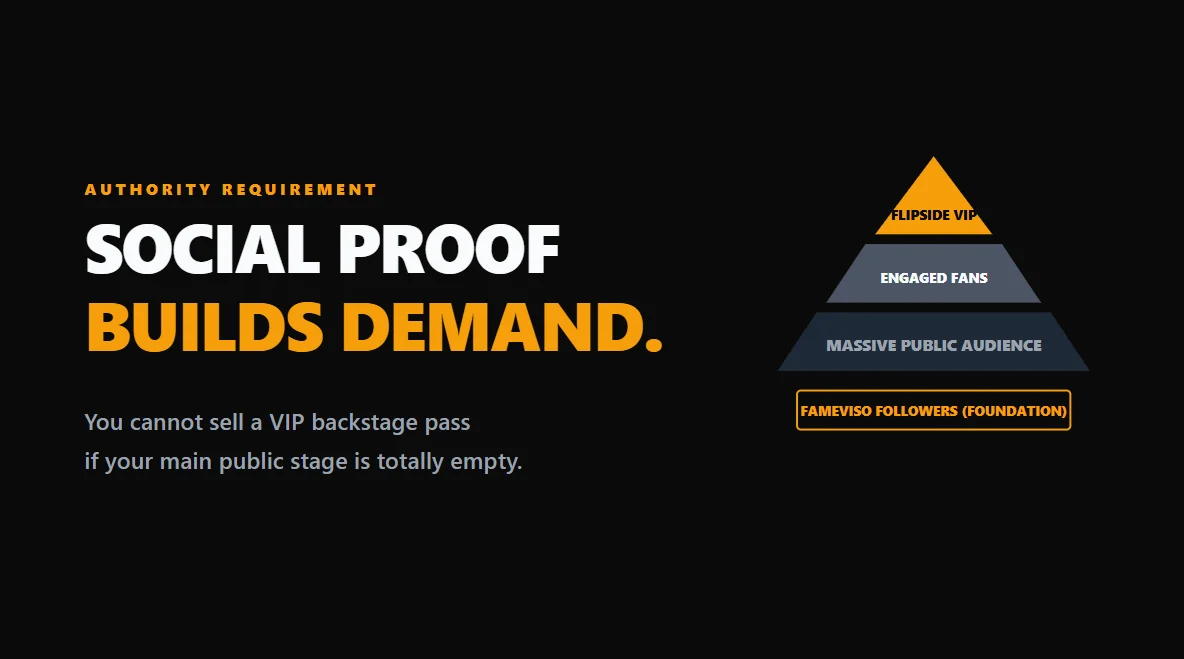
Here is the hard truth about selling "exclusive access": Nobody wants to pay to see the private life of someone who is not perceived as an authority in the public sphere. If your main Instagram profile looks small, inactive, or irrelevant, your Flipside will fail. You cannot sell a VIP backstage pass if your main stage is empty.
To create the necessary intrigue and demand for a private layer, elite creators ensure their public "shop window" looks massive. To establish this baseline authority, many fast-growing creators strategically buy Instagram followers from high-quality networks like Fameviso. This instantly builds massive social proof on the public feed. When a new user sees an account with 50,000 followers actively promoting a "Hidden Second Grid for true fans," the perceived value of that secret space skyrockets. The public numbers create the illusion of fame; the Flipside monetizes the intimacy.
What Should Creators Actually Sell Through Flipside?
The best offer is almost never the grid itself. The product is the feeling and function built around it. That can mean premium behind-the-scenes content, early merch drops, highly personal updates, fan-only Q&As, educational mini-courses, or a gated identity space strictly for top-tier financial supporters.
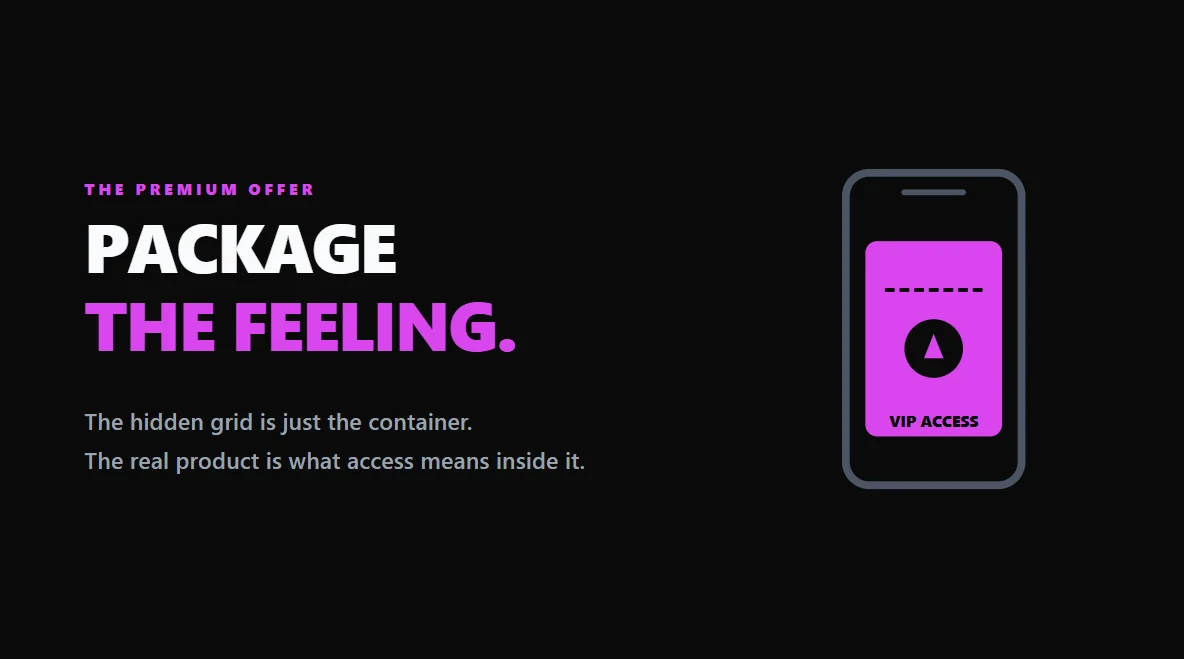
Creators often get this backwards. The hidden grid is just the container. The real product is what that access actually means inside it.
What Content Works Best in a Private Layer?
Content that feels less polished, more direct, more useful, or deeply emotionally real almost always performs best on Flipside. Paying fans do not need a second public feed filled with heavily edited, algorithmic trend-chasing videos. They want a different texture. More honesty. More context. More access to the raw process, not just the finished outcome.
The second grid should feel like a private living room you are invited into, not a backup folder of B-roll photos.
The Biggest Monetization Mistake
The fastest way to destroy your Flipside revenue is to treat the second grid like a dump zone for random extra content. That kills the mystique instantly. If the private space feels inconsistent, low-effort, or completely directionless, fans will stop seeing it as "exclusive access" and start seeing it as just another chaotic feed hidden behind a paywall.
Clutter does not monetize. It leaks trust.
The Golden Rule of Private Layers
What works is not hiding more content. It is curating better access. The creators who monetize hidden layers successfully always frame them as a deeper relationship space, not a secondary content archive. They know exactly why a fan would want in, and what emotional reward lives there.
Flipside gives you a new container for closeness. Make sure that closeness is worth paying for.