Audit every video objectively. Delete or private any content that relies entirely on third-party clips with no visible original commentary.
Understand that AI voices and automated scripts are heavily scrutinized in 2026. Humanize your narrative structure.
Transformation is key. Adding background music and auto-captions does not count as original value; you must alter the educational or entertainment meaning.
Rebuild your channel's visual identity to scream 'Original Creator' before you hit the reapply button.
If your channel momentum drops during the cleanup, strategic engagement campaigns can help signal active algorithmic health.
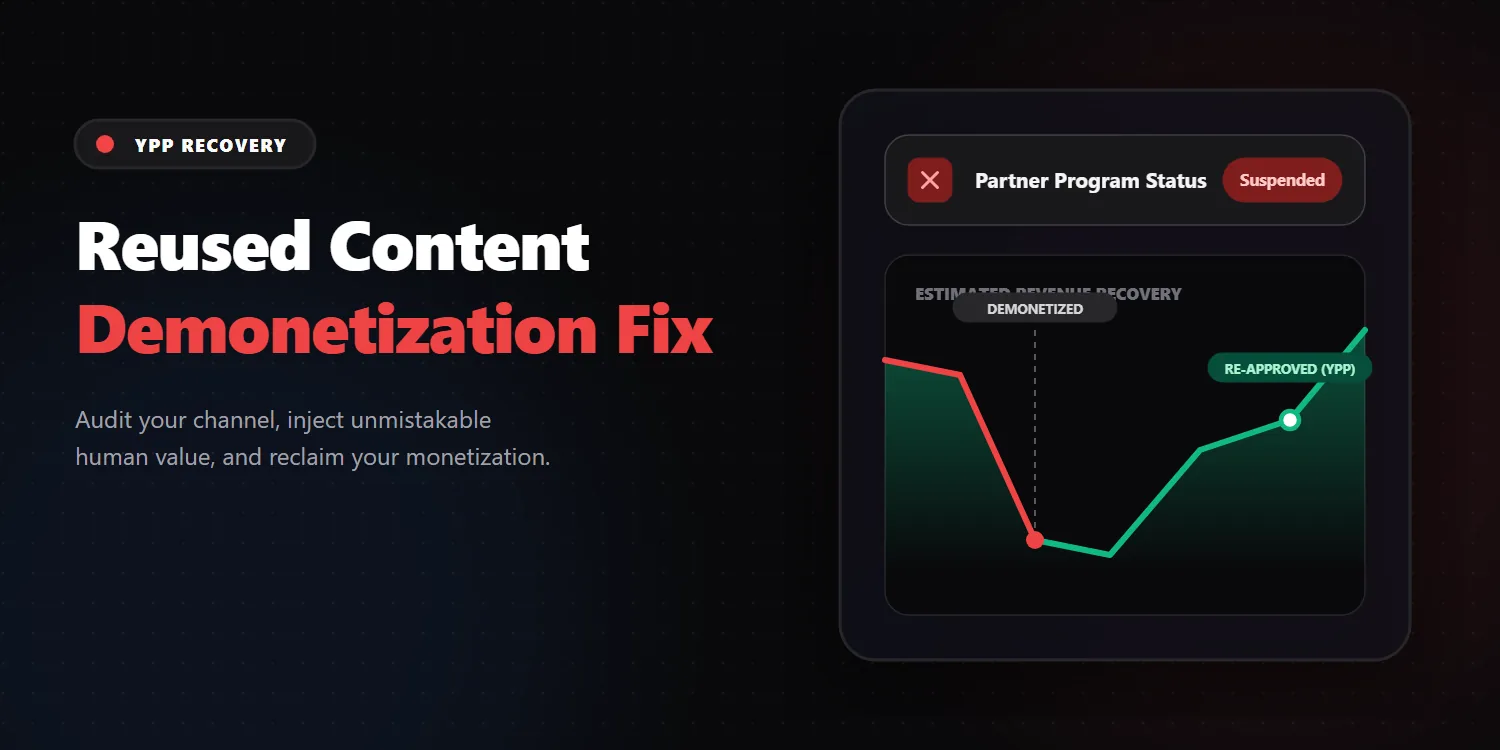
You’ve spent months grinding to hit the YouTube Partner Program (YPP) thresholds. The subscribers are there, the watch hours are verified, you submit your application with confidence—and then, the dreaded email arrives: Demonetized due to Reused Content. It feels vague, frustrating, and often deeply unfair. Many creators assume they are just one minor edit away from approval, missing the fundamental truth about YouTube’s 2026 review process.
The reality? YouTube isn’t just scanning your videos for copyright claims anymore. Human reviewers are evaluating whether your channel adds undeniable, original human value to the platform.
In this definitive guide, we will break down exactly what triggers the reused content penalty, how to ruthlessly audit your library, and the exact step-by-step recovery protocol to ensure your next YPP application is approved.
1. Decoding the "Reused Content" Penalty
The biggest misconception creators have is equating "legal to use" with "monetizable." You can use Creative Commons clips, royalty-free music, and fair-use movie scenes without ever receiving a copyright strike. However, if your channel simply stitches these elements together without a unique narrative, YouTube categorizes it as reused content.
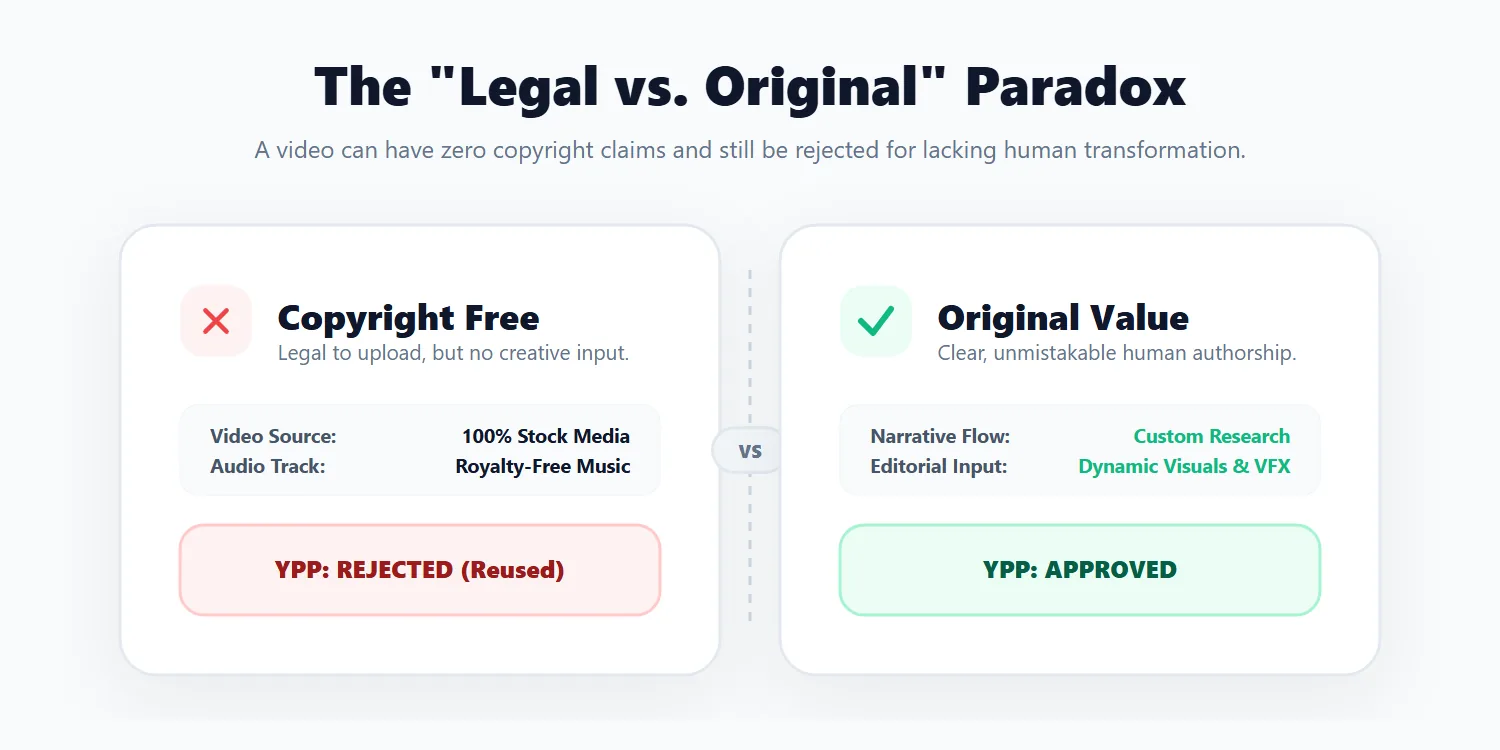
YouTube’s goal is to reward original creators, not aggregation machines. If a reviewer mutes your video and removes the borrowed clips, what is left? If the answer is "nothing," your channel will not be monetized.
2. The 3 Major Algorithmic Red Flags
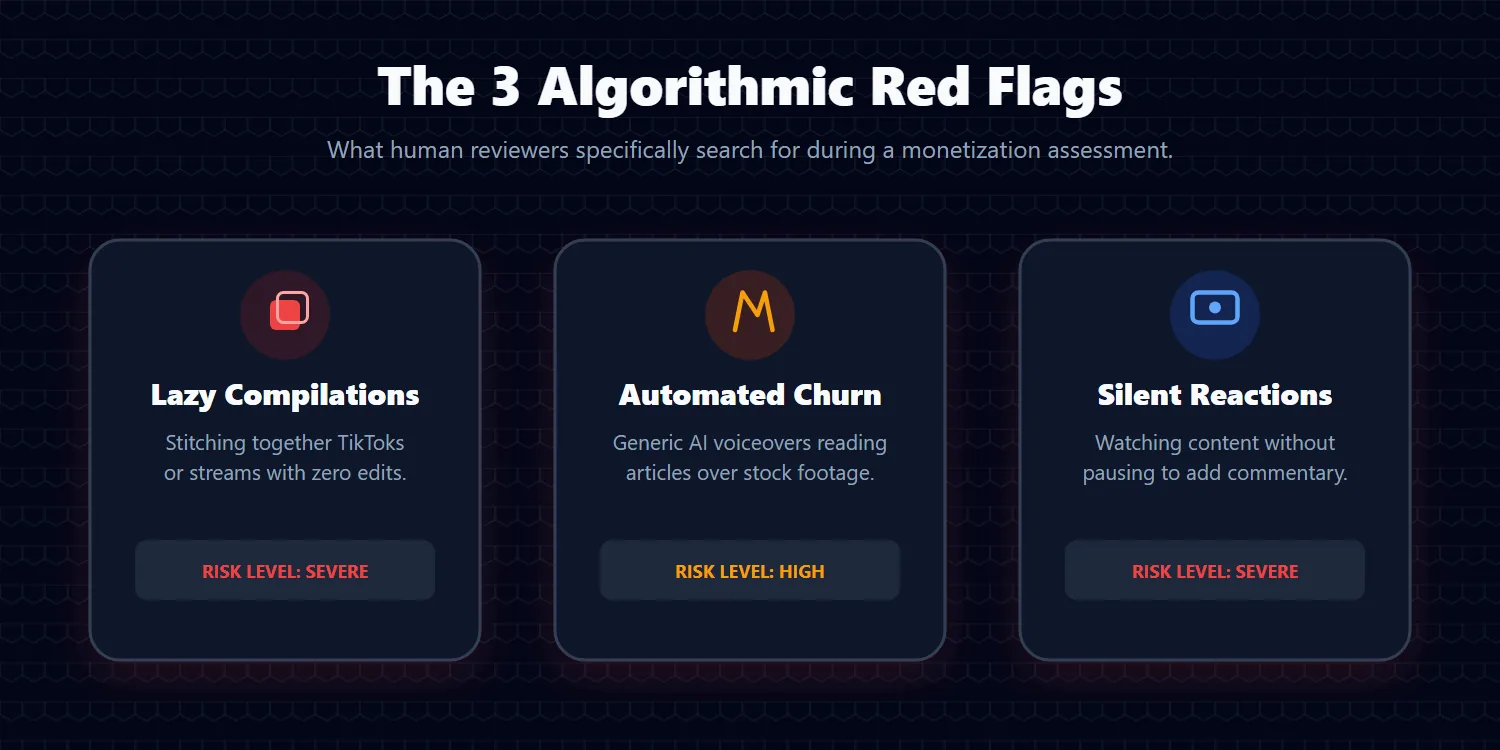
Monetization reviewers look for patterns across your entire public library. In 2026, the threshold for "originality" is higher due to the massive influx of AI-generated content. Here are the three fastest ways to get rejected:
- Lazy Compilations: Stitching TikToks, Twitch streams, or sports highlights together with minimal transitions.
- Automated Faceless Churn: Using generic AI voiceovers to read Wikipedia articles over repetitive stock footage.
- Low-Effort Reactions: Watching someone else's video while occasionally nodding or laughing, without pausing to offer structured, transformative commentary.
3. The Survival Guide for Faceless Channels
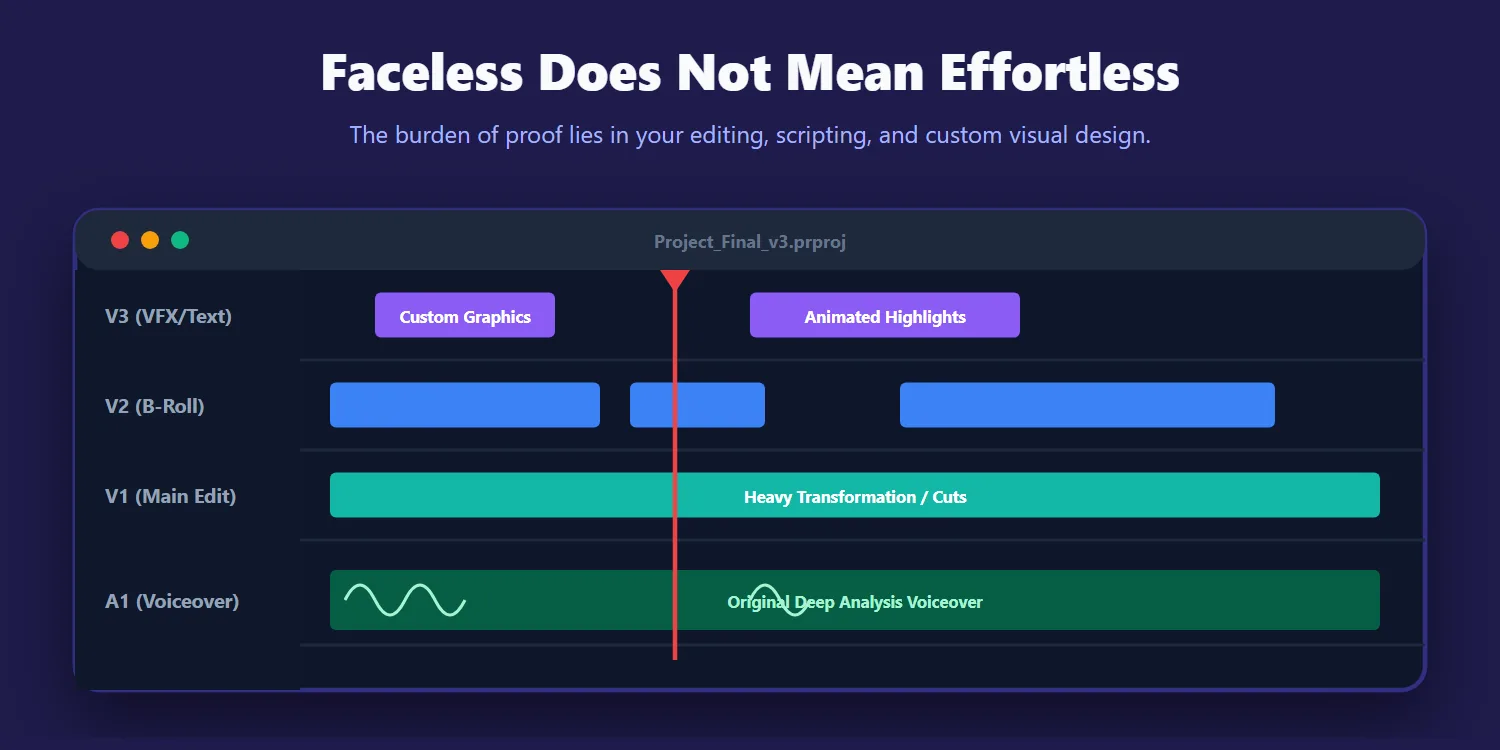
Can faceless channels still get approved? Absolutely. But faceless must never mean effortless. If you run a faceless channel (like video essays, top 10s, or educational explainers), the burden of proof is on your script and editing.
Your audio track must carry a distinct personality, your script must offer unique research, and your visual editing must transform the stock footage into a completely new narrative experience. YouTube doesn’t need your face; it needs your brain.
4. The 3-Step Reused Content Recovery Protocol
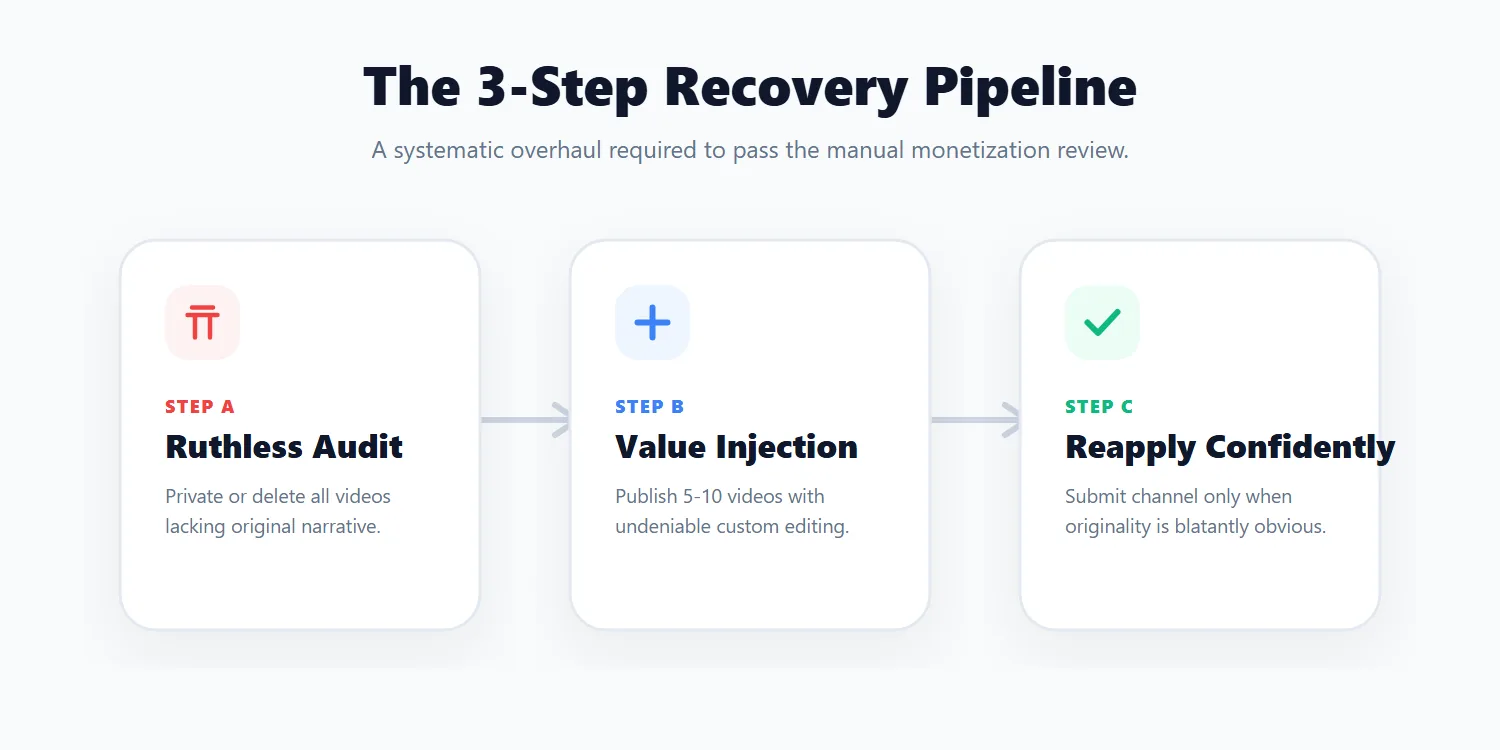
You cannot fix a demonetized channel with cosmetic tweaks. A changed thumbnail or a new description won’t fool a human reviewer. You need a systematic overhaul.
Step A: The Ruthless Content Audit
Review every public video. If a video relies on 80% third-party footage and 20% your own input, it is a liability. You must either private or delete these videos. Yes, it hurts to lose views, but keeping them guarantees another YPP rejection.
Step B: The Value Injection Model
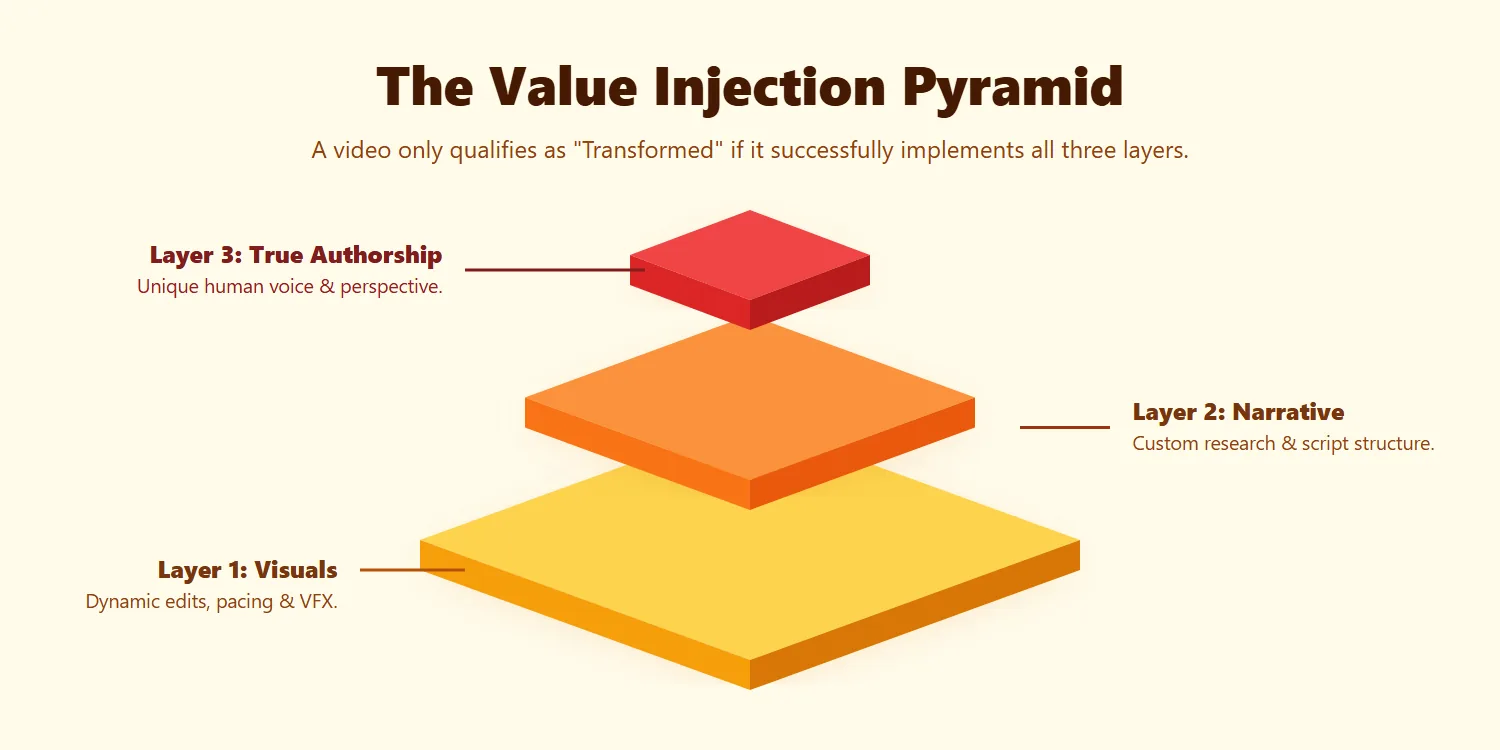
Every new video you upload from this day forward must prove transformation. Adding subtitles or a lo-fi background beat is not transformation. You must inject original commentary, deep educational insights, and custom narrative frameworks that make the video uniquely yours.
5. Restoring Channel Authority Before Reapplying
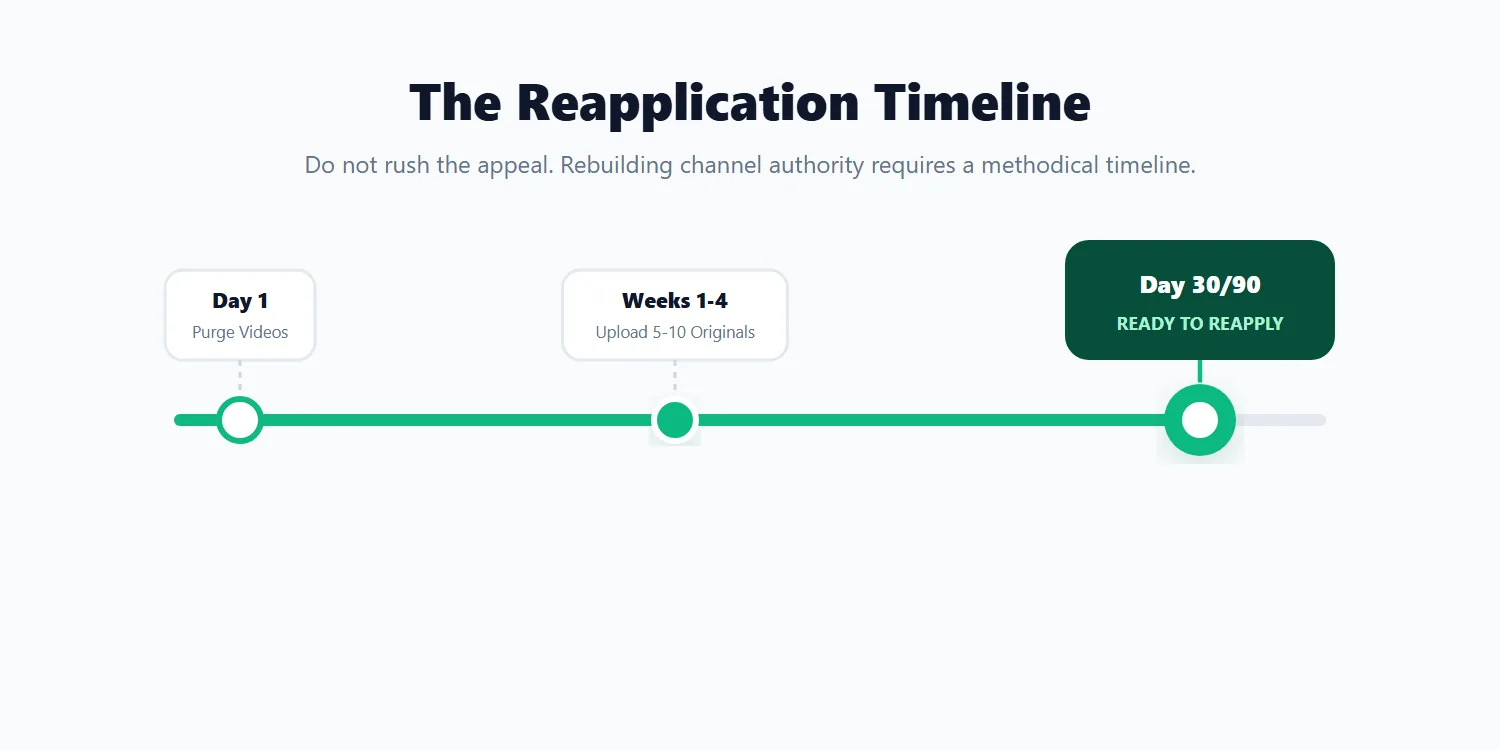
After a massive content purge, your channel’s algorithmic momentum will likely drop. Reviewers look at channel health and consistency. Before you hit the "Reapply" button, you should publish at least 5 to 10 highly original, undeniable videos.
If your channel needs a boost to regain its algorithmic footing after deleting old content, strategic audience building is critical. To signal active channel health and establish a premium baseline, many recovering creators opt to buy YouTube subscribers from highly vetted, premium networks like Fameviso. This establishes social proof alongside your newly structured, original content, presenting a high-authority profile to YPP reviewers.
6. Final Review: The YPP Readiness Checklist
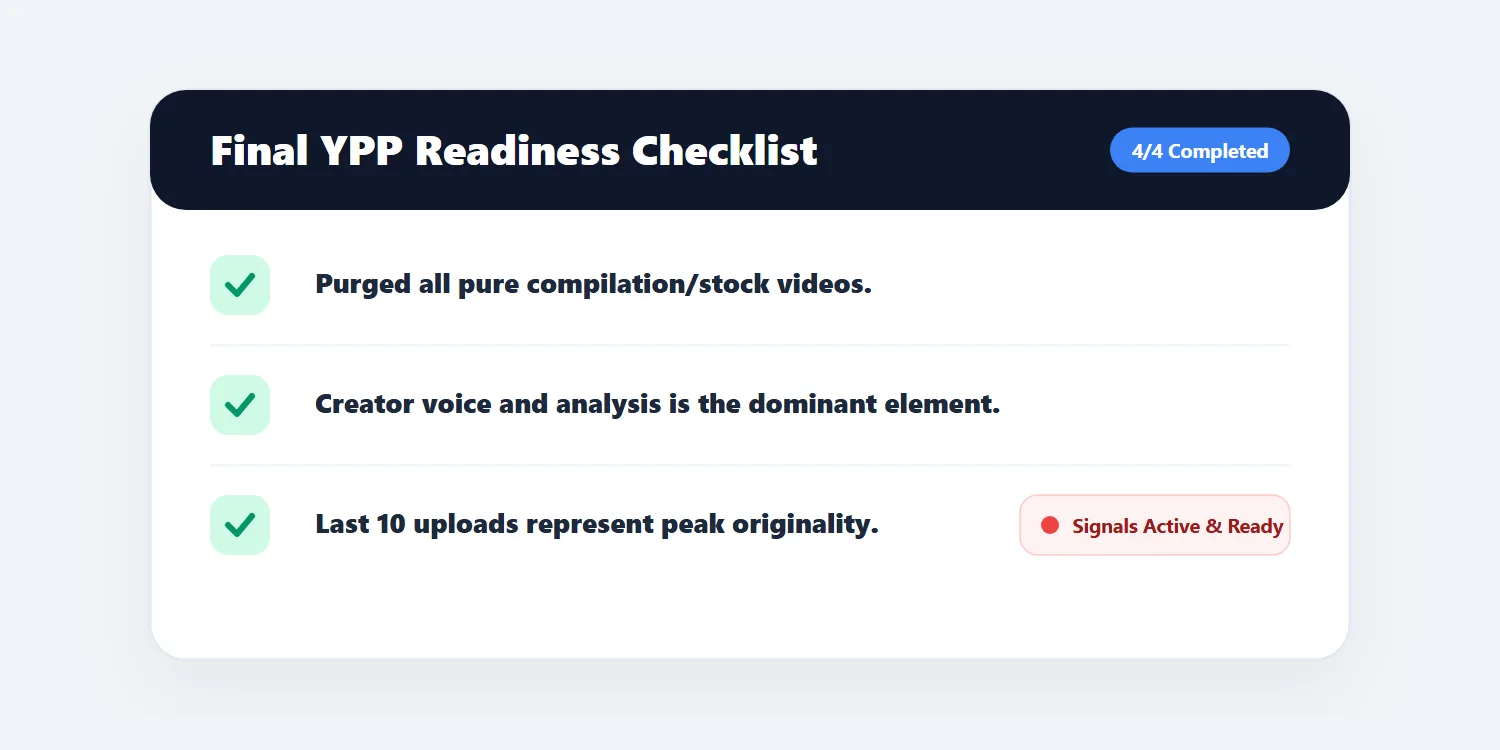
Reapplying too early is the most common mistake. Use this 2026 checklist before you submit your channel back to the review team:
- Is the creator's voice or face the dominant element of the channel?
- Have all lazy compilations and pure stock-footage videos been deleted or privated?
- Does the "About" section and channel banner clearly communicate a unique brand identity?
- Do the last 10 uploads represent your absolute best, most original work?
Fixing reused content forces you to become a better, more intentional creator. Build for originality, optimize for value, and the monetization approval will follow organically.