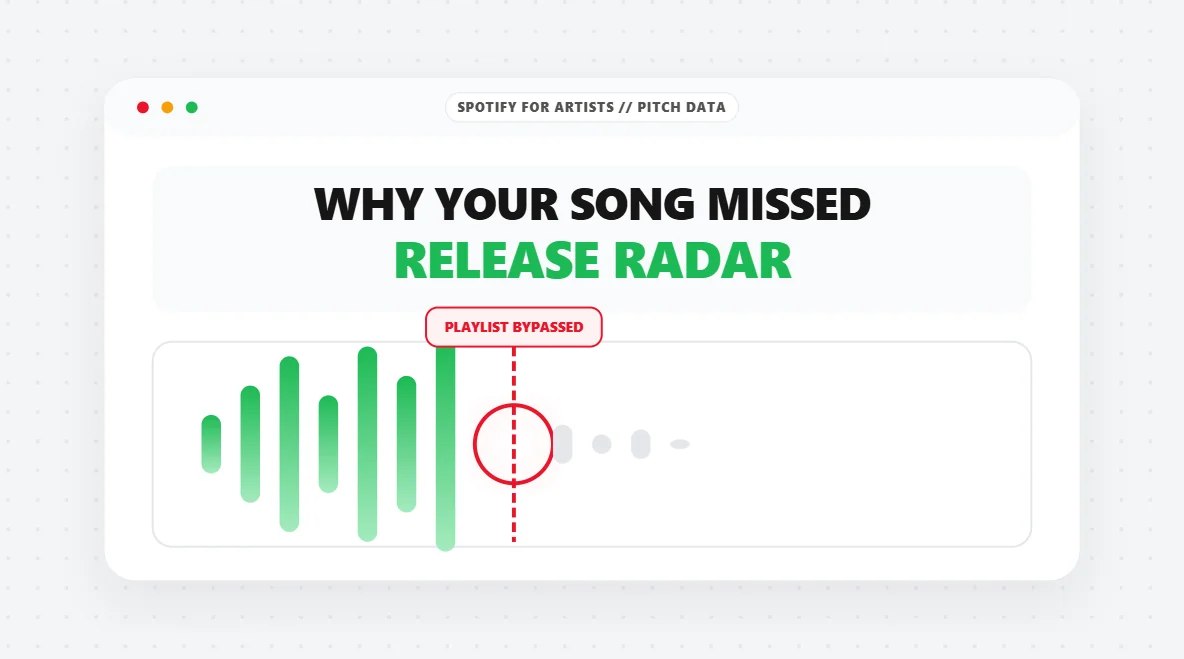
Release Radar is not guaranteed; it is a highly technical algorithmic placement that requires strict adherence to Spotify’s data ingestion timelines.
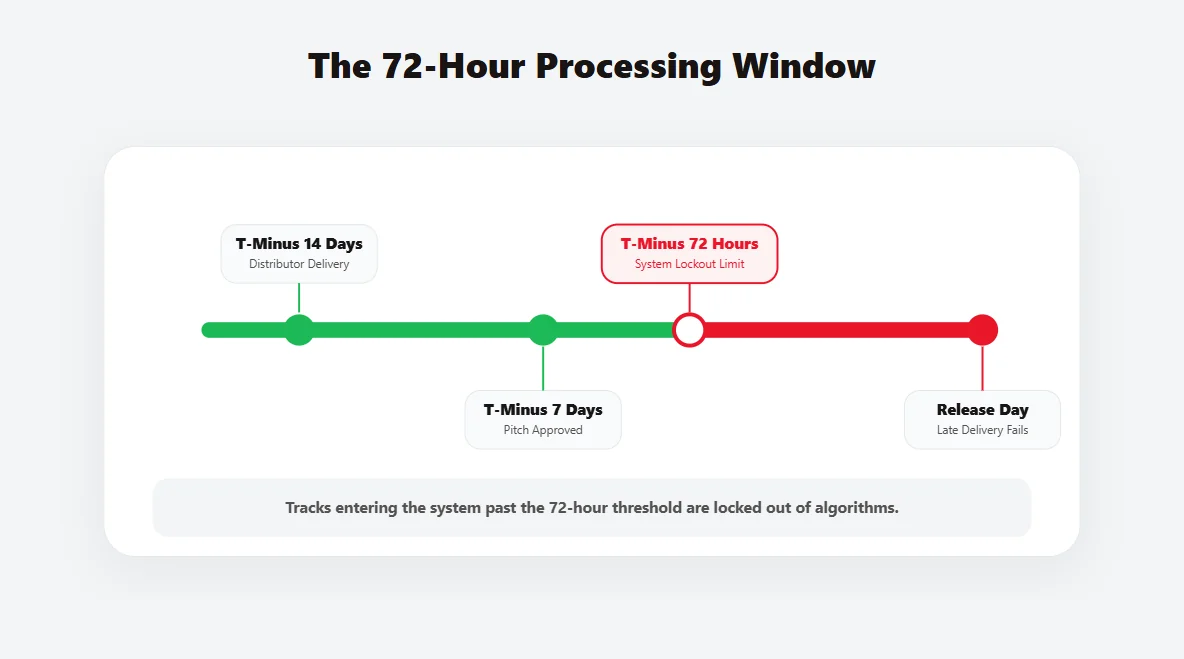
The 72-hour rule dictates the absolute minimum time Spotify needs to process audio files, map metadata, and allocate playlist slots before launch.
Pitching a track to editorial curators too late permanently disqualifies it from Release Radar delivery to your followers.
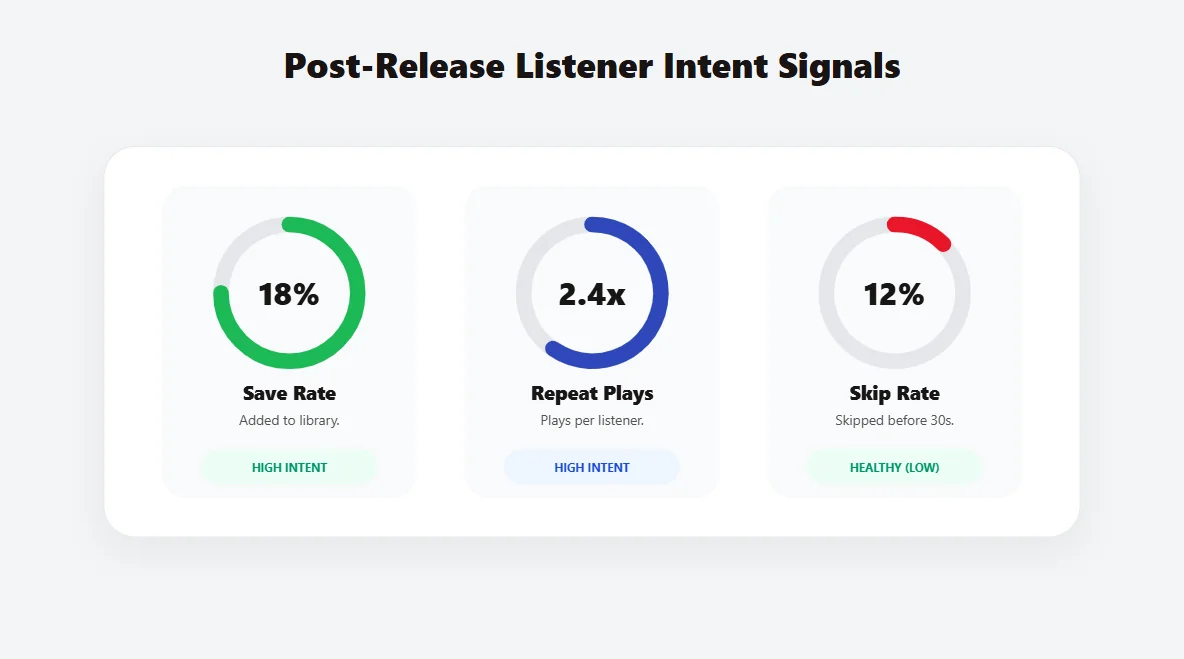
Algorithm confidence relies heavily on post-release intent signals like saves, low skip rates, and personal playlist additions.
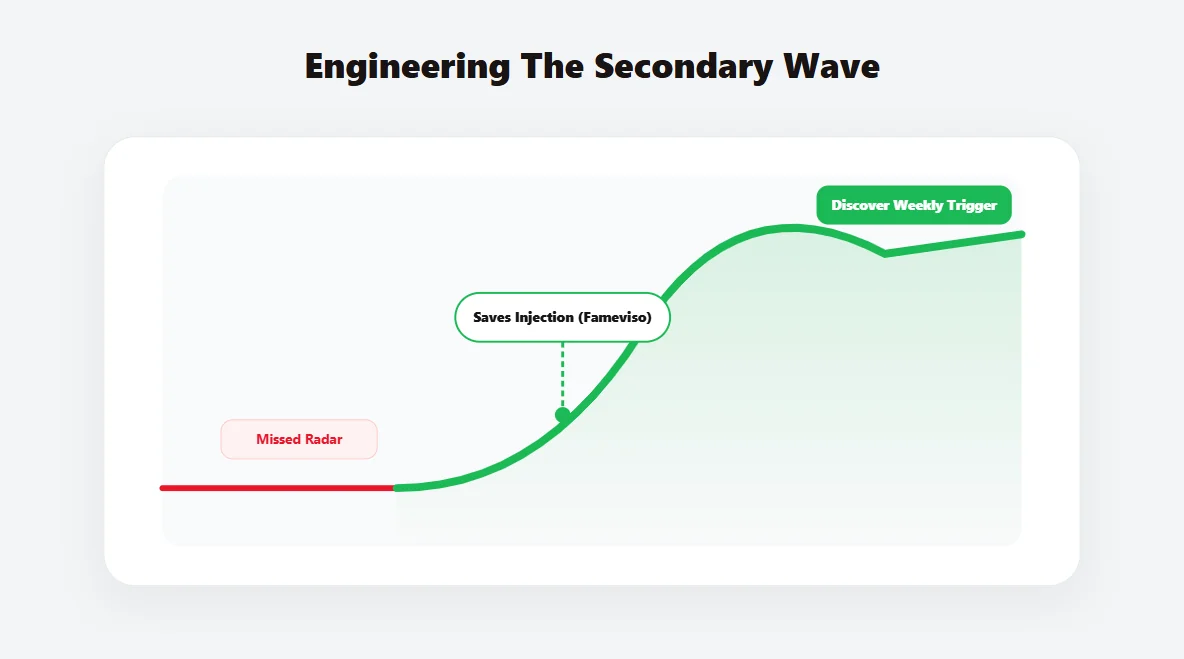
A missed Release Radar placement can be recovered by engineering a secondary wave of high-retention organic traffic.
Launch day arrives. You have teased the track on social media, refreshed your Spotify for Artists dashboard, and waited for that initial spike in streams. But the numbers stay flat. You check your followers’ playlists, and your track is nowhere to be found. Missing Spotify Release Radar is one of the most frustrating experiences for an independent artist because it represents a massive loss of guaranteed, high-converting organic reach.
When this happens, artists frequently blame the algorithm, assuming their music was shadowbanned or ignored. However, the Spotify algorithm is entirely data-driven. A missed Release Radar placement is rarely a qualitative judgment on your music; it is almost always a logistical failure in your release pipeline. Understanding how the platform ingests audio data is the key to ensuring you never miss this crucial algorithmic push again.
The Mechanics of the 72-Hour Processing Window
Spotify does not operate in real time when it comes to catalog updates. The platform hosts over 100 million tracks, receiving tens of thousands of new uploads daily. To manage this massive influx of data, the system requires a structured ingestion period to scan audio files, verify metadata, and allocate server space across its global content delivery network.
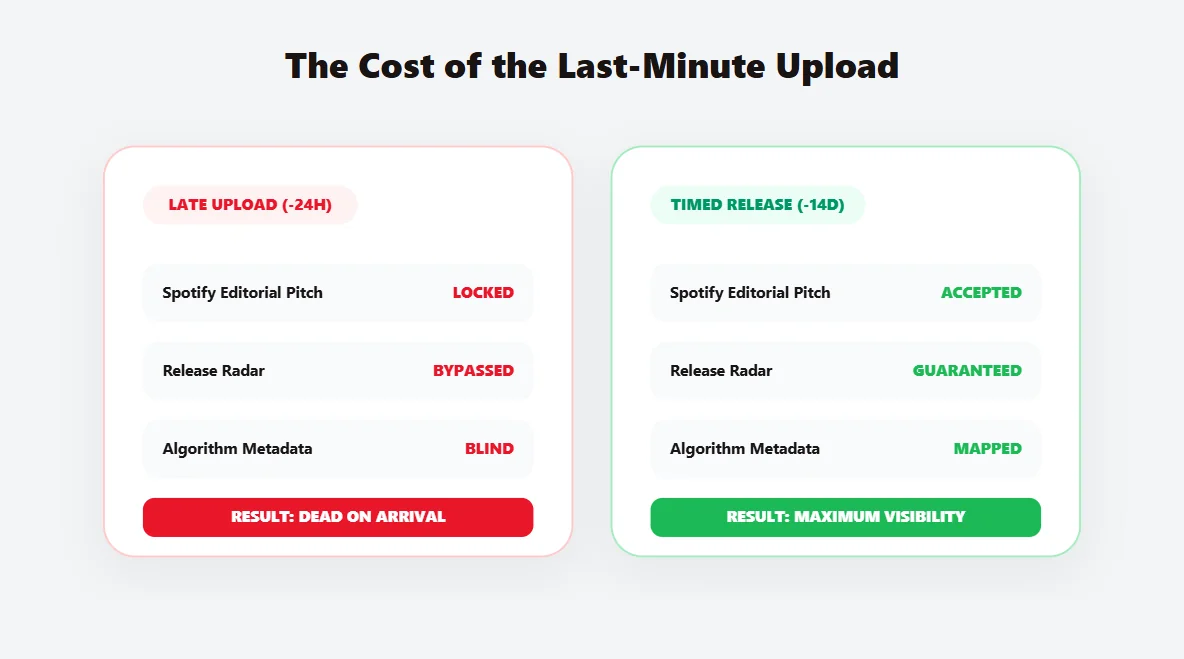
This is where the infamous 72-hour rule comes into play. If your distributor delivers your track to Spotify with less than 72 hours until release day, the system physically cannot process the metadata in time. The release will go live on your profile, but the automated backend systems that populate Release Radar will completely bypass it.
Why Your Song Was Left Off the Playlist
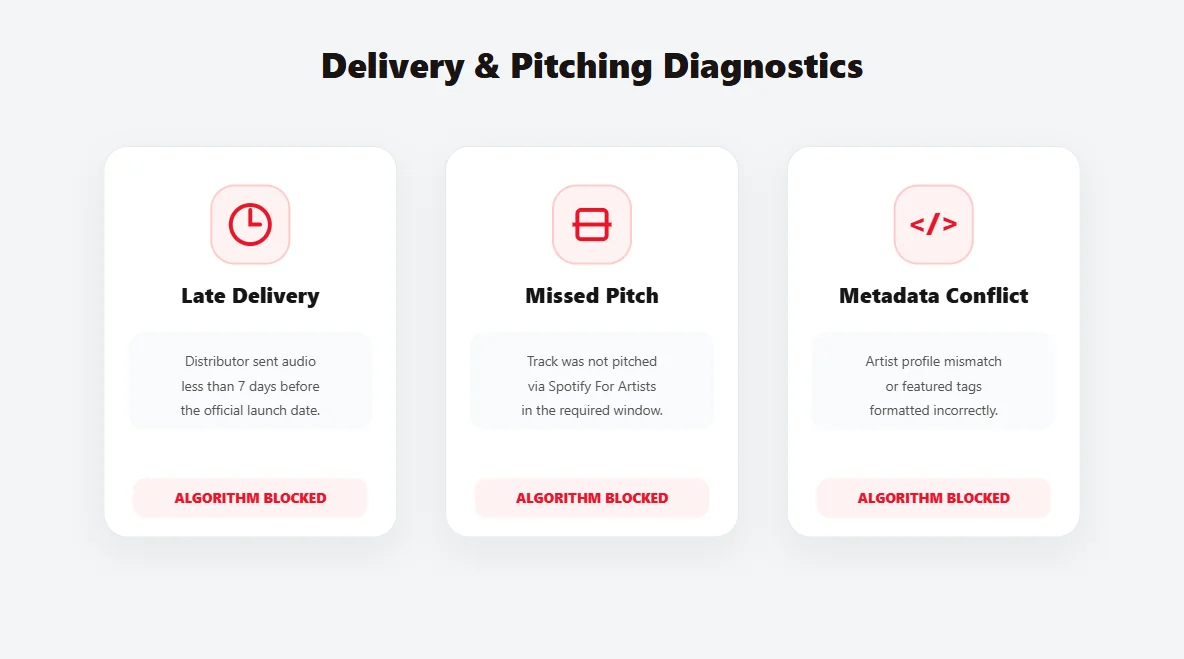
Assuming your track was delivered on time, there are still several administrative hurdles that can derail your Release Radar placement. The most critical failure point is the pitch process. Pitching a track through Spotify for Artists at least 7 days prior to release is the only way to mathematically guarantee placement on your followers’ Release Radar.
Other common causes include fractured metadata (e.g., listing your artist name slightly differently than your official profile), incorrectly tagging main artists versus featured artists, or uploading multiple tracks on the same day without specifying a focus track. The algorithm demands absolute clarity; any confusion results in exclusion.
The Importance of Post-Release Intent Signals
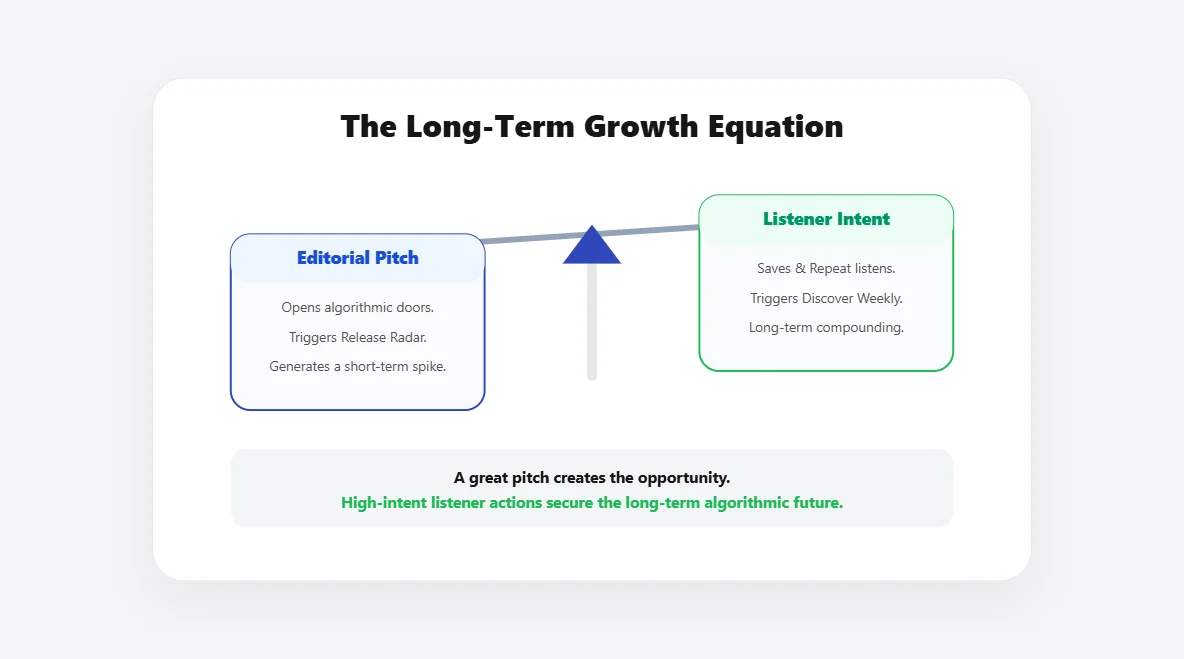
If you successfully land on Release Radar, your job is only half done. Release Radar is a testing ground. Spotify places your song in front of your followers to observe their behavior. If they skip the track within the first 30 seconds, the algorithm downgrades its internal confidence score.
Conversely, if listeners save the track to their personal libraries or add it to their own playlists, the algorithm flags the song as highly engaging. These high-intent actions are the exact triggers that push a song from Release Radar into the much larger, highly coveted Discover Weekly playlist.
How to Prepare Your Release Pipeline Correctly
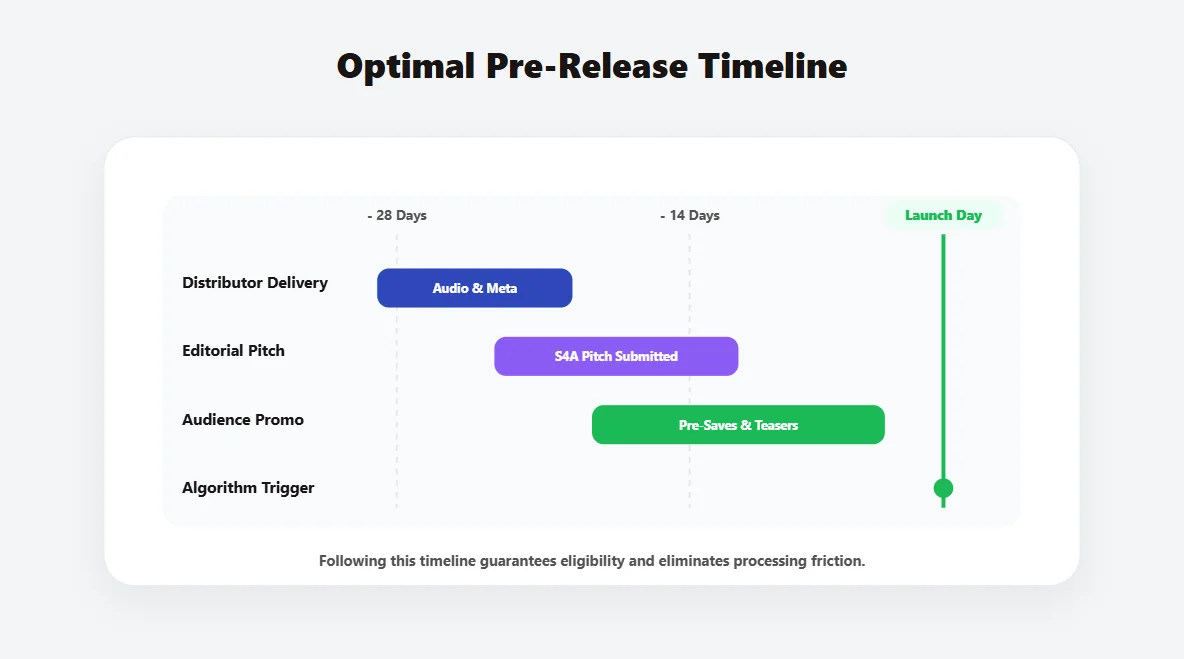
Treat your distribution date as a strict deadline, not a suggestion. Elite independent artists operate on a 3-to-4 week lead time. They upload the master audio and artwork to their distributor 28 days before release. This ensures the track arrives in the Spotify backend with ample time for review.
Once the track appears in the "Upcoming" tab of Spotify for Artists (usually within 48 hours of distribution), they immediately submit a highly detailed editorial pitch. This timeline completely eliminates technical friction, guaranteeing Release Radar delivery and maximizing algorithmic visibility.
Recovering Algorithmic Momentum After a Miss
If you missed the window and lost your Release Radar spike, you must artificially engineer a secondary wave of momentum. The algorithm evaluates rolling 7-day and 28-day data. To recover, you need to drive external traffic to the track and forcefully generate high-intent actions.
If your organic reach is temporarily weak because of a botched launch, stabilizing your listener signals becomes your top priority. To jumpstart this secondary momentum safely, some independent record labels strategically buy Spotify saves. This injects crucial high-intent algorithmic signals into the system, forcing the platform to recognize the track's retention value and triggering Discover Weekly or Spotify Radio placements as a powerful backup growth engine.
The Cost of the Last-Minute Upload
Uploading a track 24 hours before release day is the equivalent of launching a product in the dark. Not only do you forfeit Release Radar, but you also lose the ability to run pre-save campaigns, you cannot submit to editorial curators, and your track enters the system with zero contextual metadata.
Building Long-Term Spotify Authority
Every successful release builds upon the data of the previous one. When you consistently deliver music on time, pitch accurately, and generate authentic listener retention, your artist profile’s overall trust score increases.
Stop treating your release dates as chaotic deadlines. Treat them as the final step in a meticulously planned data delivery pipeline. Respect the platform’s ingestion windows, optimize your listener signals, and the algorithm will reward your music with the visibility it deserves.