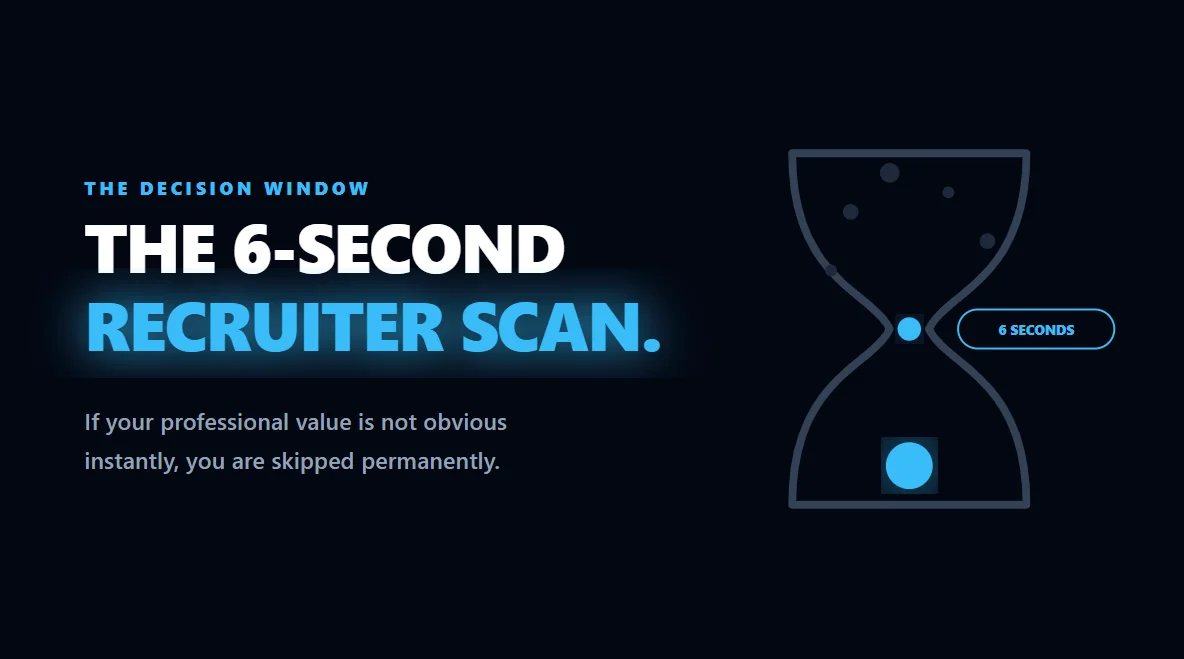
Recruiters spend an average of 6 seconds scanning a profile; if your value is not immediately obvious, you are skipped instantly.
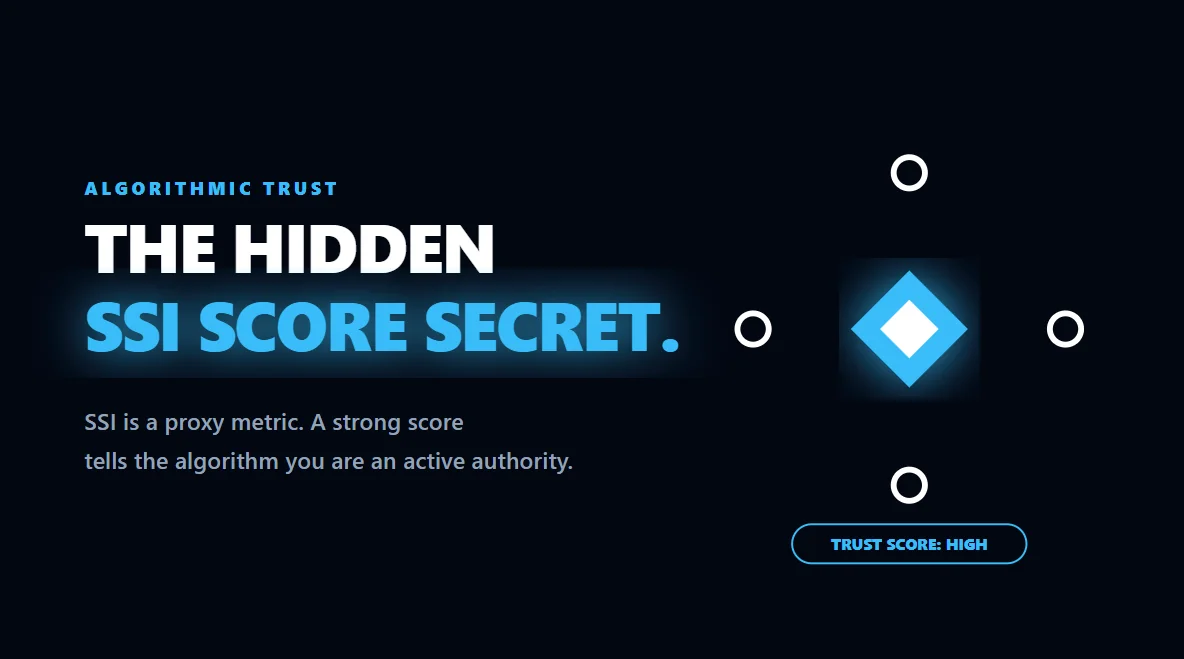
The LinkedIn SSI (Social Selling Index) is a powerful proxy metric that evaluates your professional brand, networking habits, and platform trust.
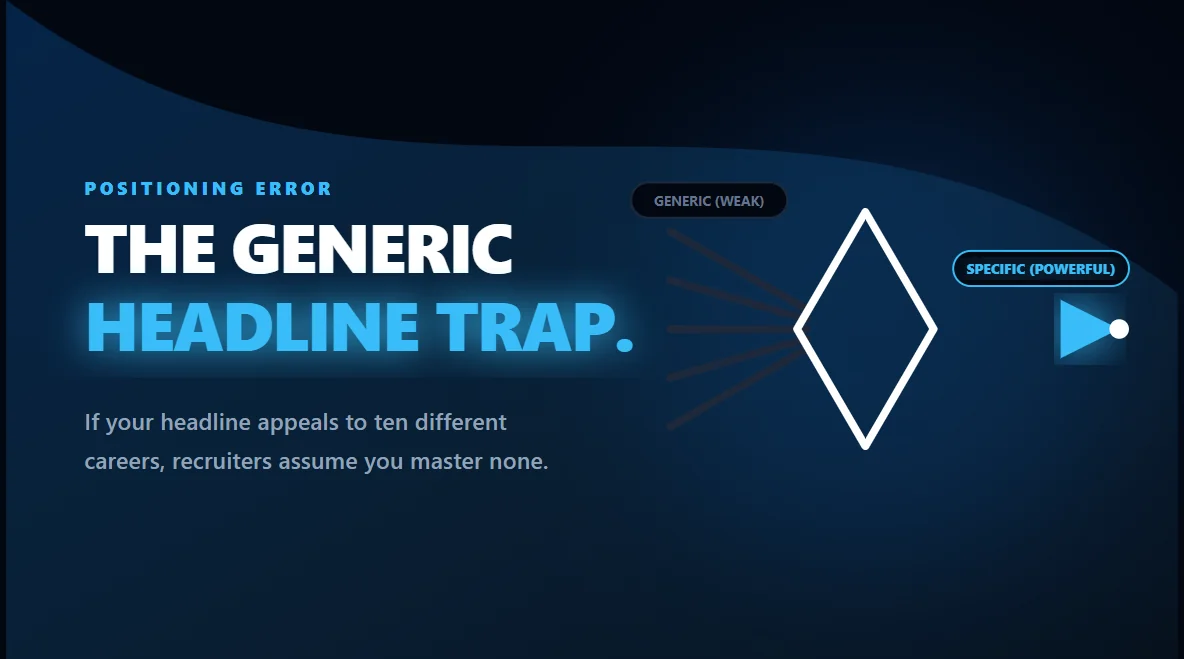
Generic headlines that list multiple unrelated roles confuse recruiters and dilute your search ranking in LinkedIn Recruiter tools.
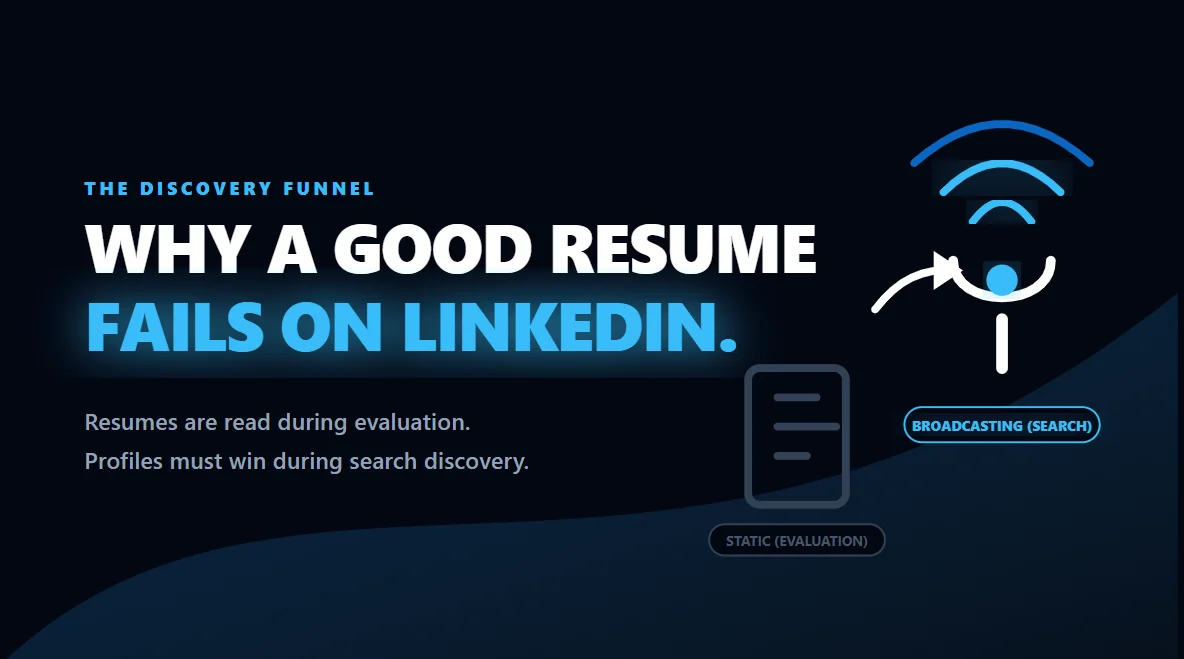
A great resume does not equal a great LinkedIn profile; resumes are for evaluation, while LinkedIn profiles must be optimized for search discovery.
Building initial social proof and a strong follower base prevents your account from looking dormant, increasing recruiter trust drastically.
You have a LinkedIn profile. Your photo is professional. Your job titles are filled in accurately. You even took the time to copy and paste the bullet points from your resume into your experience section. You sit back and wait for the interview requests to roll in. And yet, recruiters keep passing you by. No messages. No InMails. No profile traction worth talking about. That silence can feel incredibly personal, but most of the time, it is purely structural.
We have audited thousands of profiles and the pattern is always the same. Recruiters do not ignore your profile because you lack talent or value. They ignore it because your profile fails to surface that value fast enough. In a platform containing nearly a billion professionals, waiting to be noticed is a failing strategy.
The 6-Second Recruiter Scan
You must understand how recruiters actually use the platform. They are not reading your profile like a biography or a novel. They are using LinkedIn Recruiter, an enterprise search tool, to filter through hundreds of candidates in minutes. When they click on your profile, eye-tracking studies show they spend an average of just 6 seconds deciding whether to read further or hit the "Next" button.
If your profile feels broad, passive, or hard to decode within those first few seconds, they move on. LinkedIn is not just an online resume; it is a ruthless relevance filter. If your professional relevance is blurry, your career value becomes invisible.
The Generic Headline Trap
The single biggest mistake professionals make is trying to appeal to everyone. A headline that reads "Experienced Professional | Marketing | Sales | Project Management | Leader" sounds like you are versatile. To a recruiter, it sounds like you lack a specialty. A recruiter is not looking for a "jack of all trades." They have a very specific job requisition to fill, and they are looking for a highly specific solution to that problem.
If your headline and summary could apply to ten different careers, it is too vague to attract the right recruiter consistently. Specificity wins the search algorithm.
What is the Hidden SSI Score Secret?
SSI stands for Social Selling Index. While it was originally designed for sales professionals, savvy job seekers have realized that the SSI score is a powerful proxy metric for profile health. It measures four things: establishing your professional brand, finding the right people, engaging with insights, and building relationships.
The real secret is not the score itself, but what the score represents. A strong SSI indicates to the LinkedIn algorithm that you are a highly active, high-trust user. Profiles with strong underlying SSI behaviors are inherently prioritized in recruiter search results. It is not a magic button, but it is the architectural foundation of visibility.
Why a Good Resume Still Fails on LinkedIn
Many professionals fail to realize that a resume and a LinkedIn profile serve two entirely different functions. A resume is read during an evaluation process, after you have already gained their attention. A LinkedIn profile must win attention in a discovery process.
Your resume is a historical document. Your LinkedIn profile is a dynamic landing page. If you simply copy and paste your resume onto LinkedIn without optimizing for search keywords, adding multimedia, or writing a conversational "About" section, your profile remains a static, unengaging document buried on page 50 of search results.
How to Force Recruiters to Notice You
To break the silence, you must stop treating your profile like a storage unit for your job history and start treating it like a targeted marketing campaign. Sharpen your profile around one clear target role. Ensure your Headline immediately identifies your specialty. Rewrite your About section to include measurable results, not just fluff adjectives like "hard-working."
The Power of Social Proof and Perceived Authority
In the high-stakes recruitment field, visibility is only half the battle; credibility is the other. Recruiters subconsciously judge your industry authority by your network size and engagement levels. If a recruiter lands on your profile and sees only 30 connections and zero recent activity, the account looks dormant. It signals a lack of professional presence.
To bridge this gap instantly, many top-tier professionals and executives strategically buy LinkedIn followers from premium organic networks like Fameviso. This isn't about vanity; it is about Authority Architecture. A robust follower base provides immediate social proof, signaling to the recruiter and the algorithm that you are an established, influential voice in your industry. When your profile carries that initial weight of authority, recruiters are exponentially more likely to send that first InMail.
The Golden Rule: Clarity Beats Effort
Ultimately, recruiters do not reward how hard you worked on your profile; they reward how quickly they can understand your value. Remove the jargon. Delete the ambiguous skills. Build a network that proves your authority.
When you align your profile's SEO, optimize your visual first impressions, and back it up with undeniable social proof, you stop chasing recruiters. They start chasing you.