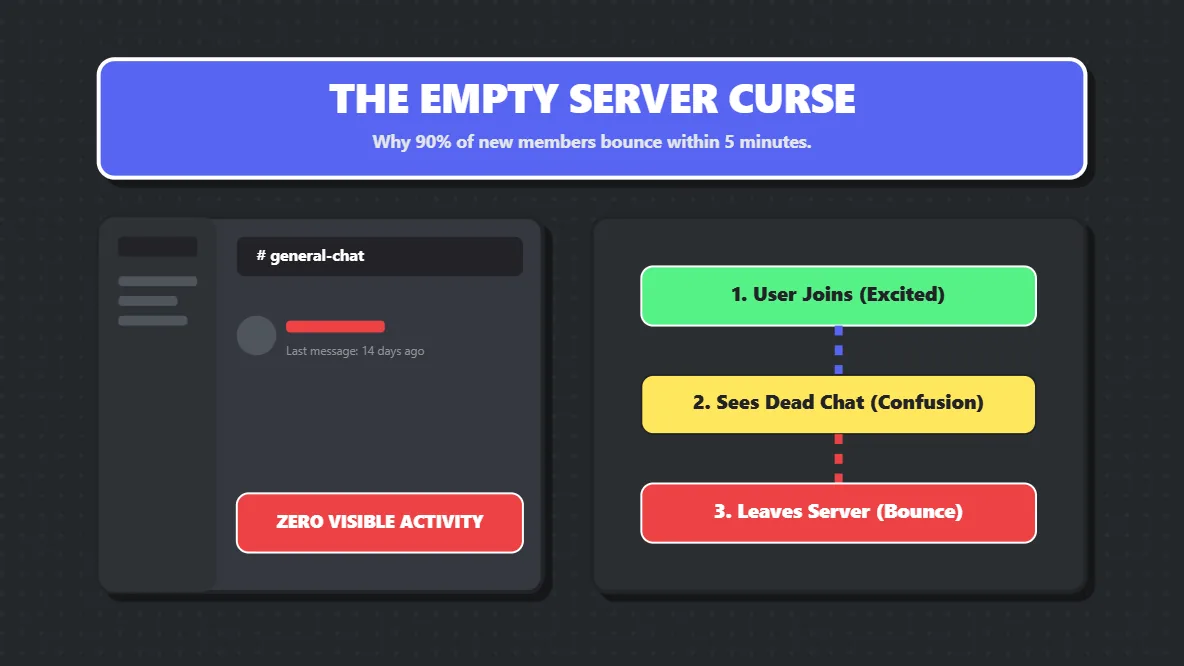
The Empty Server Curse occurs when a lack of immediate, visible activity causes new arrivals to bounce before participating.
Overloading new members with too many channels on day one causes decision fatigue and kills community activation.
Discord retention requires clear onboarding infrastructure; members must immediately understand where to go and what to do next.
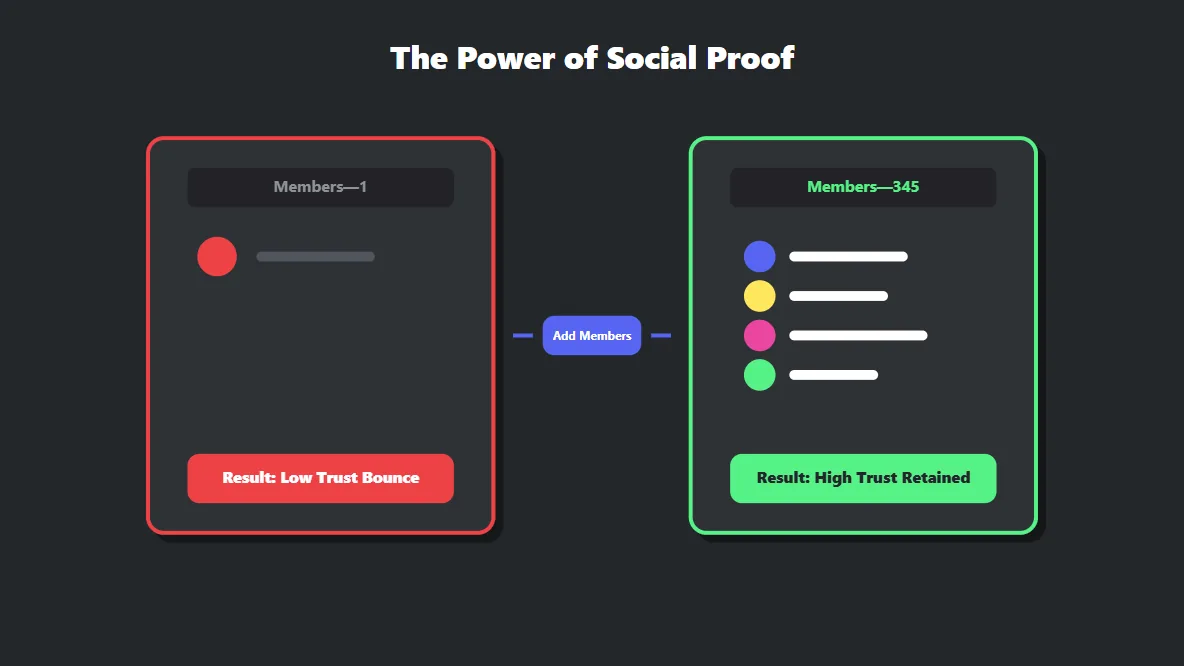
Social proof is critical. A server with 50 active members retains newcomers far better than a silent server with 5,000 members.
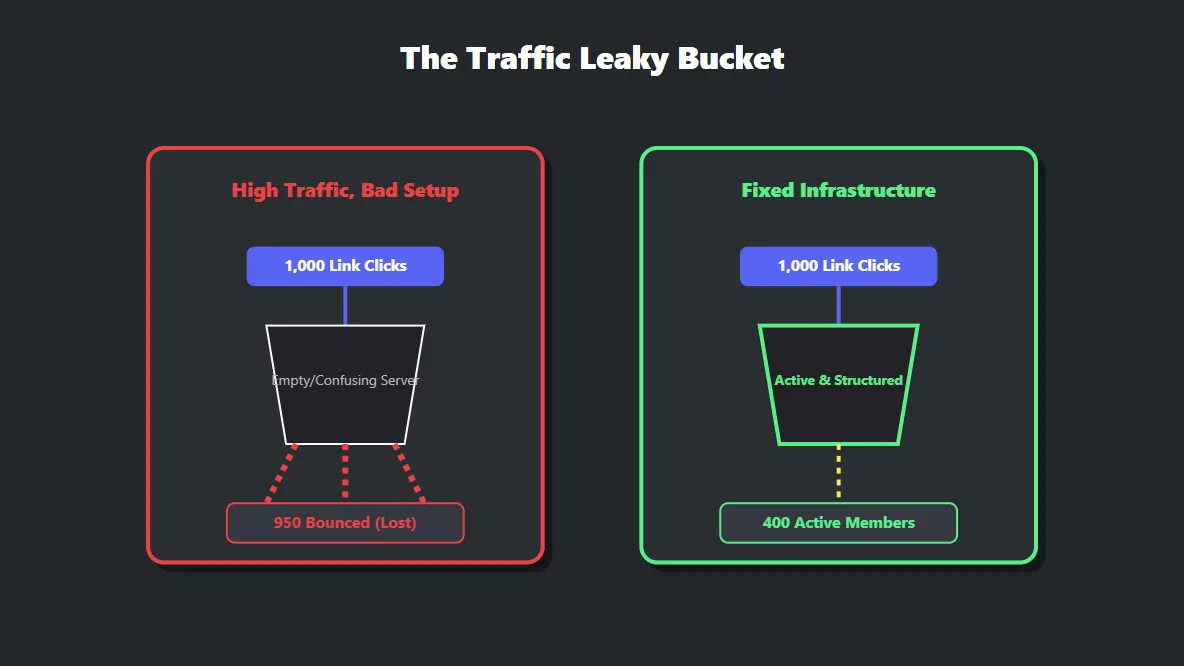
Fixing retention must happen before scaling traffic; otherwise, you are simply pouring marketing budget into a leaky bucket.
You watch the notification pop up. Someone used your invite link. You get that small dopamine hit—your Discord server is growing. But before you can even type a welcome message, they are gone. No introduction. No engagement. Just a join and a quiet, immediate exit. When this happens once, it is annoying. When it becomes a pattern, it is devastating to your community growth.
We see this constantly across gaming guilds, SaaS communities, Web3 projects, and creator hubs. The hard truth is that people rarely leave because the platform is broken; they leave because your server’s first impression failed to capture them. This phenomenon is known as the "Empty Server Curse."
Understanding the Empty Server Curse
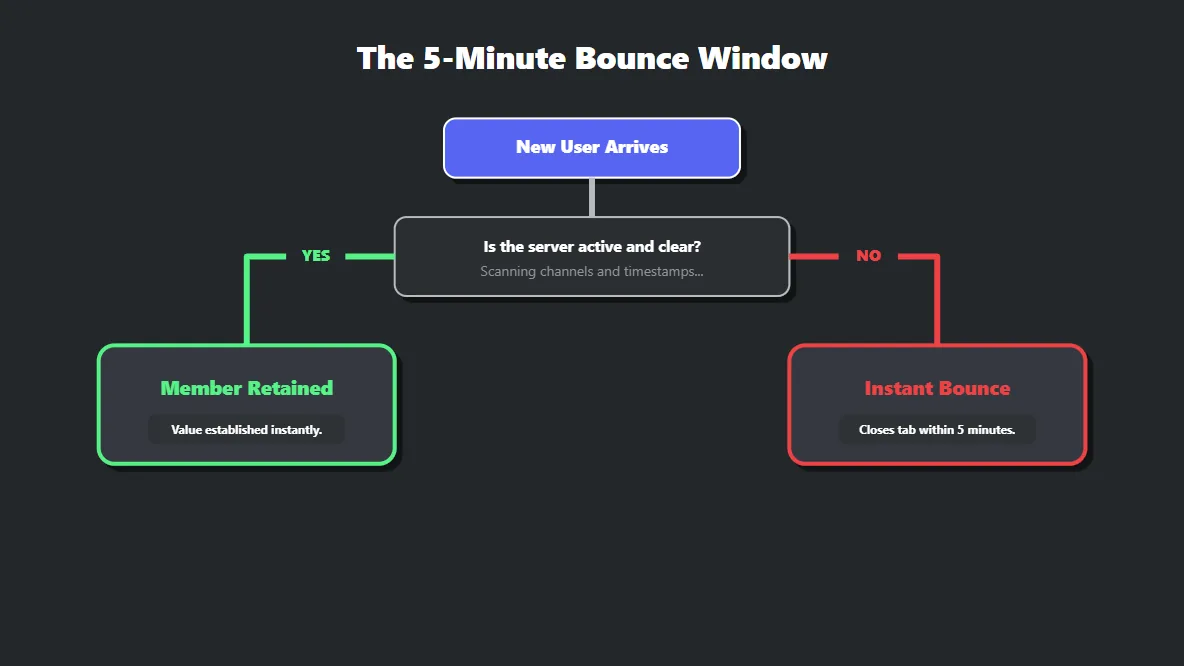
The empty server curse is a psychological trap. A new user joins and immediately scans for momentum. They look at the general chat, check the timestamps on the last few messages, and gauge the energy. If they sense silence, confusion, or a lack of value, they bounce before forming any attachment.
This issue is rarely tied to your total member count. A server can boast 5,000 members in the sidebar, but if the visible channels have not seen a message in three days, the server feels dead. That perception destroys retention instantly.
The Three Killers of Discord Retention
Discord is inherently a high-friction platform for newcomers. Unlike scrolling a continuous TikTok feed, Discord requires users to actively navigate categories, read rules, and choose where to speak. If your server design does not guide them smoothly through this process, they will leave.
1. The Category Maze (Channel Overload)
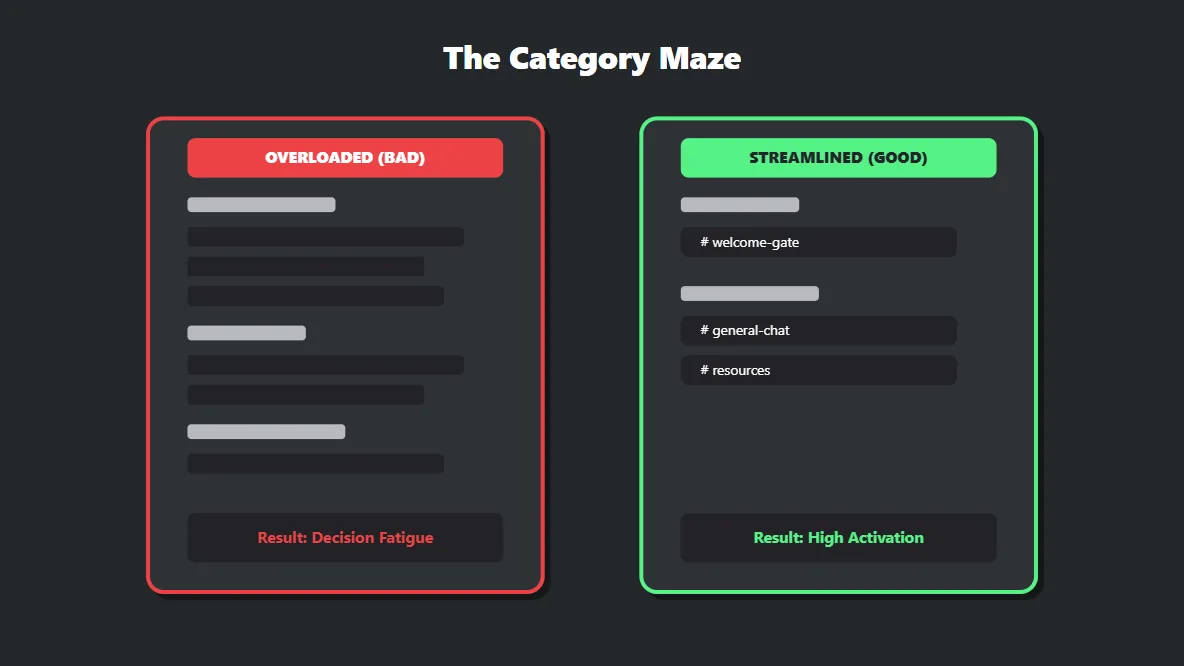
The most common mistake amateur server owners make is creating 40 different channels on day one. Having separate channels for memes, pets, bot-commands, off-topic, and specific game modes looks organized to the admin, but it is deeply overwhelming to a new arrival. This causes decision fatigue. When people do not know where to speak first, they simply do not speak at all.
2. The Ghost Town Lobby
If your welcome gate drops users into a "General" chat where the last message was a bot notification from a week ago, trust collapses immediately. People join communities to connect with humans. If the lobby looks abandoned, they assume the entire project is dead.
3. The Verification Wall
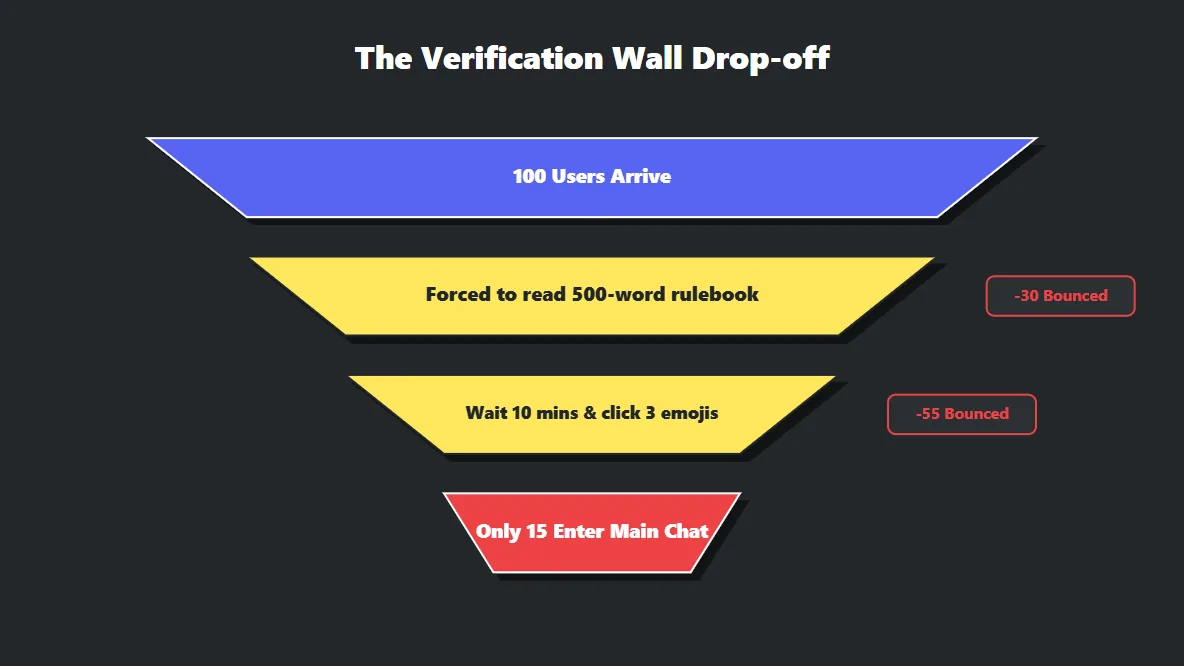
Security is important, but overly complex verification systems kill growth. If a user has to read a 500-word rulebook, react to three different emojis, and wait ten minutes for a role to be assigned just to say "hello," you will lose 80% of your traffic right at the door.
How to Fix Your Discord Onboarding Infrastructure
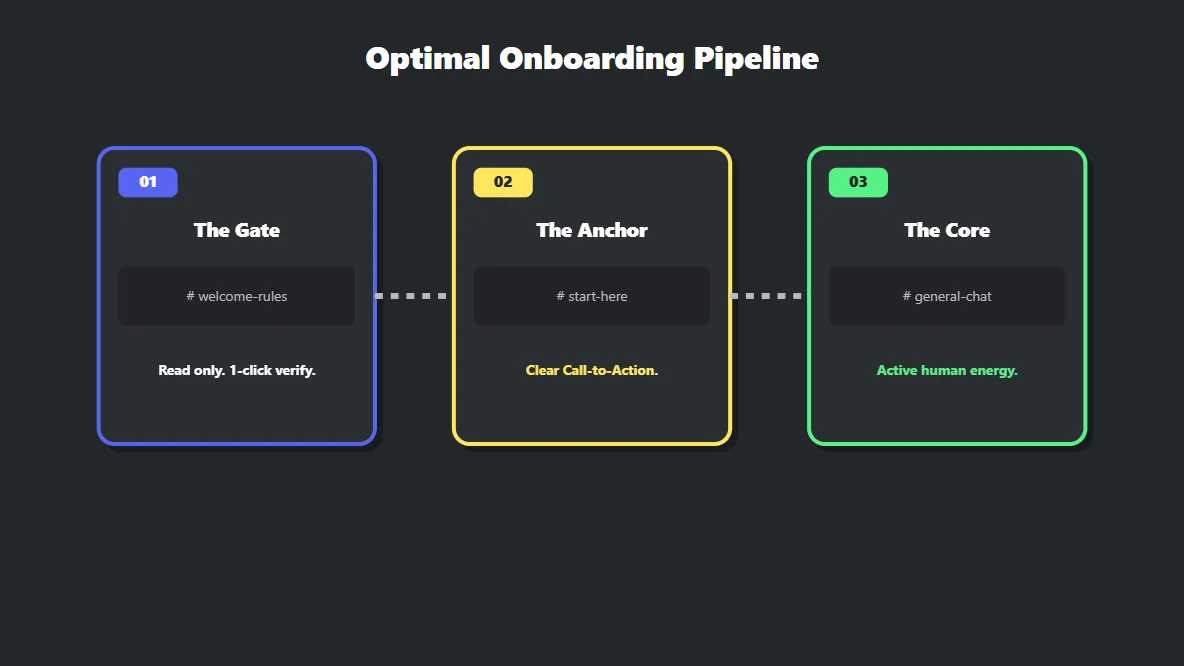
Fixing retention requires tightening the user experience. You must streamline the path from "Just Joined" to "First Message."
- Consolidate Channels: Delete the dead zones. Start with a welcome channel, an announcements channel, and one highly active main chat. Only create new channels when the main chat becomes too fast to read.
- Provide a Clear Next Step: Do not just welcome people; direct them. Your welcome message should explicitly say: "Introduce yourself in #general and tell us what games you play!"
- Curate the First Impression: Pin high-value resources, guides, or server maps in your landing channels. Give lurkers a reason to stay and read, even if they are not ready to type yet.
The Power of Social Proof (And How to Fake It Until You Make It)
Even with perfect onboarding, an empty server still looks empty. Humans are tribal; we flock to where the crowd is. When a new user joins and sees a healthy member count and active voices, their psychological barrier to staying drops significantly.
If you are launching a brand new community, getting over the "zero-member" hurdle is the hardest part. To bypass this initial friction and establish immediate social proof, smart community managers often buy Discord server members from premium, organic-based providers like Fameviso. This strategic injection of offline members populates the sidebar, making the server look established. When real, organic traffic finally arrives, they enter an environment that feels credible, drastically increasing the chances they stick around.
Traffic vs. Retention: The Leaky Bucket Problem
Many server owners obsess over marketing. They buy ads, partner with influencers, and blast their invite links across Reddit. But driving traffic to an unprepared Discord is like pouring water into a leaky bucket.
If your retention rate is 5%, it does not matter how many clicks your invite link gets. Growth without activation is wasted effort. You must prioritize the core community experience first. Build a small, hyper-active core group of 20 people before you try to scale to 2,000.
Metrics That Actually Matter
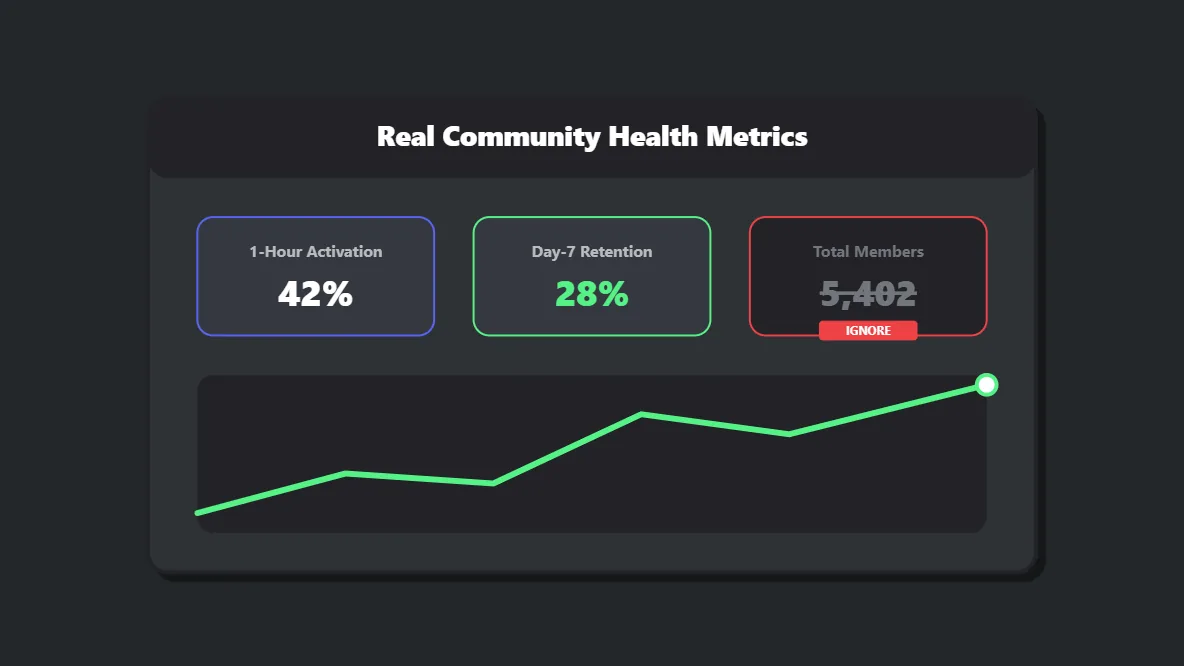
Stop looking at your total member count. It is a vanity metric. To gauge the true health of your Discord server, monitor these vital signs:
- First-Hour Activation Rate: What percentage of new joins send a message within 60 minutes?
- Day-7 Retention: How many members return to the server a week after joining?
- Voice Channel Activity: Are members utilizing voice comms, or is the server strictly text-based?
A thriving Discord server is not built by chance. It is engineered through clean onboarding, relentless pruning of dead channels, and visible social proof. Fix the infrastructure, and the empty server curse will disappear for good.