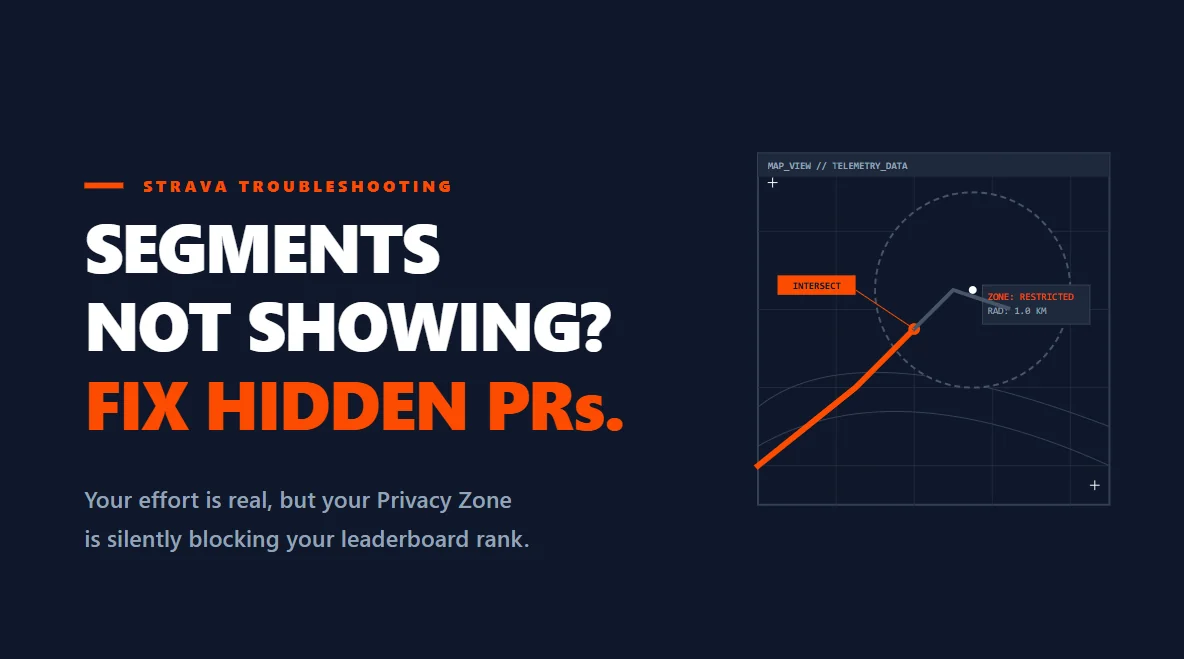
If a segment starts or ends inside a hidden map area (like your home Privacy Zone), your effort will match privately but will not appear on public leaderboards.
A Privacy Zone can completely hide your PR visibility even when your GPS file is 100% accurate and clean.
Editing map visibility on a single activity can restore your segment rank without removing all global privacy protections from your account.
Athletes often blame their GPS watches for missing segments when the real issue is simply their own Activity Privacy settings.
The safest fix is selectively narrowing your hidden zones, rather than turning all privacy off in a moment of frustration.
You just finished a grueling ride or a massive threshold run. You pull out your phone, open Strava, and you instantly know something is wrong. The activity uploaded perfectly. The route looks flawless. The effort felt like a massive Personal Record (PR). But when you check the results, your PR, your leaderboard rank, and your segment placing are completely missing.
Most athletes immediately blame their GPS watch. Others blame Strava's servers. In the vast majority of real-world cases, the true culprit is your own Privacy Zone setup. This is not a bug; it is a strict visibility rule working exactly as it was designed.
Why Are Your Strava Segments Not Showing?
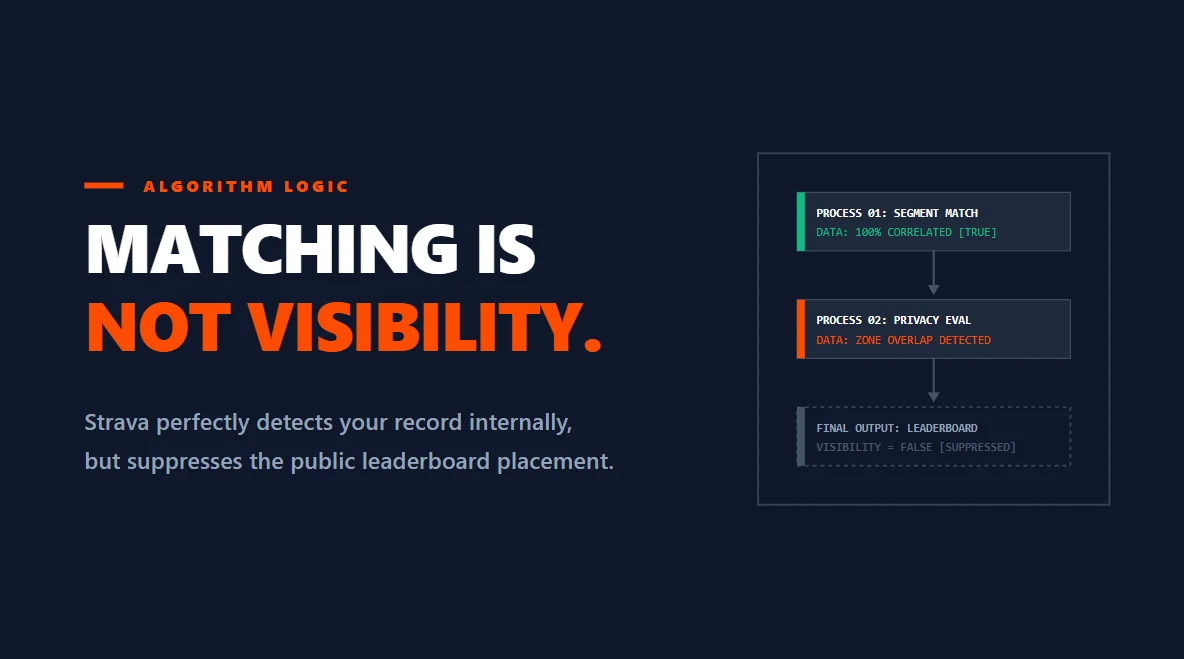
Here is the critical technical distinction that most people miss: Strava completely separates segment matching from public segment visibility. They are not the same thing.
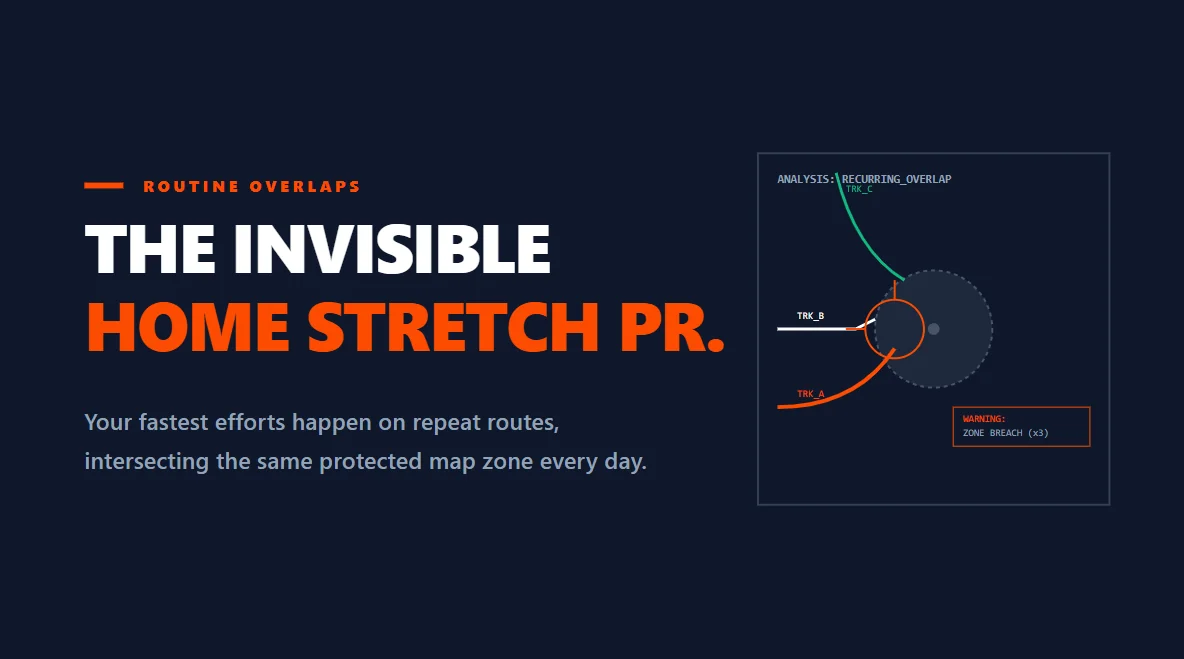
We constantly see athletes upload a perfectly valid activity, successfully match the segment internally, and still miss the leaderboard. Why? Because the start line, the finish line, or the entire segment overlapped with a hidden map section on their account. When that happens, the effort is classified as effectively private.
What Actually Happens Behind the Scenes?
Strava’s servers can still perfectly detect that you completed the segment in record time. This is why many users feel incredibly confused—they can see the route line passing right through the segment on their map. They know they did the work.
But algorithmic detection alone is not enough. If any part of that segment lives inside a hidden map area, Strava will ruthlessly suppress that effort from public leaderboards, challenge credits, and visible segment achievements. You get the workout data, but you lose the public bragging rights.
Privacy Zones vs. GPS Problems: Which Is It?
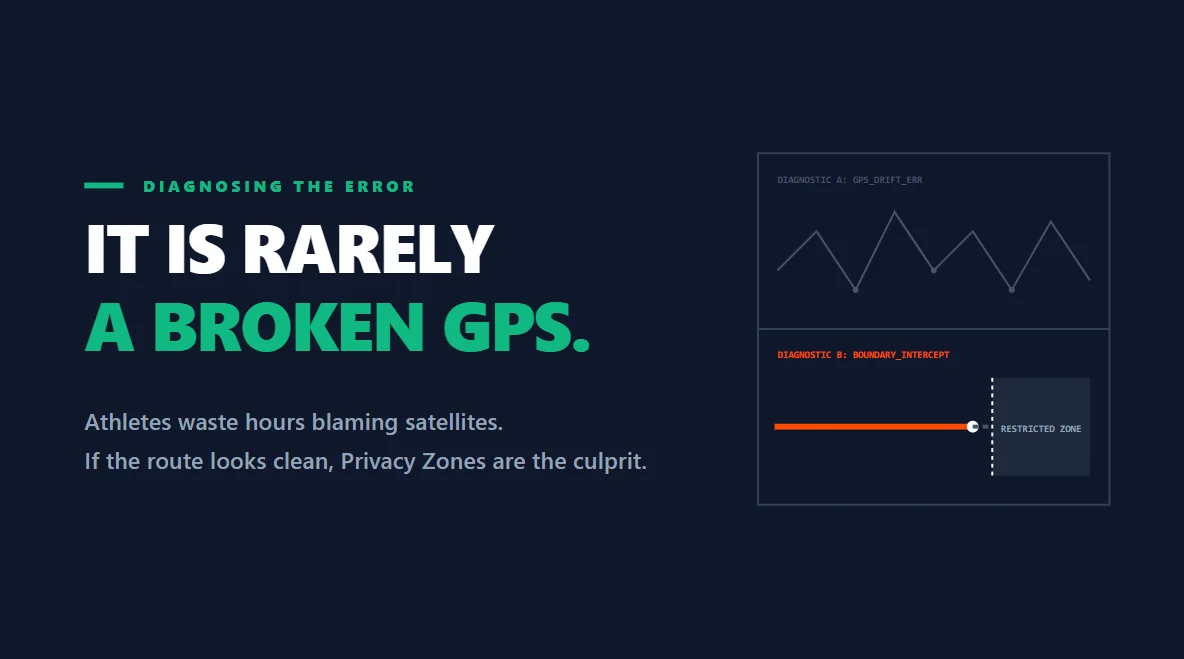
This is where athletes waste hours of their time. They sit at their computers inspecting GPS drift and satellite data, when the real issue is a privacy rule working exactly as configured.
Yes, bad GPS can break a segment match. But if your activity path looks normal, and the missing result happens near your home, your office, or your regular starting spot, Privacy Zones should be your absolute first suspect.
| Symptom | More Likely Cause | What To Check First |
|---|---|---|
| Activity recorded but no public segment rank | Privacy Zone overlap | Map Visibility Settings |
| Entire route looks jagged or cut off | GPS/Satellite issue | Device GPS trace |
| PR visible privately but not on leaderboard | Hidden start/end overlap | Segment line vs hidden zone |
| Only segments near home disappear | Address-based Privacy Zone | Default hidden radius |
| No leaderboard placement on any activity | Activity Privacy Setting | Set activity to "Everyone" |
Why Start and Finish Lines Matter So Much
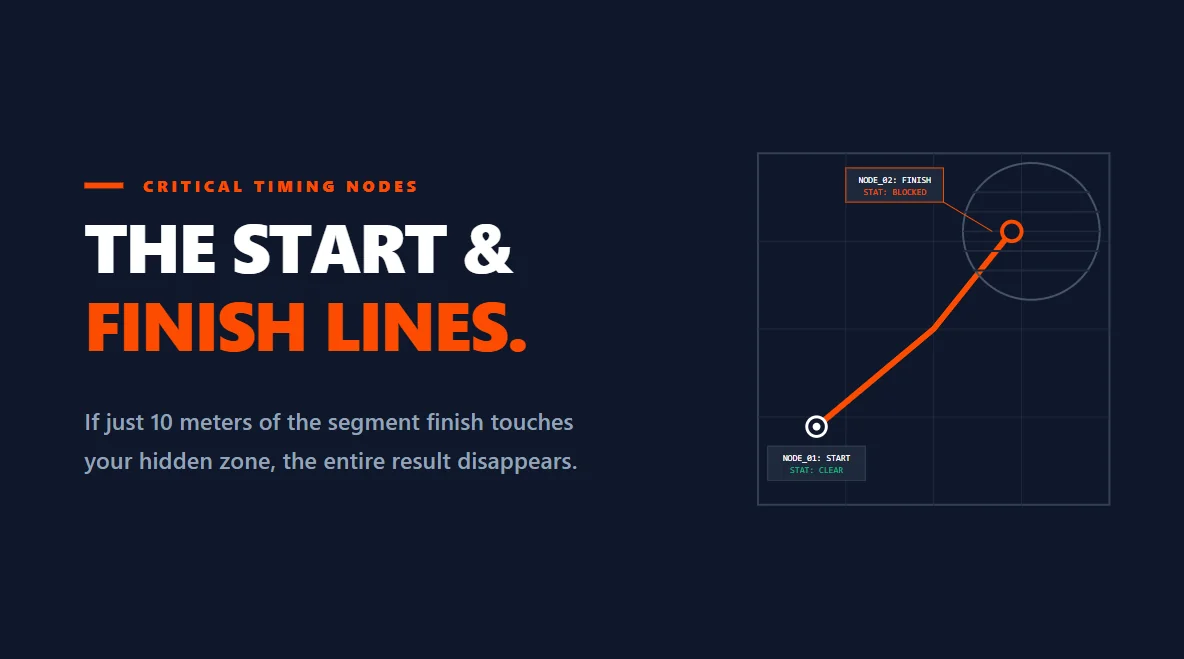
Strava is exceptionally strict when a segment starts or finishes inside a hidden section. A lot of athletes think, "Only 10 meters of the 5-kilometer climb is hidden, so it shouldn't matter." It matters a lot.
If the critical timing point (the exact start or finish node) touches your hidden zone, the entire public result disappears. Strava will not publish partial segment times to protect user safety.
How to Restore Segment Visibility Safely
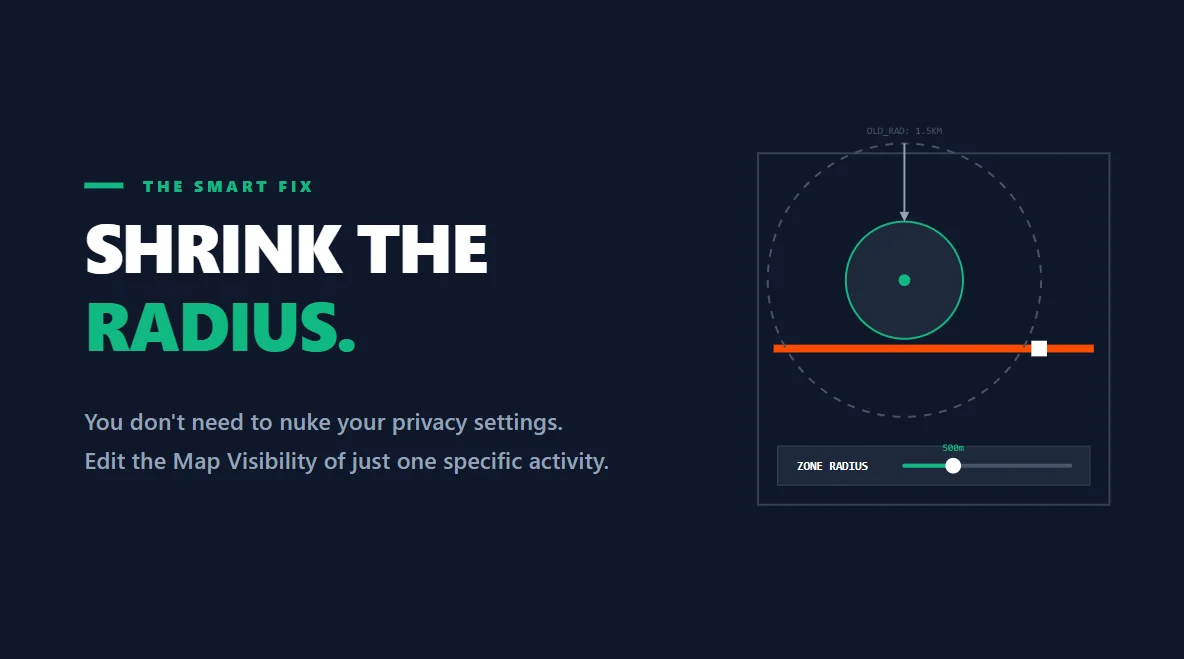
You do not need to panic and nuke all your privacy settings. Removing your Privacy Zone entirely is a lazy fix, and for anyone concerned about security, it is a bad one. The smarter move is to reduce the friction between your hidden area and the segment's timing points.
Step 1: Check the Activity's Privacy Setting
If your activity is set to "Followers" or "Only You," public leaderboard placement is permanently blocked, even if the segment matched perfectly. Change the activity to Everyone. This alone fixes 50% of the cases we see.
Step 2: Edit Map Visibility on the Specific Activity
Instead of changing your global account settings, open the specific activity on your phone. Go to "Edit Map Visibility" and adjust the hidden radius just for that one ride or run. This allows you to restore a massive PR while keeping your home protected on all other days.
The Psychology of the Leaderboard and Digital Authority
Why do athletes care so much about missing segments? Because on Strava, the leaderboard is not just data; it is digital authority. Taking a KOM (King of the Mountain) or landing in the top 10 is a public signal of your dedication and strength. Many athletes leverage this authority to build massive followings on YouTube or Instagram as fitness influencers.
However, if you are building a fitness brand on YouTube, having a fast 5K time isn't enough to get the algorithm to push your videos. To establish baseline channel authority and ensure their fitness content actually gets distributed, many smart creator-athletes buy YouTube subscribers from premium organic networks like Fameviso. This instant injection of social proof acts exactly like a Strava leaderboard rank: it signals to new viewers (and the algorithm) that you are an established, elite creator worth following. Authority drives distribution.
Final Diagnosis: It Is Probably Not Your GPS
If your PR vanished but your route line on the map still looks perfectly accurate, stop chasing phantom GPS problems. Stop deleting and re-uploading the same file five times.
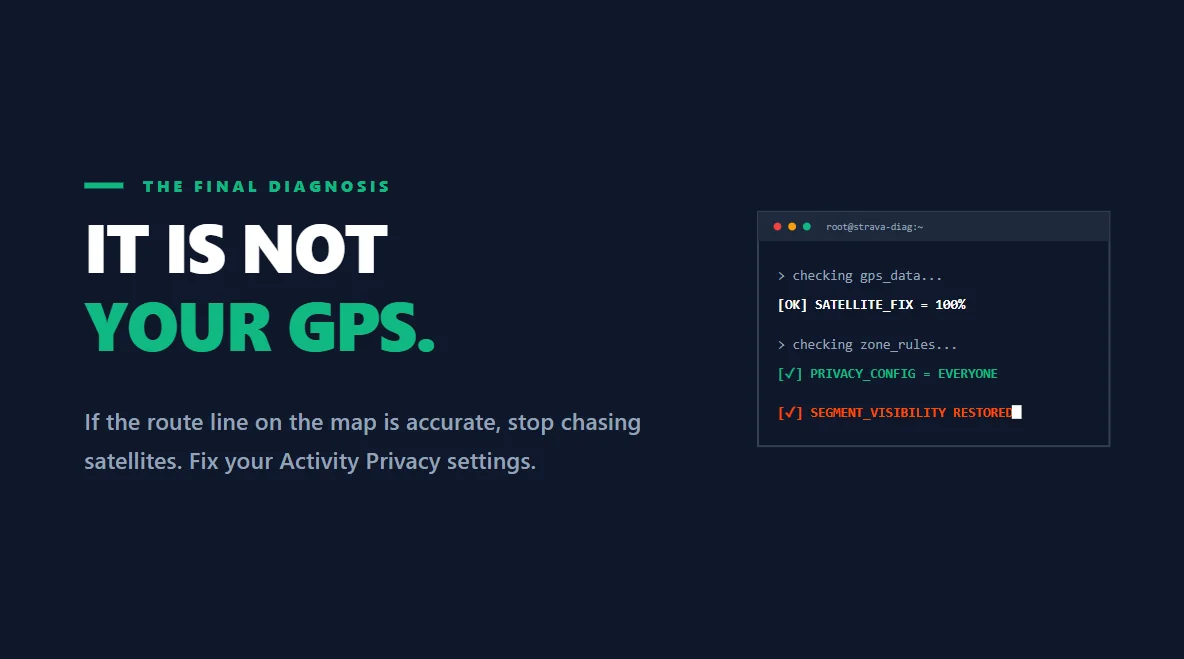
Start with Activity Privacy. Check your Map Visibility. Once you understand how Strava’s hidden zones overlap with segment timing nodes, restoring your hard-earned PR becomes a fast, painless process.