Build concentrated early engagement from real listeners within the crucial first 24 to 72 hours of your release.
Improve your Save Rate, lower your Skip Rate, and drive repeat listens instead of chasing empty, bot-inflated stream counts.
Avoid cheap bot panels at all costs; they destroy your algorithmic trust and lead to shadowbans.
Use trusted, organic Spotify promotion services (like FameViso) that deliver real human listeners to safely trigger algorithmic playlists.
Independent artists hear the exact same terrible advice every single week: buy cheap bot streams, pay for pitch placements on shady bot playlists, fake your momentum, and hope Spotify mistakes your artificial noise for genuine traction. That shortcut burns careers.
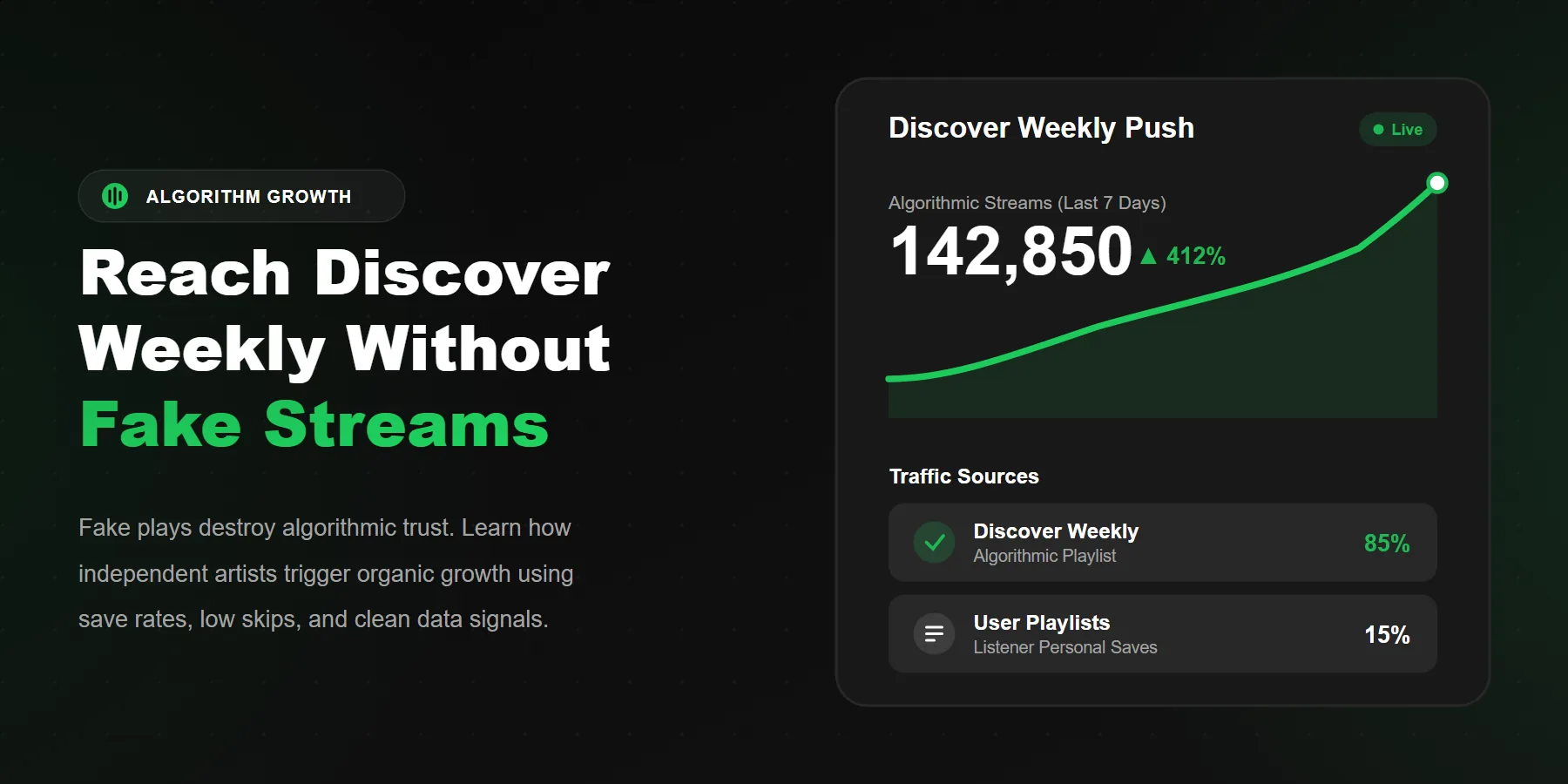
If your ultimate goal is hitting Discover Weekly or Release Radar, you need clean data signals, real listeners, and a release strategy built for algorithmic retention, not vanity screenshots.
Quick answer: To reach Discover Weekly safely in 2026, independent musicians must secure strong first-week listener quality, high Save Rates, low Skip Rates (especially in the first 30 seconds), and avoid bot panels at all costs. The algorithm triggers only when a song gets concentrated engagement from real listeners—which is why smart artists invest in authentic, premium promotion rather than fake numbers.
Why Fake Streams Guarantee Algorithmic Failure
We have seen this catastrophic pattern too many times. An artist buys 20,000 cheap streams from a random panel for their new single. The play count spikes for three days, yet the Save Count stays at absolute zero, follower growth is flatline, and absolutely nobody returns to listen to the rest of the catalog. That is not growth. That is digital camouflage.
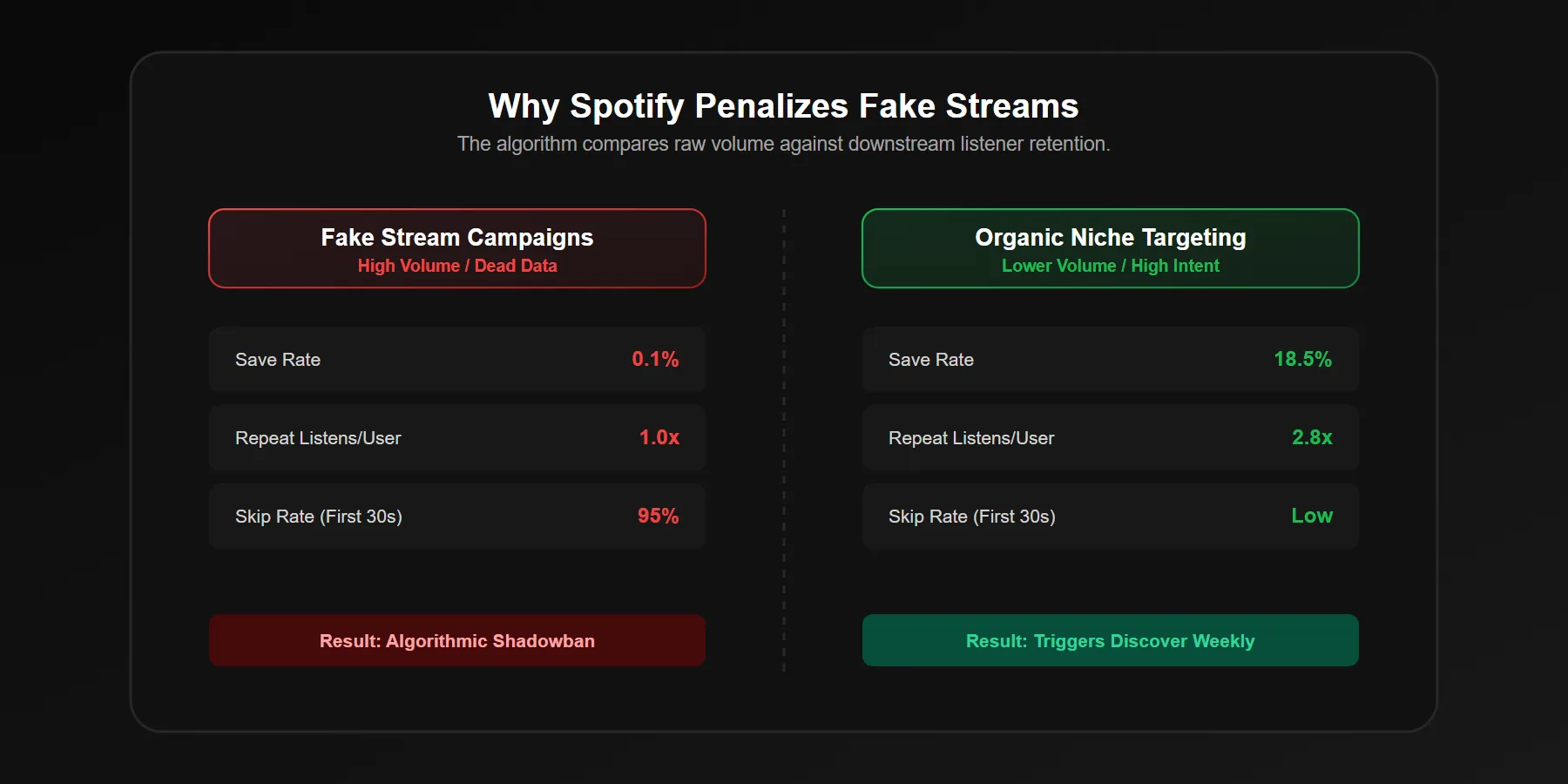
Spotify's machine learning is infinitely smarter than a $5 bot script. The platform constantly compares your raw stream volume against downstream listener behavior. If your numbers look loud but the listener actions look dead, the campaign creates friction instead of momentum. Bad traffic teaches the platform the exact wrong lesson about your music, often resulting in a shadowban.
What Suspicious Traffic Actually Looks Like to Spotify
Fake traffic leaves a very obvious, undeniable footprint in your Spotify for Artists dashboard. It often comes with shallow listening depth, bizarre geographies (spikes from random cities), zero profile visits, and almost zero user playlist adds.
| Algorithmic Signal | Healthy Release Pattern (Real Humans) | Risky Artificial Pattern (Bots) |
|---|---|---|
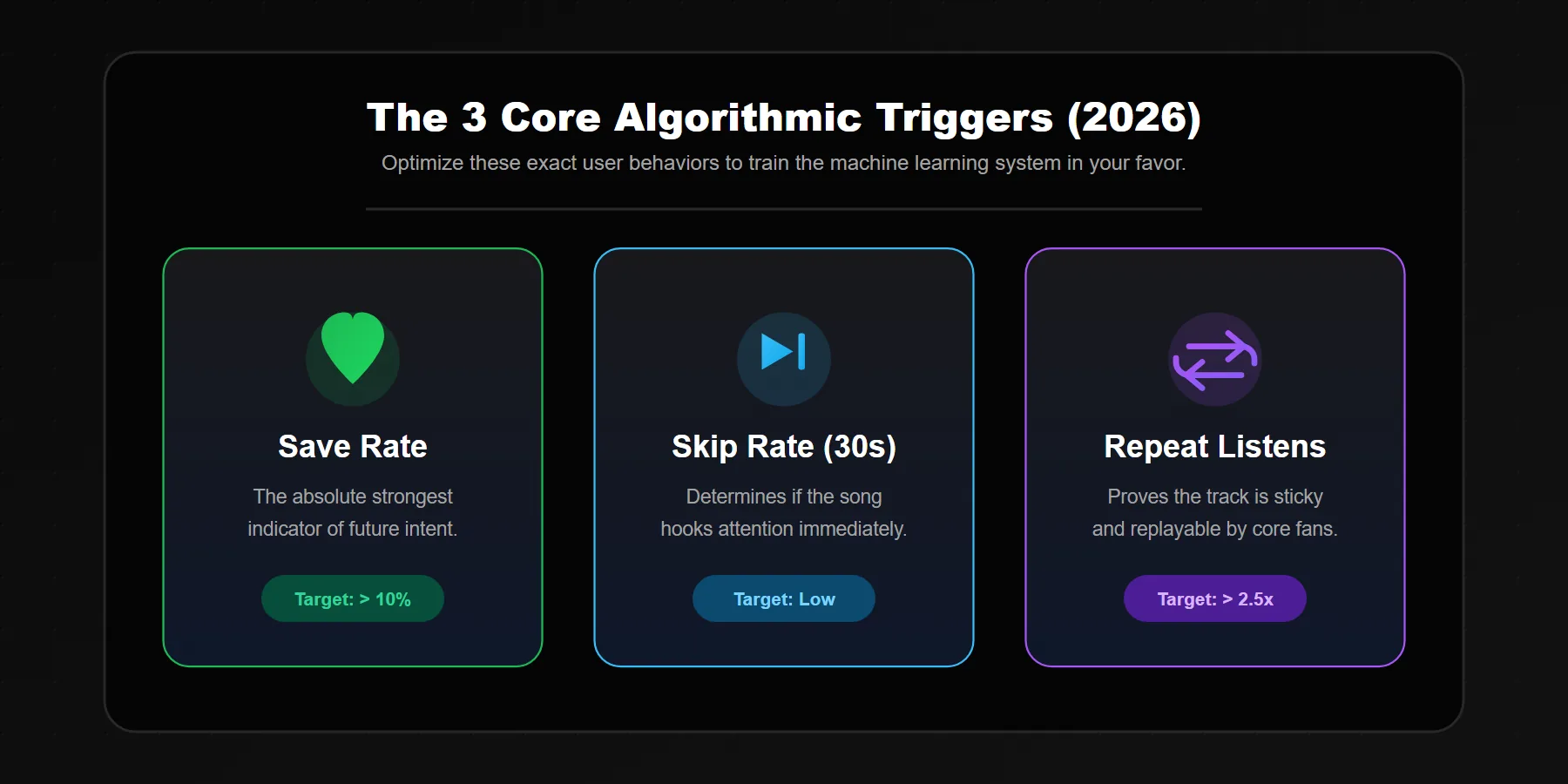
| Save Rate | Strong (10%+) and steady after launch. | Less than 1% compared to total streams. |
| Skip Rate (First 30s) | Moderate to low. Listeners stay engaged. | Abnormally high, or suspiciously exactly zero. |
| Repeat Listens | 2.5+ listens per listener among core fans. | Exactly 1 listen per user, never returning. |
| Playlist Adds | Organic growth in user-generated playlists. | Zero adds despite massive stream counts. |
| Audience Geography | Matches your genre and promotion strategy. | Random global spikes with no cultural connection. |
What the Spotify Algorithm Actually Wants in 2026
Forget the industry myths. Spotify is simply trying to answer one mathematical question: When this specific song reaches a certain type of listener, do they enjoy it enough to stay on our app?
That is exactly why listener quality heavily beats listener quantity for independent releases. A song with 5,000 real streams and a 20% Save Rate will absolutely destroy a song with 50,000 bot streams and a 1% Save Rate in the algorithmic race.
The 5 Core Signals That Trigger the Algorithm
- Save Rate: The absolute clearest sign that a track has lasting emotional value to a user.
- Repeat Listens (Streams/Listener): Tells Spotify the song deserves another spin and should be pushed to similar users.
- Completion Rate (Low Skip Rate): Extremely critical in the opening 15-30 seconds. If they skip early, the algorithm stops testing the song.
- User Playlist Adds: Indicates deep personal relevance and guarantees future passive streams.
- Profile Actions: Profile visits, follows, and catalog exploration validate that the listener actually cares about the artist.
What About Promotion Agencies? (The Secret to Safe Growth)
This is where independent artists get deeply confused. Not all promotion is bad. Bot promotion is bad. Legitimate, targeted promotion using real human listeners is exactly how major labels break new artists every single day.
If you buy $5 bot streams, your skip rate will skyrocket, your save rate will flatline, and Spotify will flag your account. But if you invest in a premium network of real listeners, you feed the algorithm exactly the fuel it needs to push you organically.
Your 2026 Release Week Playbook
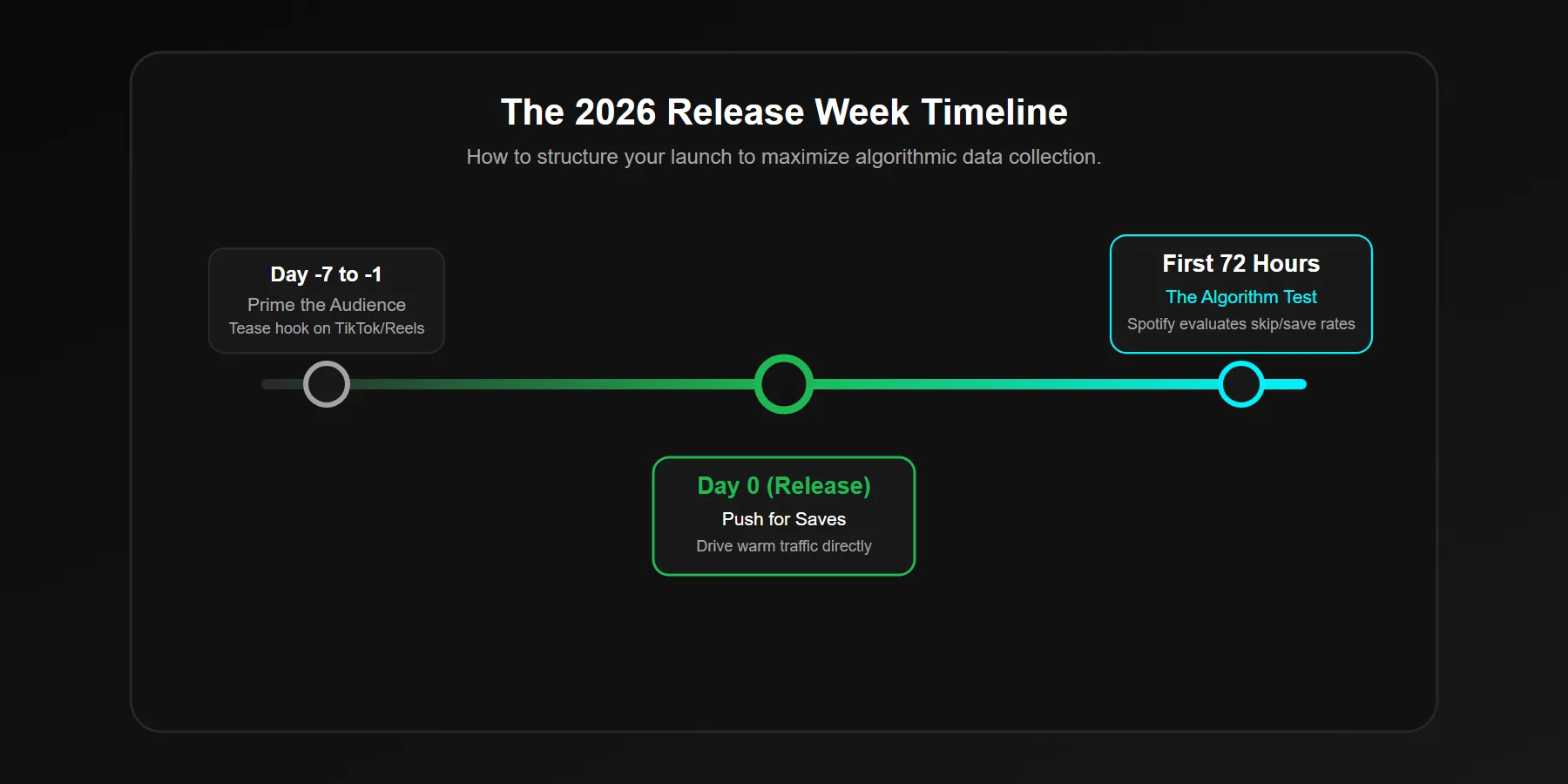
You do not need a million-dollar major label rollout. You need execution discipline. Partnering a strong song with a high-quality, real promotional campaign is how you win the first 72 hours.
Step 1: Prime the Audience Before Release Day
Warm your listeners up before the song drops. Tease the hook on TikTok/Reels. Share the story behind the lyrics. When release day arrives, your crucial first plays should not come from cold, skeptical traffic.
Step 2: Push Listeners Toward "Saves", Not Just Passive Plays
Stop begging for streams on your Instagram Story. Instead, ask your core audience to Save the song, add it to their personal driving/gym playlist, or send it to a friend. Those high-friction actions carry vastly more algorithmic weight than empty volume.
Step 3: Supercharge with Authentic Promotion
Once your organic fans are engaged, inject high-quality traffic into the track. By utilizing FameViso's real Spotify streaming and save packages during your launch week, you create the ultimate "Algorithmic Spike." Real streams mixed with high save rates signal to Spotify that your track is trending, forcing the algorithm to put you into Release Radar and Discover Weekly.
Why Niche Positioning Beats Generic Promotion
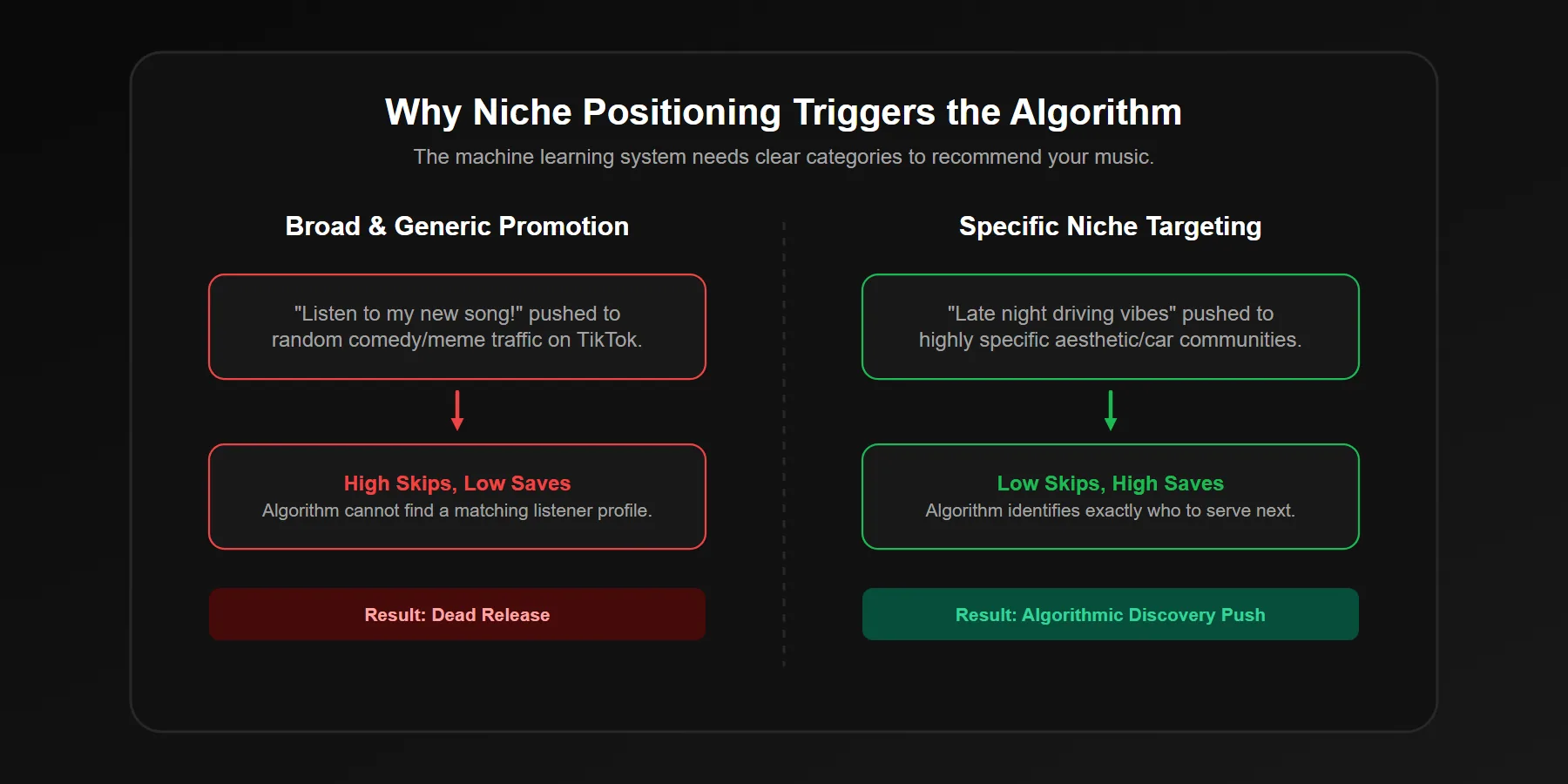
Many independent artists sabotage their own growth by trying to appeal to absolutely everyone. Spotify's AI works best when it can place your song inside a highly believable, specific listening context.
A track that clearly belongs to "indie folk heartbreak," "melodic house night-drive," or "rage rap gym" playlists stands a significantly better chance of triggering algorithmic growth than a song marketed with vague language to a random, general audience. Specificity wins.
Why Some Great Songs Still Miss Discover Weekly
Because audio quality alone is not enough. A brilliant song with a slow 40-second intro, zero promotional budget, or the wrong first audience will underperform. We have seen incredible records stall simply because the artist launched them like an afterthought and refused to invest in safe, real promotion.
The algorithm is not judging your soul or your talent. It is reading user behavior. That can feel brutal, but it is also highly useful because behavior can be optimized and safely scaled with the right partner.
The Long Game: Building Algorithmic Trust
Discover Weekly is not just a lucky playlist placement. It is a byproduct of algorithmic trust. Spotify needs repeated, undeniable evidence that your music satisfies listeners. That evidence compounds release by release.
So stay clean. Stay highly specific. Do not buy bots. Instead, invest in your career by using trusted, 100% real promotional campaigns that feed the machine learning system what it actually wants. That is how you win the Spotify algorithm in 2026.