Write a headline that states what you do, who you help, and the result you create.
Treat your About section like a landing page, not a mini autobiography.
Use Featured, proof assets, and clear CTAs so recruiters and buyers know the next step fast.
Align your profile photo, banner, job titles, and content with one obvious niche.
Post small, useful proof consistently so your profile converts profile visits into real conversations.
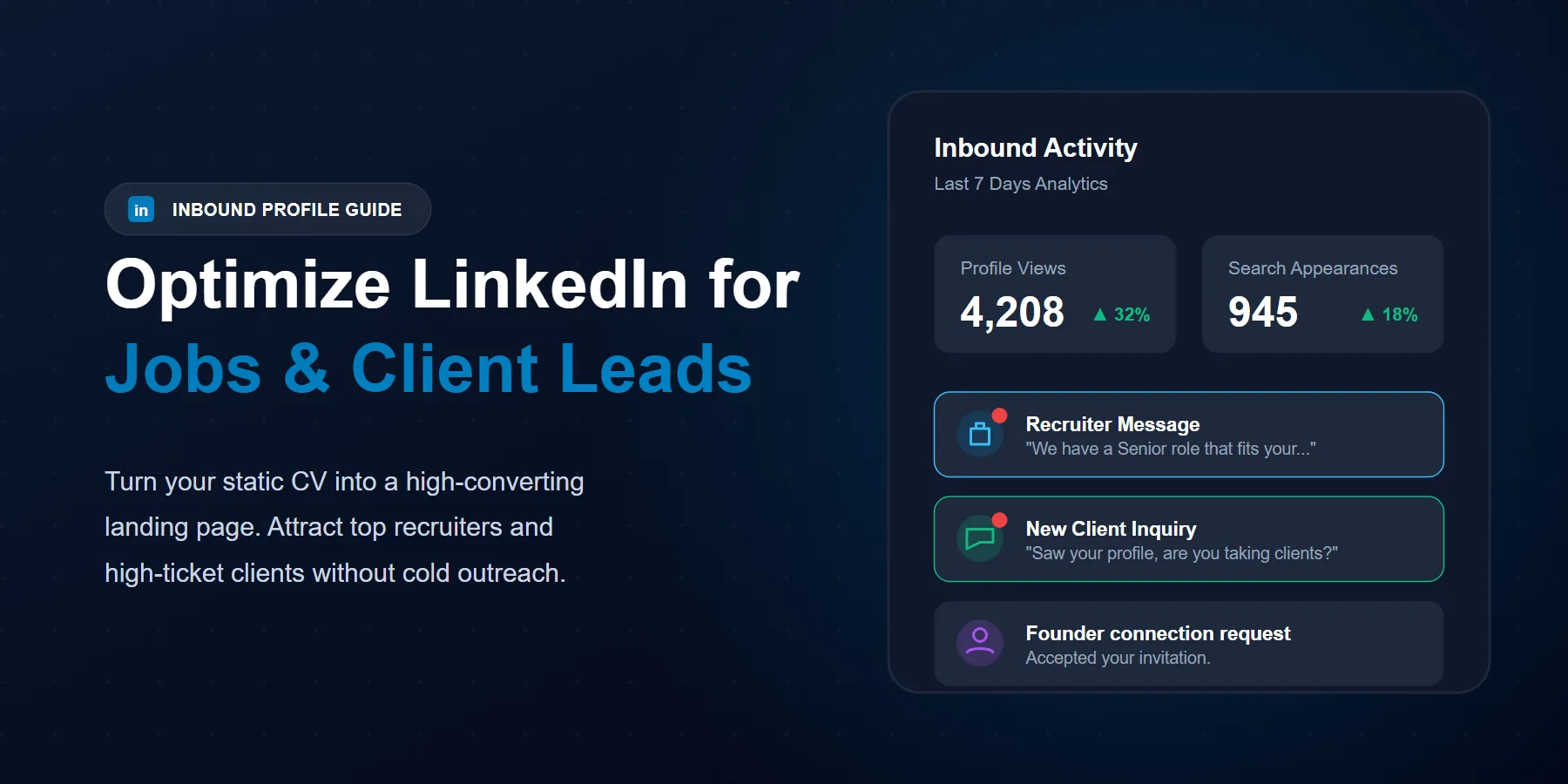
Most professionals still treat LinkedIn like a static, digital CV. That is a massive career mistake. In 2026, a high-converting LinkedIn profile should work like a personal landing page that sells your credibility in seconds, attracts top-tier recruiters without you having to beg for interviews, and makes high-ticket clients feel safe enough to message you before they ever ask for a proposal.
Quick answer: If you want LinkedIn to bring you inbound jobs and client offers without sending a CV first, you need five elements working together: a clear benefit-driven headline, a proof-heavy About section, a trust-building visual identity, visible case-study assets, and a profile structure that tells visitors exactly what you do, who you help, and what to do next.
Why Most LinkedIn Profiles Fail to Convert Traffic
They are vague. They read like recycled corporate filler. They hide the most important value behind generic buzzwords like “motivated,” “results-oriented,” and “passionate professional.” Nobody buys that anymore; neither algorithms nor human recruiters.
In our experience reviewing growth-focused profiles, the biggest leak is simple: the visitor cannot tell what the person actually does in under five seconds. When that happens, the click dies there. No follow. No DM. No interview invite.
What Should a LinkedIn Visitor Understand in 10 Seconds?
Think like a buyer. Think like a hiring manager. They have 50 other tabs open. They need instant clarity on your role, niche, credibility, and the next step.
- What do you do? (The Skill)
- Who do you help? (The Audience)
- What outcome do you create? (The ROI)
- Why should anyone trust you? (The Proof)
- How can they contact you? (The CTA)
If your current profile does not answer those five questions immediately, it is not optimized. It is just taking up server space.
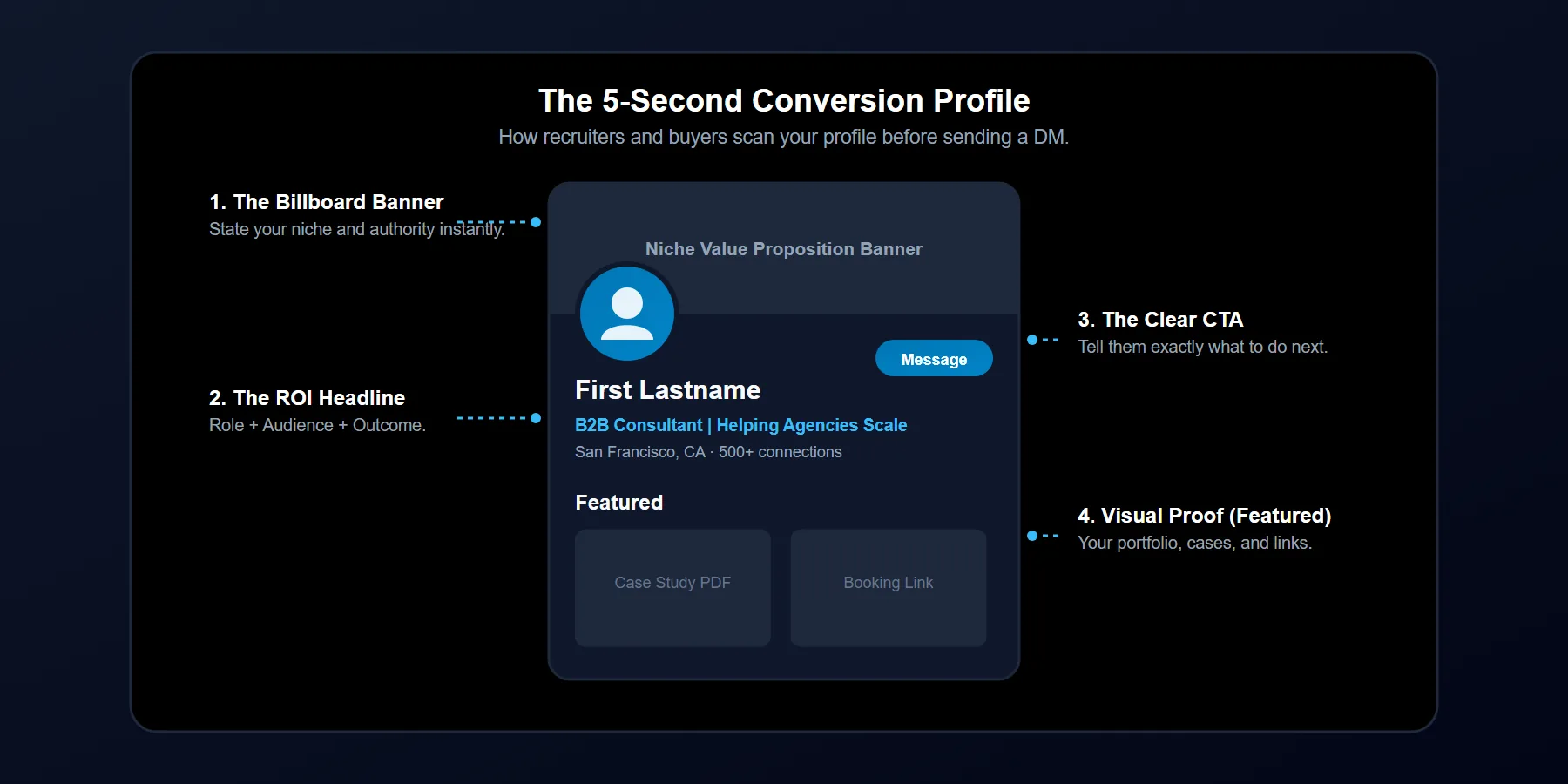
Start With the Headline: This is Your Hook
Your headline is not a place to sound fancy or abstract. It is a place to sound highly useful. The winning 2026 formula is simple: What you do + Who you help + The result you deliver.
| Profile Element | The Weak Version (Avoid) | The High-Converting Version (Use) |
|---|---|---|
| Headline | Consultant | Freelancer | Entrepreneur | B2B Lead Gen Consultant | Helps agencies book 10+ calls a month from LinkedIn |
| About Opening | I am a hardworking professional with years of experience... | I help SaaS teams turn underperforming LinkedIn profiles into inbound deal channels. |
| Call to Action (CTA) | Feel free to connect with me! | Want more recruiter replies or client inquiries? Message me the word PROFILE. |
| Featured Section | (Left completely empty) | Portfolio PDF, client video testimonials, results screenshots, Calendly booking link. |
| Banner Image | Default grey pattern or random city skyline | Clear positioning statement, social proof logos, and a niche promise. |
How Should You Write the About Section?
Write it like a sales page, not a biography. The first two lines must explain your massive value before the “See more” cutoff truncates your text.
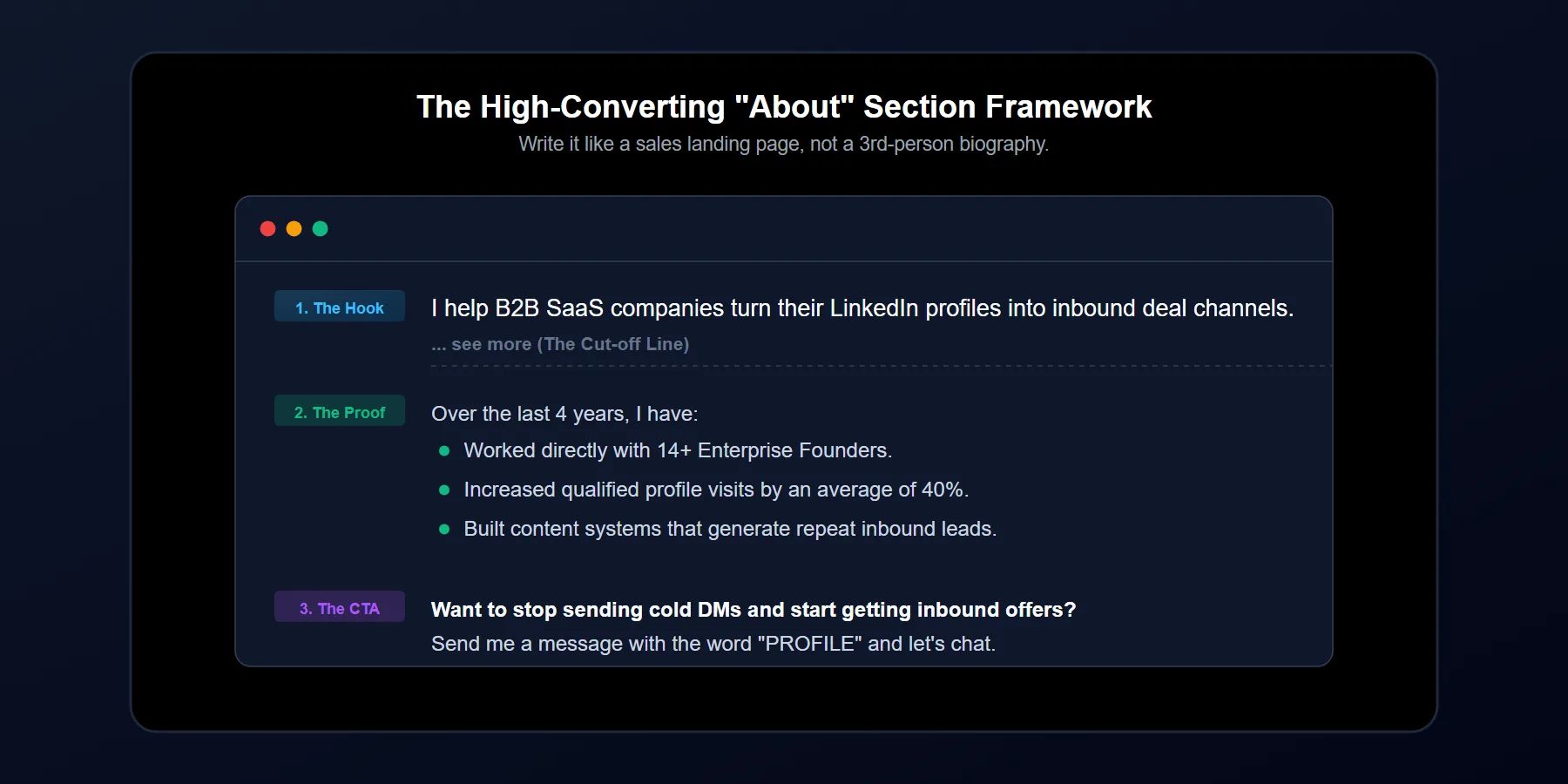
Use this proven structure:
- Line 1: What you do in plain, jargon-free English.
- Line 2: Who you help and what exact result they get.
- Paragraph 2: Proof, methodology, or mini case studies.
- Paragraph 3: What kinds of opportunities you are actively open to.
- Last line: One simple, frictionless Call to Action (CTA).
Then add proof. Numbers help. So do specifics. “Worked with 14 B2B service brands,” or “built content systems that generated 30% more inbound leads” sounds alive. Generic self-praise does not.
Why Visual Packaging Matters More Than People Admit
People claim skills matter more than visuals. True in theory. False in first impressions. On LinkedIn, your photo, banner, and overall visual consistency create a trust signal before a single word of your copy is read.
Use a clean profile photo with direct eye contact, natural lighting, and a calm, uncluttered background. Your banner should not be empty unless you are a globally recognized CEO. It should reinforce your positioning with one short, sharp statement.
What Recruiters and Clients Actually Scan
They do not read every line equally. They jump between the same trust points again and again.
| What They Check | What They Want to See | What Instantly Kills Trust |
|---|---|---|
| Photo and Banner | Professional, clear, relevant identity. | Low-quality image, mixed branding, blank banner. |
| Headline | Clear expertise and business use case. | Buzzwords (Ninja, Guru) without a real offer. |
| About Section | Specific value and real-world proof. | A 3rd-person biography with no outcomes. |
| Experience | Results, scope, and metric relevance. | Task lists copy-pasted from a job description. |
| Featured | Portfolio, testimonials, assets, proof. | Empty section or broken, irrelevant links. |
How to Make Your Experience Section Work Harder
Most people waste the Experience section by listing daily duties. Duties do not sell. Outcomes do.
Instead of “Managed social media accounts,” write “Built content calendars and audience positioning that improved inbound message quality and increased qualified profile visits by 40%.” Even when you cannot share exact proprietary numbers, you can still describe the type of business change you created.
Should You Use the Featured Section? Absolutely.
This is one of the most underused conversion zones on the entire LinkedIn platform. It can do the work of a portfolio, a case-study shelf, and a trust booster all in one highly visible place.
Add your best assets only. A polished PDF portfolio. A top-performing viral post. A video client testimonial. A Calendly booking link. A free mini-audit offer. Pick whatever closes doubt the fastest for your specific niche.
How Can Content Help You Get Offers Without a CV?
Content creates pre-sold trust. That is its real power. When a director or founder lands on your profile and sees highly useful posts tied to one specific niche, they assume you know what you are doing before the conversation even starts.
You do not need to post every day. You need to post with a recognizable pattern. Share industry breakdowns, client lessons, contrarian takes, before-and-after analyses, mistakes you fixed, and simple frameworks people can save.
Why Niche Clarity Beats "I Can Do Everything" Energy
Generalists often get admired but completely ignored. People respect wide skill sets, but they contact specialists faster because specialists feel much safer to hire.
You do not need to trap yourself forever in one niche. You just need a profile that points clearly enough for the right people to self-select today. Broad foundational skill + Sharp public positioning. That is the combination that wins in 2026.
Your 2026 Profile Action Plan
Do not “improve your LinkedIn” in a vague way this week. Fix the highest-leverage pieces first:
- Rewrite your headline using the Role + Audience + Result framework.
- Replace your blank banner with a niche-based positioning line.
- Rewrite the first 260 characters of your About section to hook the reader.
- Add 3 strong proof assets to your Featured section.
- Rewrite your Experience bullets around business outcomes, not daily duties.
Final Takeaway
You do not need to chase every opportunity manually and send out 500 cold CVs. Build a profile that sells the next step for you. That is the ultimate goal.
When your LinkedIn profile clearly states what you do, proves you can actually do it, and makes the next action obvious, recruiters stop asking “Who are you?” and start asking “Are you available?” Clients do the exact same thing. That is how your profile becomes your pitch.