Warm up a new channel before publishing aggressively so YouTube reads it as a real user account, not a disposable spam profile.
The first three seconds decide more than most creators want to admit. If viewers swipe early, distribution dies early.
AI can help with ideation and scripting, but lazy robotic execution kills retention and makes content feel disposable.
Consistency matters more than instant validation. Many channels look dead for weeks before the algorithm finally starts trusting them.
A direct subscribe call to action can materially increase conversion when the video already earned attention and trust.
YouTube Shorts created one of the biggest growth myths in creator culture. Post three videos a day, let AI do the work, and money starts printing. That fantasy sells courses. It does not prepare anyone for the reality of building a channel from zero.
Quick answer: To grow on YouTube Shorts from scratch in 2026, you need to warm up the channel like a real user, earn strong retention in the first few seconds, publish consistently for long enough to build trust, avoid robotic AI-style execution, and actively convert viewers into subscribers with clear calls to action.
Why most new Shorts channels die before they even start
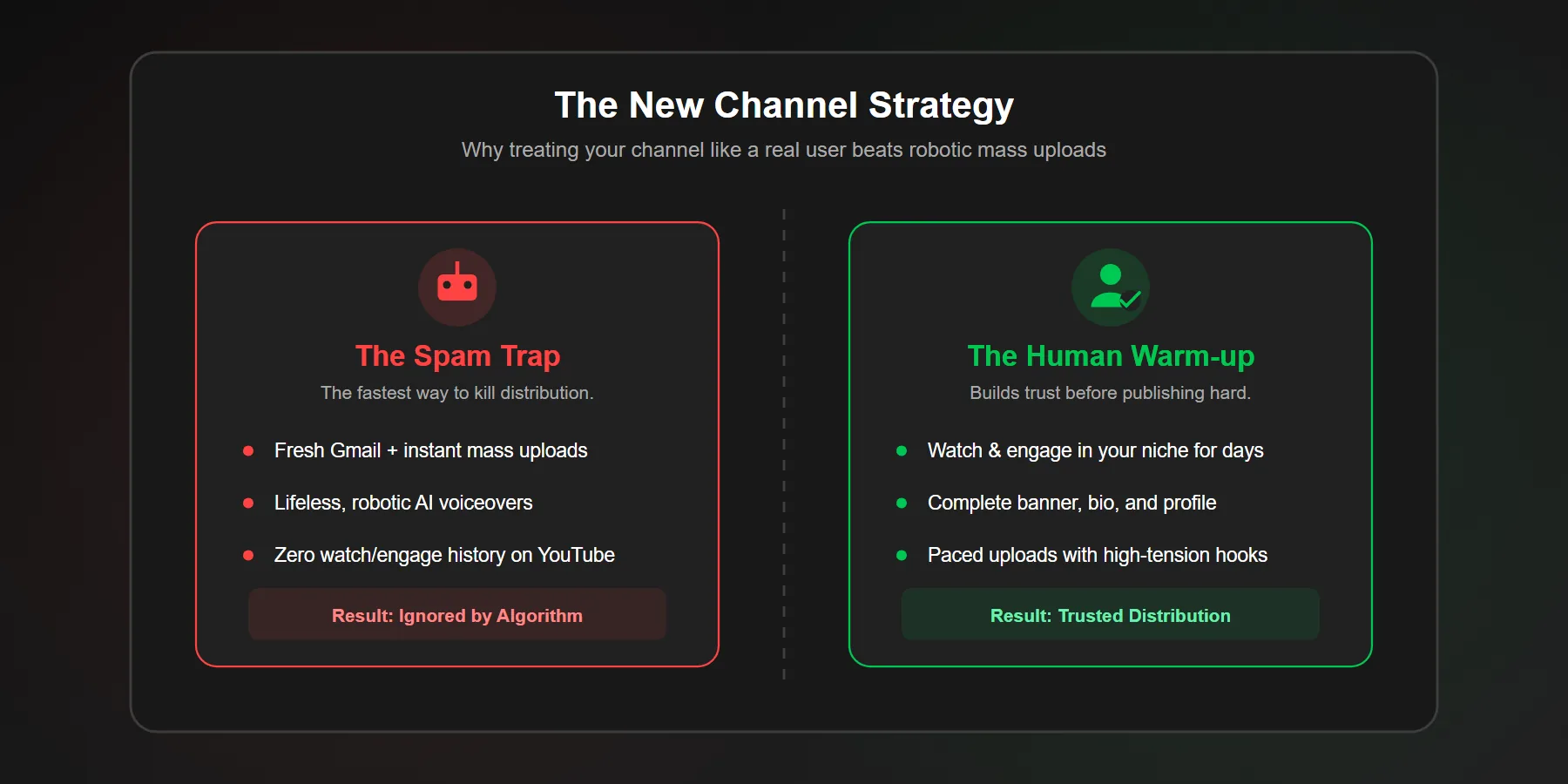
New creators usually fail before the content itself gets a fair shot. They open a fresh Gmail, create a channel, upload several videos the same day, and expect the platform to treat that account like a trusted creator profile. It does not work that way.
From the system's point of view, that behavior can look synthetic. Disposable account. Fast setup. Burst uploads. Low trust.
Warm up the channel before you publish hard
This is one of the most underrated early-stage tactics. Before you go into full publishing mode, use the account like a real person.
Watch, like, comment, and train your feed
Spend the first few days watching content in your niche. Like videos. Leave a few natural comments. Subscribe to relevant channels. Let the platform understand what audience cluster your account belongs to.
When your feed starts looking like your niche, that is a good sign. It means the system has more context about who you are and what type of viewers your content may belong to.
Complete your profile properly
Fill out the channel basics. Banner. Profile image. Description. Links if relevant. Empty channels feel temporary. Complete channels feel intentional.
The AI trap that ruins Shorts performance
AI is not the enemy. Lifeless content is.
YouTube does not punish content because it involved AI. It punishes content because viewers do not care enough to stay. That difference matters.
What bad AI content looks like
A weak script. Robotic narration. Generic stock clips. Flat pacing. No emotion. No point of view. No tension.
This is where many creators lose the room. They mistake production speed for viewer value.
What actually works
Use AI for support, not substitution. Brainstorm ideas faster. Tighten structure. Generate variations. But the final piece still needs a human angle, stronger curiosity, emotional pull, and better timing.
Instead of saying something flat like “Cats have four legs and meow,” frame it as a tension-driven question such as “Why do cats insist on bringing their prey to your bed?” One version informs. The other creates a reason to stay.
The 10-person test: why your Short dies instantly
This is where the math gets brutal. Many creators believe the algorithm is ignoring them. Often the opposite is true. The system did test the video. The test just went badly.
When a Short is uploaded, YouTube may first show it to a small sample of viewers. If too many people swipe away in the first few seconds, distribution can collapse almost immediately.
Retention is not a bonus metric. It is survival.
If 8 out of 10 viewers swipe in the first three to five seconds, the platform learns one hard lesson: this video does not hold attention. Once that signal becomes clear, wider reach becomes much less likely.
That is why creators can make a “good” video and still get bad results. The idea may be strong. The opening may be weak.
| First Impression Element | What Viewers Feel | Likely Result |
|---|---|---|
| Slow intro | “This is taking too long” | Fast swipe, weak distribution |
| Strong hook | “Wait, what is this?” | Higher retention, more testing |
| Confusing visuals | “I do not get it” | Low watch time |
| Clear tension and payoff | “I want the answer” | Better completion rate |
How to fix the first three seconds
This is where real Shorts channels separate themselves from hopeful hobby uploads. The opening must grab attention fast, but it cannot feel fake, forced, or misleading.
Start with a curiosity trigger
Use tension. Surprise. A weird fact. A bold claim. A hidden mistake. A visual pattern break. The goal is to make the viewer hesitate before swiping.
Show movement early
Static openings kill momentum. Even if your idea is strong, viewers read stillness as low energy. Movement, expression, and change buy you time.
Promise a payoff
Give the viewer a reason to stay until the end. Not with empty clickbait. With a clear reward.
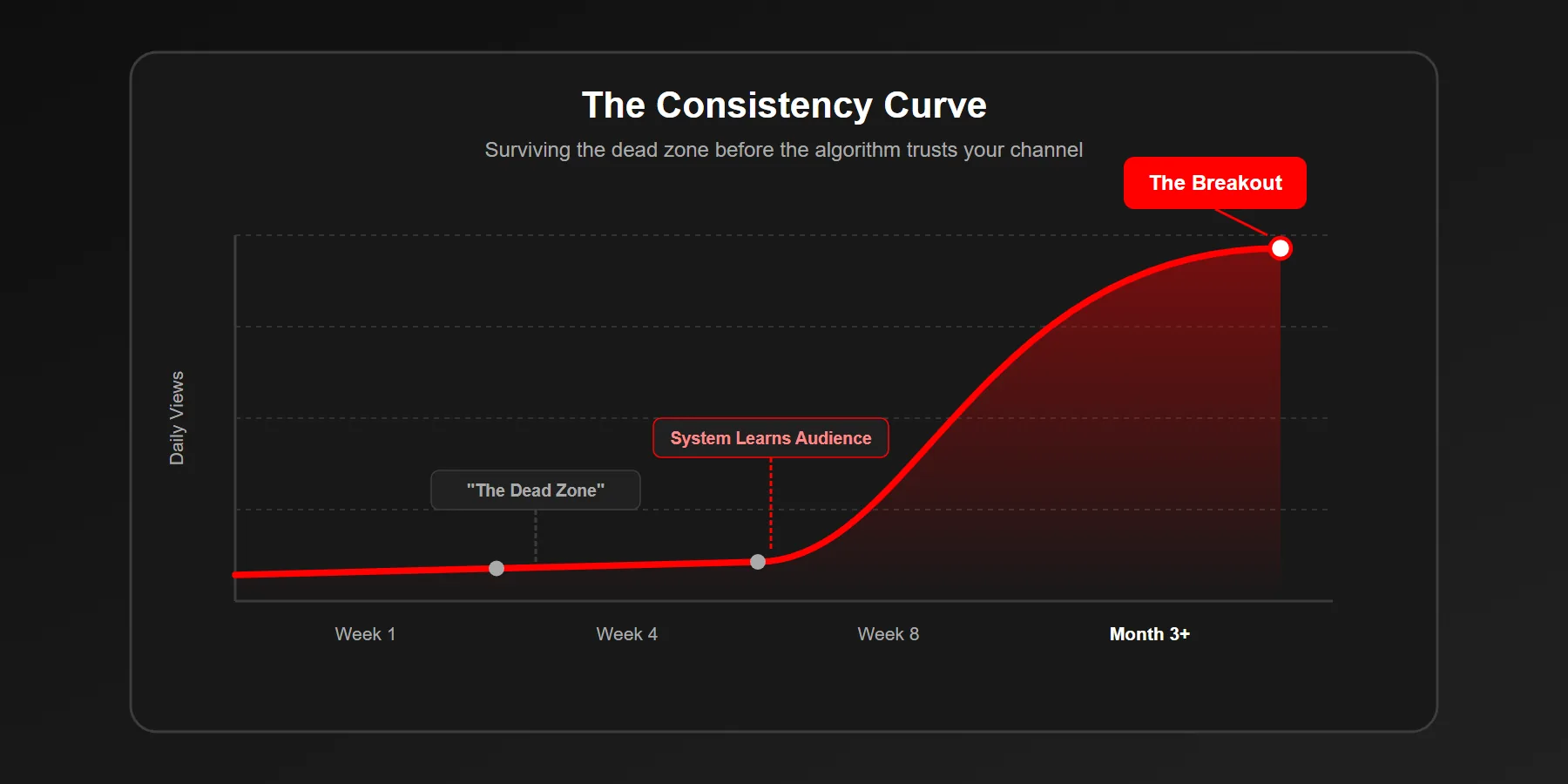
Consistency is the part most creators cannot survive
This is where the dropout rate becomes extreme. Many channels quit after a few weeks because the numbers look insulting. Fifty views. Eighty views. Maybe a hundred. It feels pointless.
But some of the most dramatic Shorts breakouts follow a long dead zone. We have seen creators post almost daily for two months while the channel barely moved, then suddenly cross a trust threshold and hit massive acceleration inside a single month.
Why consistency changes the game
Consistency does two things at once. It trains you, and it trains the system. You improve your hooks, pacing, editing, and topic instincts while the platform collects more data about your content and audience fit.
That is why early patience is not motivational fluff. It is a structural advantage.
| Publishing Phase | What It Feels Like | What Is Actually Happening |
|---|---|---|
| Weeks 1-2 | Nothing works | The channel has little trust and weak audience data |
| Weeks 3-8 | Slow, frustrating progress | The system is learning viewer fit and content patterns |
| Month 3+ | Possible breakout window | Good retention plus consistency can trigger wider distribution |
Should you upload from desktop instead of mobile?
Sometimes, yes. Mobile publishing is convenient, but it can also make creators sloppy. Metadata gets rushed. Titles get weaker. Tagging and organization are often treated as an afterthought.
Desktop uploads can create a more disciplined workflow. Better file naming. Better packaging. Fewer avoidable mistakes.
Does SEO matter for Shorts?
Not in the same way it matters for long-form search content, but clarity still matters. A clean title, relevant keywords, and a coherent upload setup help the platform understand the content more cleanly.
How to get more subscribers from Shorts
A lot of creators focus only on views. Then one day they notice a strange problem: the channel is getting watched, but subscriber growth is weak. That is not always an algorithm issue. Sometimes it is a conversion issue.
Ask people to subscribe
This sounds too simple, which is exactly why people skip it. A clear visual or spoken call to action can materially improve subscriber conversion.
People enjoy the video and move on. That is their default behavior. A small reminder interrupts that pattern just enough to create action.
What creators get wrong about “quality” on Shorts
Many people say, “My video is high quality, but it still flopped.” Usually they mean it looked polished. Polish is not the same thing as audience fit.
A Short can have clean captions, expensive editing, and strong visuals and still fail if the idea is cold, the hook is weak, or the pacing gives viewers permission to leave.
Why does this strategy work in 2026?
Because the modern Shorts ecosystem rewards attention capture, retention, consistency, and repeat audience understanding more than surface-level effort. The channels that grow are not just “posting more.” They are reducing friction at every stage of the viewer experience.
That means better openings. Stronger narrative pull. Cleaner identity signals. More patient publishing. Smarter conversion.
Final takeaway
If you want to grow on YouTube Shorts from zero, stop chasing fantasy shortcuts. Warm up the channel. Make the opening impossible to ignore. Publish long enough for the system to trust your pattern. Use AI as support, not as a soul replacement. Then ask viewers to subscribe when you have earned their attention.
That is the real playbook. Not magic. Not luck. Just better signals, better execution, and more patience than most people are willing to invest.