Do not expect Twitch alone to discover you. Use clips and short-form content as a funnel from TikTok, Reels, and Shorts.
Your stream package matters: audio, pacing, title clarity, and on-screen energy often beat raw game skill.
Giveaways can create temporary spikes, but they rarely build a loyal community that returns when the free item is gone.
Viewer bots are not a shortcut. They damage trust, distort your analytics, and can destroy a channel you spent months building.
The best early collaborations usually happen with streamers at your level or slightly above it through raids, shared moments, and mutual visibility.
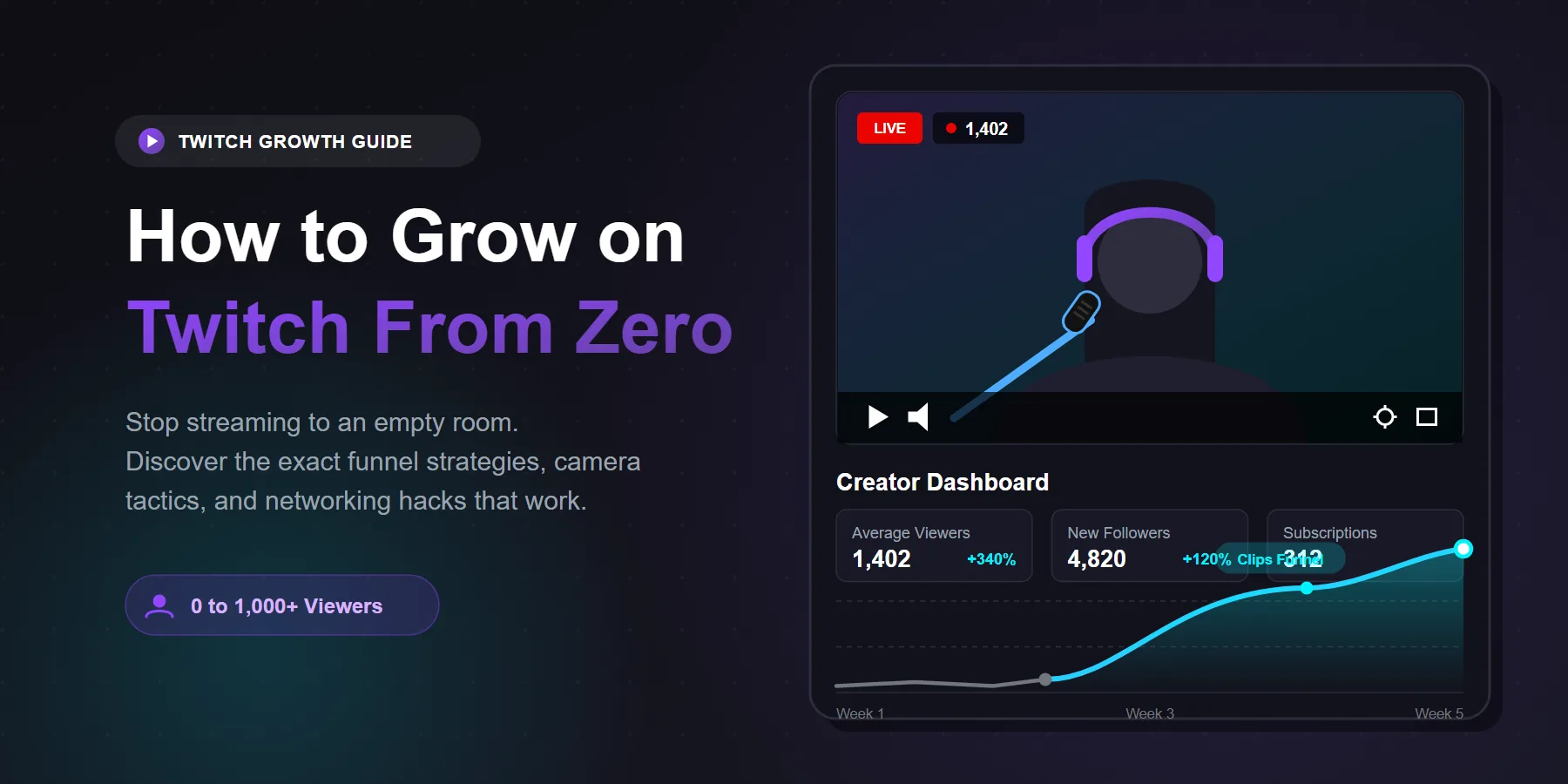
Starting on Twitch feels exciting for about a week. Then reality hits. You go live, the game looks good, the overlay is clean enough, and the viewer count sits there like a personal insult. If you already reached Affiliate and expected momentum to appear on its own, you are not alone. Most small streamers hit this wall.
Quick answer: If you want to grow on Twitch from zero, stop treating Twitch as the entire growth engine. Use short-form content as a funnel, improve your on-stream package, make your reactions easier to connect with, avoid artificial spikes like bots, and build repeat exposure through raids, clips, and creator relationships.
Why Twitch growth feels brutally slow at the start
Twitch is one of the hardest platforms to grow on when nobody already knows your name. That is the uncomfortable truth. Discovery inside the platform is weak for very small channels because viewers naturally click streams that already look active, alive, and socially validated.
That means new streamers do not just compete on content quality. They compete on appearance, momentum, and trust signals. When your stream looks empty, people leave before they discover whether you are actually entertaining.
The most effective strategy: social media synchronization
This is where most realistic Twitch growth begins. Not on Twitch itself. On the platforms that are better at pushing content to strangers.
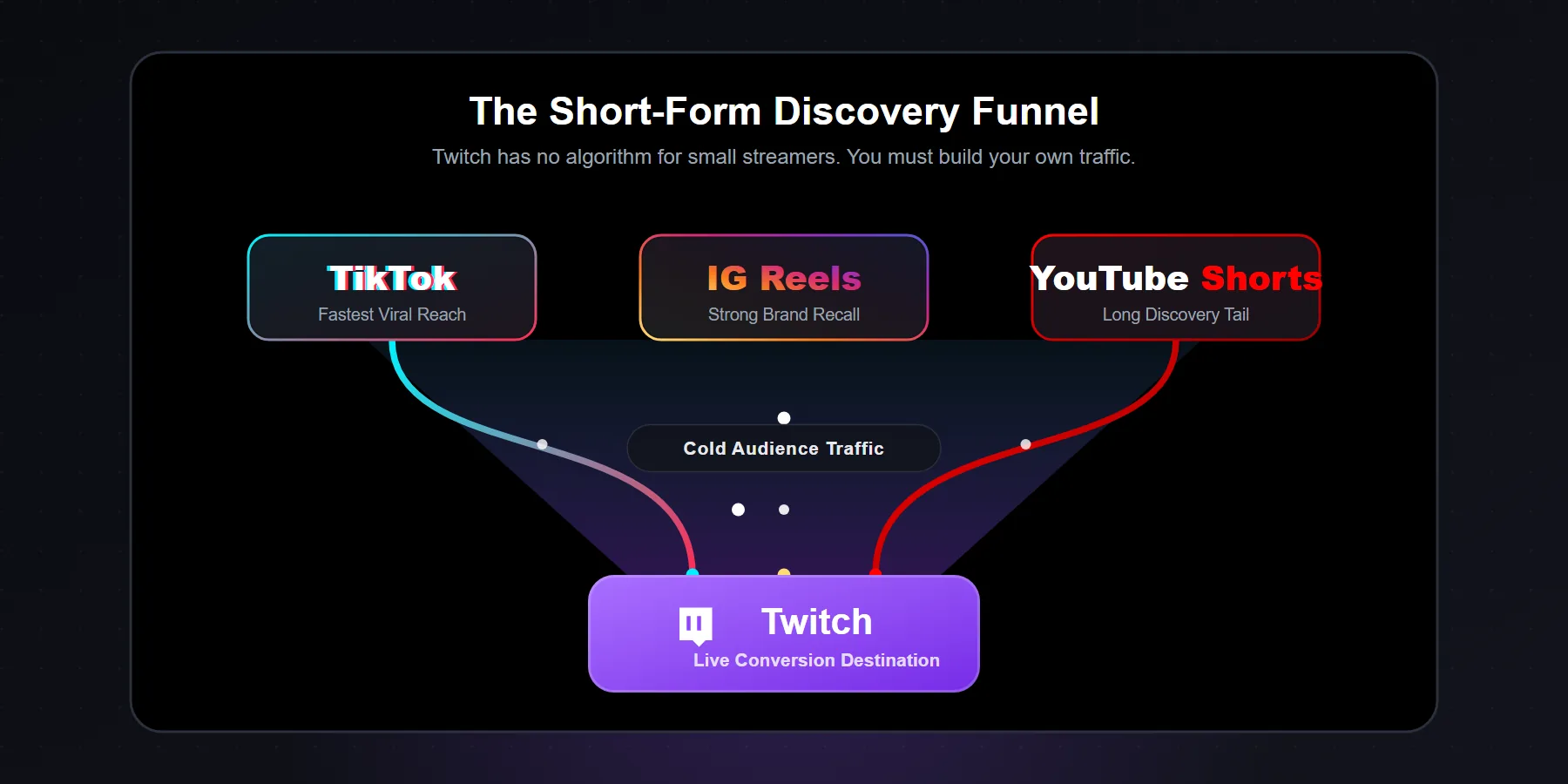
Turn your best moments into short-form clips
Your stream contains raw material: funny reactions, clutch plays, absurd fails, unexpected wins, sharp commentary, and moments of real emotion. Those are not just memories. They are acquisition assets.
Edit them into fast, vertical clips. Keep the pacing tight. Get to the moment quickly. If the first two seconds feel weak, people scroll.
Use TikTok, Instagram Reels, and YouTube Shorts as your funnel
Many modern streamers do not become visible because Twitch discovered them first. They become visible because a short-form clip reached the right audience elsewhere, then some of that audience followed them back to Twitch.
We have seen this pattern over and over. A streamer sits at 6 to 12 average viewers for months, then one good clip starts traveling and suddenly their next few lives are no longer empty. That shift matters.
| Platform | What It Does Best | How It Helps Twitch Growth |
|---|---|---|
| TikTok | Fast viral reach | Introduces your personality to cold audiences |
| Instagram Reels | High repeat exposure | Builds familiarity and brand recall |
| YouTube Shorts | Longer discovery tail | Sends traffic over time, not just in one burst |
| Twitch | Deep community building | Converts attention into real live viewers |
Should you stream with a camera?
In most cases, yes. Streaming is not only about gameplay. It is also about reaction, personality, trust, and connection.
When viewers can see your face, they read your energy faster. A laugh lands harder. Frustration feels real. Surprise becomes memorable. Without a camera, you can still win, but you are forcing voice alone to do all the emotional work.
Does that mean no-camera channels cannot grow?
No. Some do. But the bar is higher.
If you do not use a camera, your voice, timing, commentary, overlays, and in-game personality need to be stronger than average. Otherwise the stream can feel flat, even when you are playing well.
What small streamers get wrong about giveaways
Giveaways feel attractive because they look like acceleration. New followers. New chatters. A short burst of movement. On paper, it looks like growth.
But most of the time, it is rented attention. People arrive for the free item, not for the streamer. When the reward is gone, so are they.
Why giveaways fail as a core growth plan
They attract incentive-driven behavior. That audience is fragile. It rarely turns into a reliable, talkative, returning community unless the stream was already strong enough to keep people there.
If you have limited money, your budget usually goes further when you improve your setup instead: cleaner audio, a better webcam, stronger lighting, better clip editing, or more watchable overlays.
Viewer bots: shortcut or cliff?
This is the question almost every struggling streamer hears eventually. Someone says bots are necessary. Someone says they tried it and nothing happened. Someone claims “everyone does it.” None of that changes the core problem.
Bots create fake numbers, not real community. They can also create the most embarrassing mismatch on the platform: a stream that supposedly has 65 viewers while the chat is dead except for one friend.
Real viewers notice that instantly. They may not say anything. They still notice.
What is the actual cost of botting?
First, it weakens trust. A stream with inflated viewers and zero natural energy feels staged. Second, it poisons your analytics. You stop learning what content actually works because the numbers are no longer honest.
Third, the risk is not theoretical. If the platform decides your traffic is manipulated, you can lose far more than a single stream. You can lose the channel, the history, the momentum, and the work you already put in.
| Growth Tactic | Short-Term Effect | Long-Term Outcome |
|---|---|---|
| Viewer bots | Inflated visibility | Trust damage and account risk |
| Giveaways | Temporary attention | Weak loyalty if content is not strong |
| Short-form clips | Slow or bursty discovery | Compounding audience growth |
| Raids and creator friendships | Warm traffic | Better retention and community crossover |
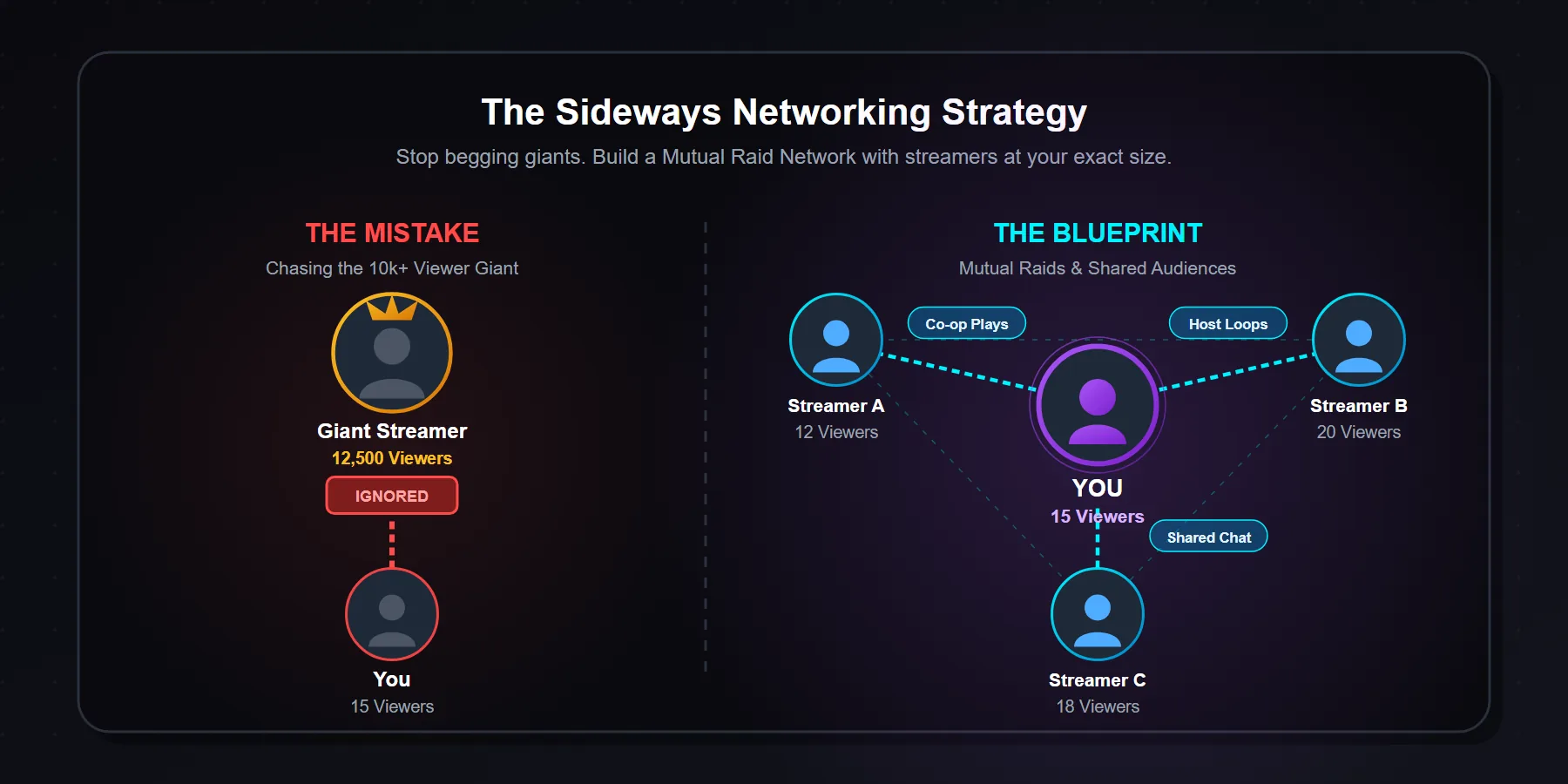
How raids, hosts, and creator relationships really help
Early Twitch growth is rarely a solo act. If your stream is good enough to hold attention, creator relationships can speed up discovery in a very natural way.
Build sideways before you build upward
Many small streamers waste energy chasing giant creators who do not know them. A smarter move is building relationships with channels at your level or slightly above it. Those creators are more likely to notice you, talk to you, and raid you back.
This creates something more useful than a one-time shoutout. It creates recurring overlap.
Make yourself worth raiding
No one wants to send their audience into a dead room. If you want raids to matter, your stream must be immediately understandable. Good audio. Clear energy. A title that fits the content. A chat response style that does not freeze under pressure.
In our experience, raids convert best when the streamer receiving them can absorb the moment naturally instead of panicking and dropping the energy.
What actually makes a small Twitch stream watchable?
This is where many guides stay too vague. They say “be entertaining” and stop there. That is not useful.
Audio quality
Bad video is survivable. Bad audio is not. Viewers forgive a modest camera. They do not forgive painful sound for long.
Pacing
Small streams die in the quiet. Dead air feels longer when there are only a few people watching. You need transitions, live narration, questions, reactions, and enough rhythm to keep the room from flattening out.
Game fit
Some games are brutal for discovery because the category is overcrowded. That does not mean you should abandon the games you love, but you should understand the tradeoff between personal passion and category competition.
Title and concept clarity
Viewers should understand what kind of session they are entering. Ranked grind. Funny chaos. Challenge run. Coaching. Speed attempts. Variety night. Vagueness kills clicks.
Can you grow on Twitch without being cracked at games?
Absolutely. Skill helps. It is not the whole product.
Some channels grow because the gameplay is elite. Others grow because the reactions are sharp, the storytelling is strong, the commentary is funny, or the environment feels welcoming. Many successful streamers are really in the entertainment business with gameplay as the setting.
What does a realistic growth plan look like for the first 90 days?
Forget fantasy. Think in systems.
Days 1 to 30
Fix the stream foundation. Improve audio. Create consistent branding. Clip every stream. Post short-form content three to five times per week. Learn what moments generate comments, not just views.
Days 31 to 60
Double down on the best clip formats. Start building friendships with adjacent streamers. Test more intentional stream titles and stronger opening energy. Study when people leave and why.
Days 61 to 90
Refine the funnel. Keep the content that converts. Remove what looks good on paper but brings nobody back. Start aiming for repeat viewers, not random spikes.
| Period | Main Goal | Metric That Matters |
|---|---|---|
| First 30 days | Build stream quality | Retention and clip output |
| Next 30 days | Improve discovery | Clip performance and returning viewers |
| Final 30 days | Build community momentum | Average viewers and repeat chatters |
Why does this strategy work in 2026?
Because Twitch itself rarely gives tiny channels enough cold discovery to grow efficiently. The winning channels build attention somewhere else, then turn that attention into habit on Twitch.
That is the modern model. Discovery outside. Community inside.
Final takeaway
If your channel is small, do not wait for Twitch to magically reward consistency. Build a system around it. Improve your stream package. Use a camera when you can. Turn your best moments into clips. Make creator friendships. Avoid fake spikes. Let real audience signals guide your next move.
That is how small Twitch channels become real communities. Not overnight. But for real.