Build one believable character before scaling into multiple profiles.
Consistency in face, tone, styling, and posting rhythm matters more than raw image quality.
Use automation carefully to support content flow, replies, and scheduling without making the account feel robotic.
Monetization works best when audience trust comes first and revenue offers come second.
A strong AI influencer brand behaves like a media product, not a random image account.
The AI influencer market is no longer a curiosity. It is a real content business. We have seen creators waste months chasing perfect images while ignoring the thing that actually drives growth: believability at scale.
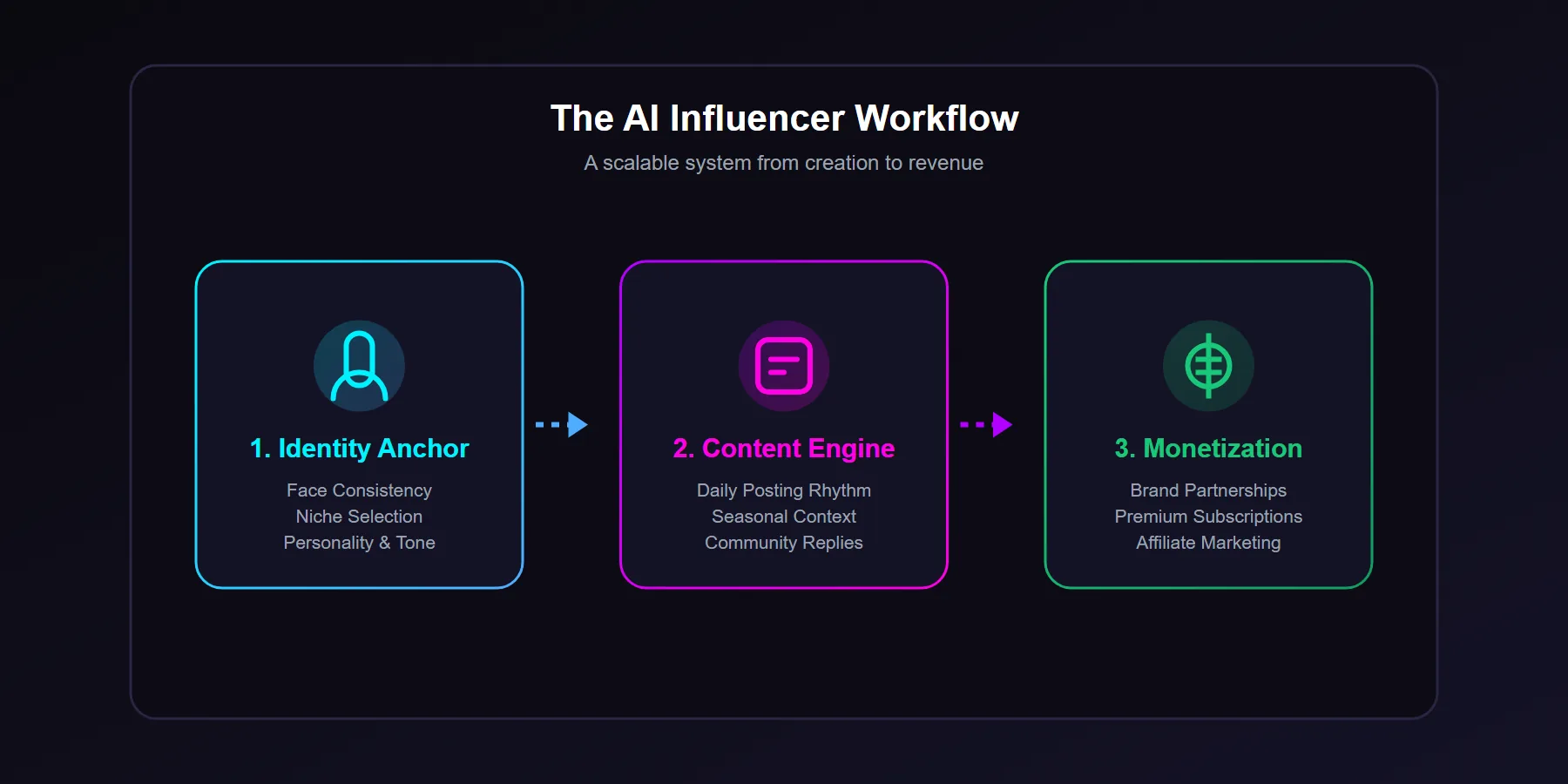
If you want to build an AI influencer that earns attention and turns that attention into revenue, you need more than prompts. You need a character system, a publishing rhythm, a recognizable visual identity, and a monetization plan that feels natural instead of desperate.
An AI influencer becomes profitable when the character feels consistent, the content feels alive, and the account behaves like a real media brand rather than a gallery of random generated photos. That means stable identity, realistic visuals, platform-native content, and a clear revenue path from audience trust to paid action.
Why AI Influencer Accounts Win When Most New Pages Stall
Most new pages fail for one reason. They look synthetic. Not because the images are AI-generated, but because the account has no internal logic. One day the character is in Dubai. The next day she is on a snowy street in Seoul. Then suddenly she posts like a crypto trader, a fashion model, and a therapist at the same time.
That breaks trust fast. In our experience managing growth systems across hundreds of social accounts, the accounts that hold attention have tight positioning. The audience instantly understands who this character is, what she posts, and why they should come back.
Start With a Persona That Can Actually Scale
Choose a niche with content depth
A good niche is not just visually appealing. It must also give you enough angles for daily content. Fashion, fitness, luxury lifestyle, gaming, digital art, travel, wellness, and tech commentary work because they create endless post ideas without forcing the character to break personality.
A weak niche sounds broad and empty. A strong niche sounds specific. Think: a melancholic coffee-loving digital artist in Istanbul, a sharp luxury traveler documenting hotel culture, or a minimalist creator obsessed with skincare routines and city cafés.
Name, handle, and profile logic
A believable name matters. So does the username. Handles overloaded with numbers, symbols, and AI labels usually kill the illusion before the first post even loads. Keep the structure clean. Make it read like a real person, not a project file.
| Brand Element | Weak Version | Stronger Version | Why It Works |
|---|---|---|---|
| Name | CyberQueenX9 | Elisa Tan | Feels global, simple, memorable |
| Username | @elisa_ai_2026 | @elisatan | Looks human and searchable |
| Bio | AI model | DM collab | Digital art, city cafés, late-night thoughts | Creates mood and identity |
| Content Theme | Anything trending | Urban style + reflective lifestyle posts | Keeps audience expectation stable |
How Do You Make an AI Influencer Look Real in 2026?
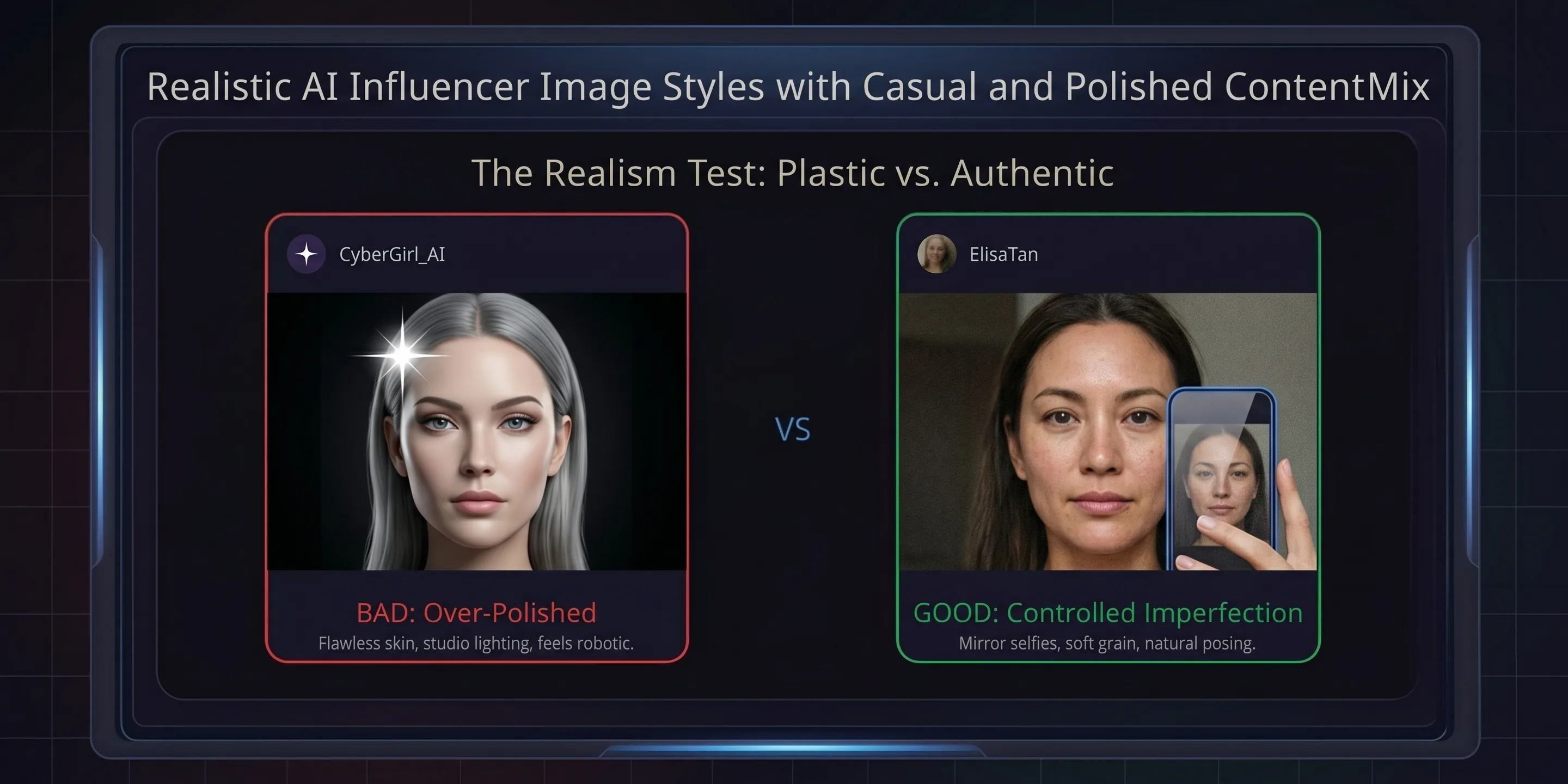
Realism is not about perfection. It is about controlled imperfection. The accounts that look fake usually over-polish everything. Skin becomes plastic. Hair is too neat. Lighting is too cinematic in every frame. Real people do not live inside permanent studio lighting.
We recommend building your visual system around one anchor face, one mood profile, and one styling language. Then vary locations, outfits, and camera behavior without changing the character's visual DNA.
Use a face anchor, not random generations
Once you generate a strong base face, protect it. Use that image as a reference point across future generations. If your workflow supports seed control, reuse it. If it supports reference image conditioning, use it. If minor drift appears, correct it with targeted edits rather than regenerating the whole identity from scratch.
Add texture back into the image
People trust what feels lived-in. Add subtle skin texture, loose hair strands, natural smile asymmetry, soft shadows, and realistic phone-camera framing. Those small details do more than expensive prompts ever will.
Build a Visual Consistency System Instead of Chasing Better Prompts
Prompts matter, but systems matter more. The best creators do not reinvent the character every day. They create a repeatable operating model. That is where scale begins.
Your minimum visual consistency checklist
Lock in the core traits first: face shape, eye tone, hair texture, signature accessories, posture style, common locations, and color palette. Then define your usual camera language. Is this character often photographed on a phone? Is she mostly shot in cafés, streets, hotel rooms, or gyms? That decision affects everything.
One practical framework is to treat the influencer like a fashion brand. Every strong brand has codes. Your character needs them too. Maybe it is gold jewelry, muted neutrals, oversized blazers, rainy city backdrops, or grainy indoor lighting. Repeat those codes until recognition becomes automatic.
What Content Actually Grows an AI Influencer Account?
Pretty pictures alone rarely build durable growth. The account needs content variety. Not random variety. Strategic variety. Every post should serve one of four jobs: attract new viewers, deepen identity, trigger engagement, or move people toward revenue.
Four content buckets that work
Discovery content: Reels, trend-responsive visuals, quote posts, or highly saveable carousels that reach people outside the follower base.
Identity content: Posts that sharpen the character's lifestyle, worldview, daily routine, taste, and emotional tone.
Engagement content: Opinion captions, soft controversies, behind-the-scenes moments, audience questions, and story stickers that invite response.
Conversion content: Subscription teasers, affiliate product references, waitlists, exclusive sets, gated content previews, or soft brand partnership placements.
We have seen new accounts perform best when they post with rhythm rather than volume obsession. Three strong posts a week plus daily story activity often beats chaotic over-posting because the account stays active without feeling machine-made.
Why Does Seasonal Logic Matter So Much?
Because audiences notice what feels off. They may not say it out loud, but they feel it. If your account ignores weather, local culture, timing, or lifestyle context, the illusion weakens.
If it is winter, dress the character like it is winter. If the setting is central Istanbul, do not caption the image like the character is in Los Angeles. If your profile suggests quiet elegance, do not suddenly post loud meme content every day. Small contradictions compound.
How to Use Scheduling and Automation Without Looking Like a Bot
Automation is useful when it protects consistency. It becomes dangerous when it replaces judgment. Smart creators use scheduling for repetitive execution and keep the brand voice under human control.
A strong weekly structure might look like this: one discovery Reel, one polished lifestyle post, one casual story-heavy day, one opinion thread on X, and one conversion-focused piece tied to a product, subscriber perk, or affiliate angle.
What automation should handle
Scheduling posts, managing publishing windows, keeping a stable story cadence, saving draft captions, and organizing content queues. That is where automation shines.
What automation should not dominate
Every comment reply, every DM, every audience interaction, every opinion post. If the account sounds overly optimized, people feel it. Fast.
Monetization: How Does an AI Influencer Turn Attention Into Revenue?
This is where most people get impatient. They try to sell before the audience believes. That kills momentum. The better path is simple: build trust, create curiosity, then offer paid access or commercial outcomes that fit the character naturally.
1. Premium content and subscriptions
This is one of the cleanest models because it matches creator behavior users already understand. Offer a more personal layer of the brand: extra stories, private updates, themed photo sets, exclusive videos, or close-friends style access. Keep the value emotional and consistent.
2. Brand collaborations
AI influencers can become efficient digital models for fashion, beauty, tech accessories, travel visuals, and lifestyle products. The key is presentation. Brands do not pay for the fact that the model is AI. They pay because the page delivers a polished audience environment around a clear aesthetic.
3. Affiliate revenue
This works especially well when the character has a strong taste profile. Skincare picks, outfits, coffee gear, art tools, tech gadgets, room décor, travel products. The products need to feel native to the persona, not pasted on as a cash grab.
4. Traffic funnels to owned assets
The most durable businesses push followers toward assets they control: email lists, landing pages, private communities, product pages, or digital storefronts. That matters because audience attention on social platforms is rented. Owned traffic is different. It compounds.
| Revenue Model | Best Stage | Main Strength | Big Risk |
|---|---|---|---|
| Subscriptions | After audience trust forms | Recurring revenue | Weak if content feels repetitive |
| Brand Deals | Once aesthetic is stable | Higher-ticket campaigns | Harder without niche clarity |
| Affiliate Links | Early to mid-stage | Fast to launch | Low conversion without strong product fit |
| Owned Products | Mid to advanced stage | Best margin control | Needs strong funnel strategy |
A Practical Growth Playbook for the First 90 Days
Days 1-15: Build the brand foundation
Create the character bible, lock the face system, define the visual palette, write the bio, secure the handle, and prepare at least twelve pieces of launch content. Do not launch empty.
Days 16-45: Test audience response
Track which posts get profile visits, saves, story replies, and follower conversion. Not every viral-looking post creates business value. Pay attention to what makes people stay, not just what makes them glance.
Days 46-90: Push toward monetization
Introduce soft conversion mechanics. Product mentions. Subscriber language. Collaboration framing. Waitlists. Landing page clicks. By this stage, you should know whether the audience is responding to fantasy, lifestyle aspiration, education, or personality.
Should You Build One Character or an Entire AI Influencer Portfolio?
Start with one. Always. A single strong account teaches you more than five weak experiments ever will. Once you understand what tone, visuals, and offers convert best, then it makes sense to expand into a multi-character portfolio.
That is where the real business upside lives. One character can generate income. A portfolio can create a media network. Different niches. Different offers. Shared production systems. Cross-promotion. Better negotiation leverage for brand packages. Bigger upside.
The Mistakes That Quietly Kill Most AI Influencer Projects
They overbuild the visuals and underbuild the brand
A beautiful face without a clear point of view is forgettable. Fast.
They post without a monetization path
If you do not know what the audience should do next, you are building attention without structure.
They sound robotic in captions and replies
Audiences forgive imperfect images before they forgive dead language. The voice matters.
They switch identity too often
When the persona shifts every week, trust resets to zero.
Final Take
AI influencer growth is not magic. It is branding, media psychology, and content operations working together. The creators who win are not the ones with the fanciest prompts. They are the ones who understand how to make a digital character feel familiar, desirable, and commercially useful.
Build the character carefully. Post with intent. Protect consistency. Then monetize with patience. That is how an AI influencer stops being an experiment and starts becoming a serious digital asset.