Facebook deliberately suppresses Business Page reach to prioritize meaningful social connections and push corporations toward paid advertising.
The algorithm judges your content within the first 10 minutes; if it lacks early engagement signals (likes, comments), its reach is permanently choked.
Posting links that drive users away from Facebook is the fastest way to get your organic reach downgraded by the platform.
Short-form video (Reels) and high-emotion community posts currently receive 4x more organic distribution than static promotional flyers.
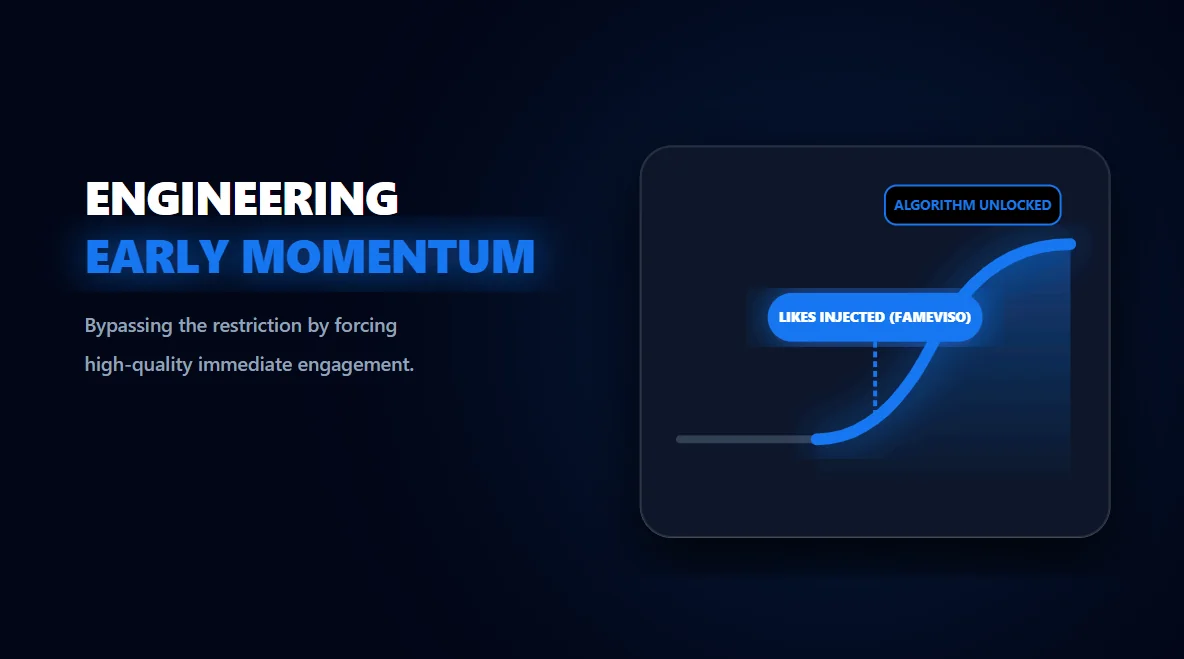
Injecting early social proof into your posts forces the algorithm to bypass its initial restrictions and open up the organic distribution feed.
You hit publish on a beautifully designed graphic detailing your latest product. You wait. You refresh the page. An hour passes, and the metrics are devastating. Three people reached. Zero likes. Zero comments. You have thousands of followers, yet it feels like you are speaking into an empty room.
This is the harsh reality of modern social media marketing. Many founders and marketers assume their page is shadowbanned, but the truth is much colder: Facebook suppresses Business Page reach by design. If you post corporate announcements and expect viral distribution, the algorithm will bury you. To survive, you must understand exactly how the feed evaluates your content.
The Corporate Suppression Mechanism
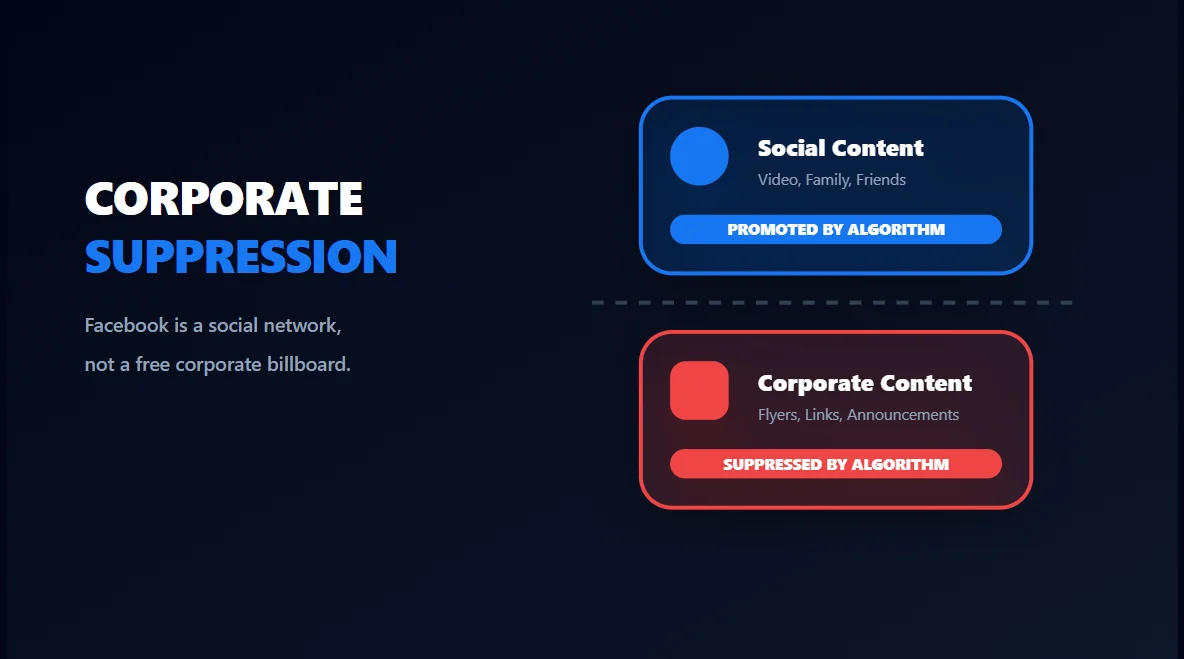
Facebook is not a billboard; it is a social network. The platform's primary directive is to keep users scrolling. To do this, the algorithm prioritizes content from friends, family, and highly engaging creator groups. Business content naturally disrupts this social experience.
When a Business Page posts a static flyer, a generic discount code, or a corporate update, the algorithm recognizes it as low-value, non-social content. Consequently, Facebook chokes the organic reach of that post, effectively telling the business: "If you want to show this to people, you need to pay for an ad."
The 10-Minute Judgment Window
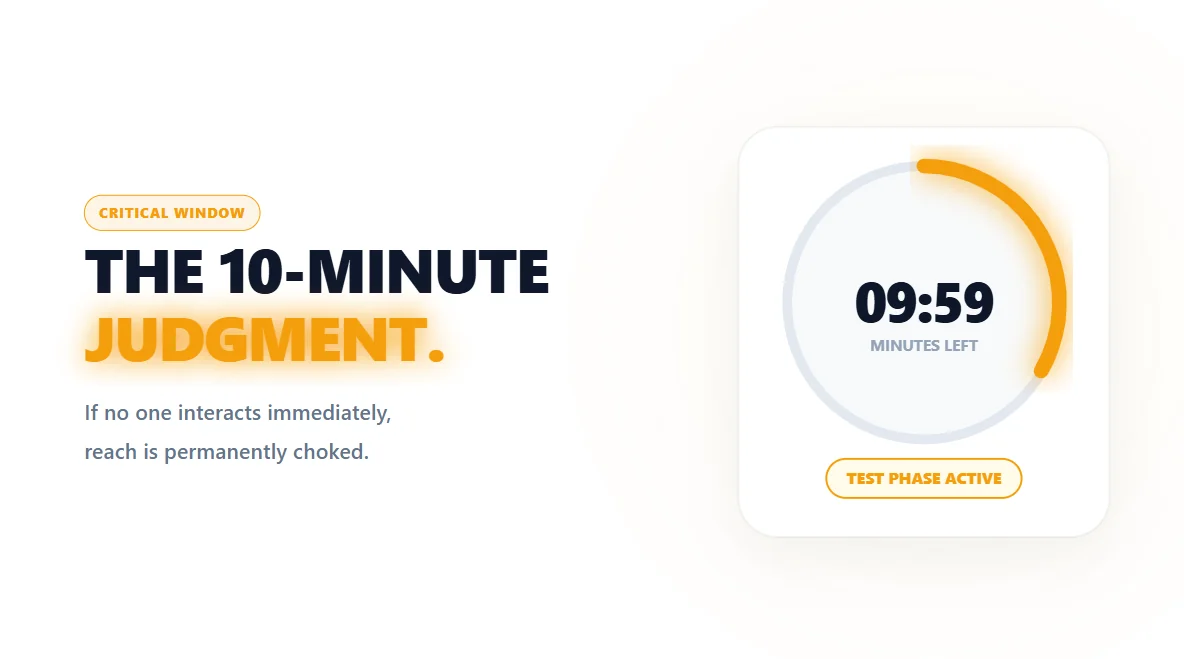
Your post does not get distributed to all your followers at once. When you publish, Facebook shows the content to a tiny fraction of your audience—often less than 1%. This is the testing phase. The algorithm watches closely for the first 10 to 30 minutes to measure the velocity of interaction.
If that initial 1% scrolls past your post without clicking, liking, or commenting, the algorithm concludes the post is boring. Distribution drops to zero. If they engage, the algorithm expands the reach to 5%, then 10%, and so on. Your reach is entirely dependent on those critical early signals.
The Penalty of Outbound Links
One of the most common mistakes businesses make is using Facebook purely as a traffic driver. They post a headline and a link to their website. Facebook hates this.
Every time a user clicks a link and leaves Facebook, the platform loses a monetizable user. Therefore, the algorithm heavily penalizes posts containing external links. If you want organic reach, you must create native content. Post full videos directly to Facebook, write long-form text posts, and keep the user on the platform. If you must share a link, place it in the comments section.
Boosting Weak Posts: The Ultimate Money Pit
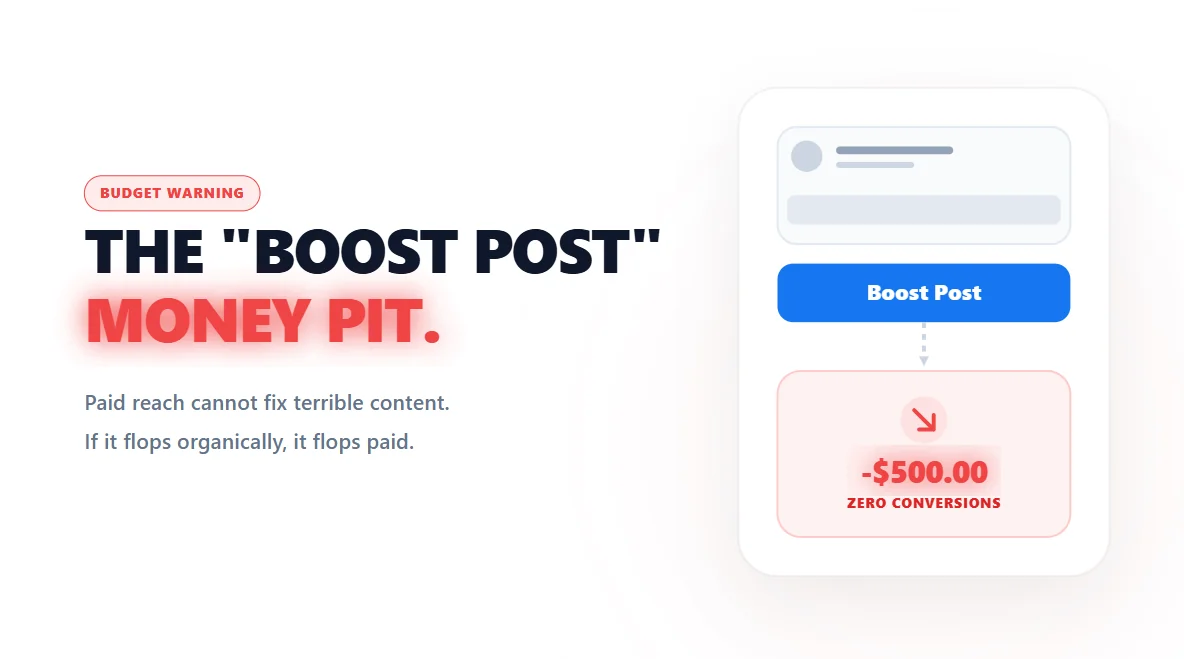
When page owners see zero reach, their panic response is often to click the blue "Boost Post" button. This is a massive waste of budget. Paid reach cannot fix terrible content. If your organic audience ignored the post because it was boring, paying Facebook to force it into the feeds of strangers will yield the exact same result: zero conversions.
The golden rule of Facebook marketing is this: Never boost a post unless it is already performing well organically. Paid budget should be used as gasoline on a fire, not as a spark for damp wood.
How to Engineer Early Momentum
Since the algorithm restricts visibility if a post lacks immediate interaction, you must solve the "Empty Room Problem." People hesitate to be the first person to like or comment on a corporate post. They wait for social proof.
To safely bypass this initial algorithmic restriction, elite social media managers strategically buy Facebook post likes from organic networks like Fameviso the exact moment they hit publish. This injection of immediate, high-quality engagement accomplishes two things: it provides the critical "Early Signal" the algorithm demands during the 10-minute window to expand reach, and it creates the psychological social proof required for real, organic users to feel comfortable joining the conversation.
Content Formats That Actually Win
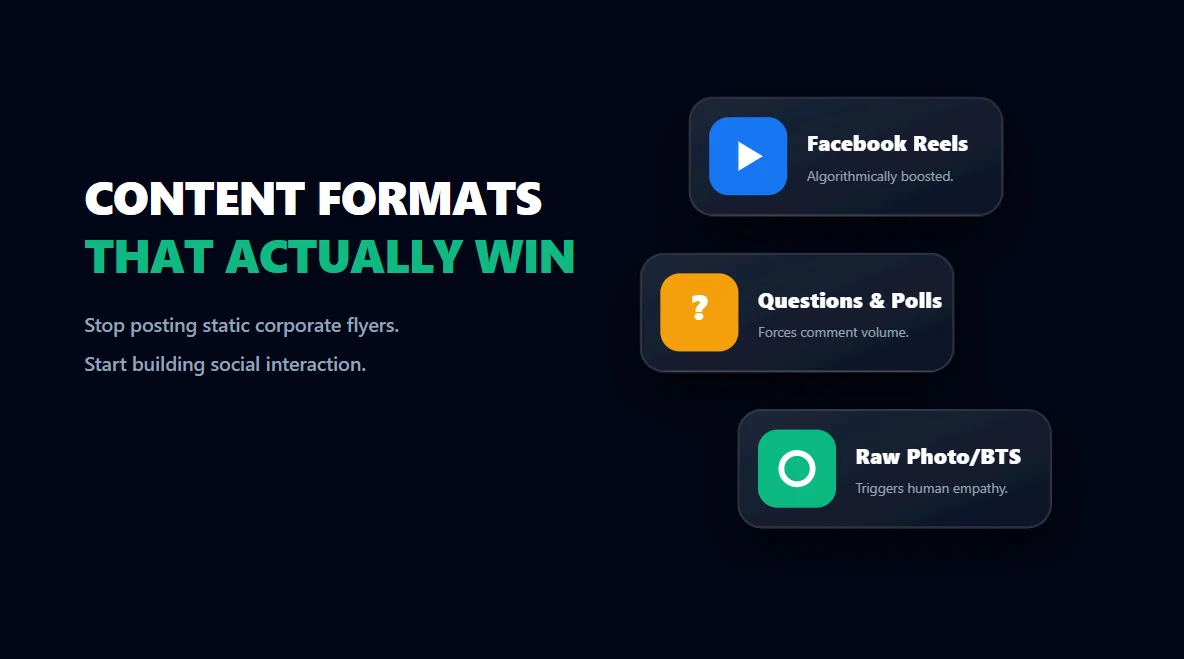
If you want to revive a dead Business Page, you must abandon traditional corporate marketing. Shift your focus to the formats that Facebook actively promotes.
- Facebook Reels: The platform is desperately competing with TikTok. Reels currently receive massive artificial boosts in the algorithm, extending your reach far beyond your current followers.
- Question & Poll Posts: Content designed exclusively to generate comments. High comment volume is the strongest indicator of a "meaningful social interaction."
- Raw, Unpolished Behind-the-Scenes: People ignore slick graphics. A shaky smartphone photo of your team working hard generates vastly more empathy and engagement than a polished Canva template.
Rebuilding Page Authority
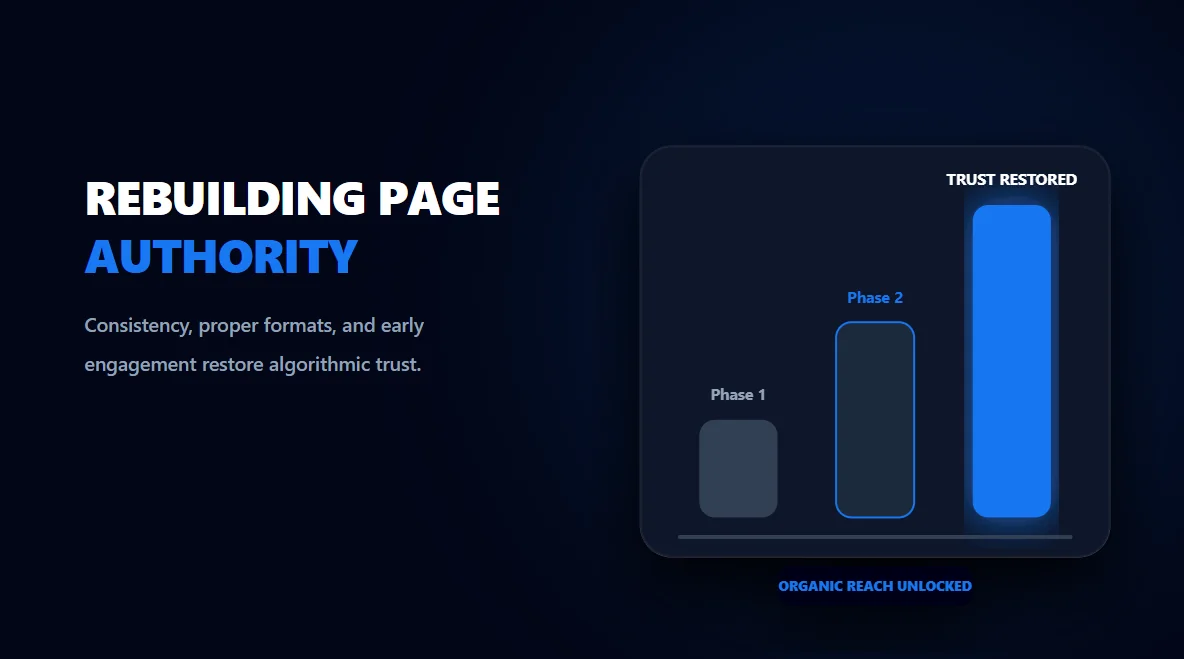
Fixing zero reach takes time. The algorithm has assigned your page a low Trust Score based on months of ignored content. By pivoting to native video, eliminating outbound links, fostering genuine conversation, and securing early momentum, you will gradually prove to Facebook that your business brings value to the feed.
Organic reach on Facebook is not dead. It is simply reserved for pages that understand how to play the algorithm's game.