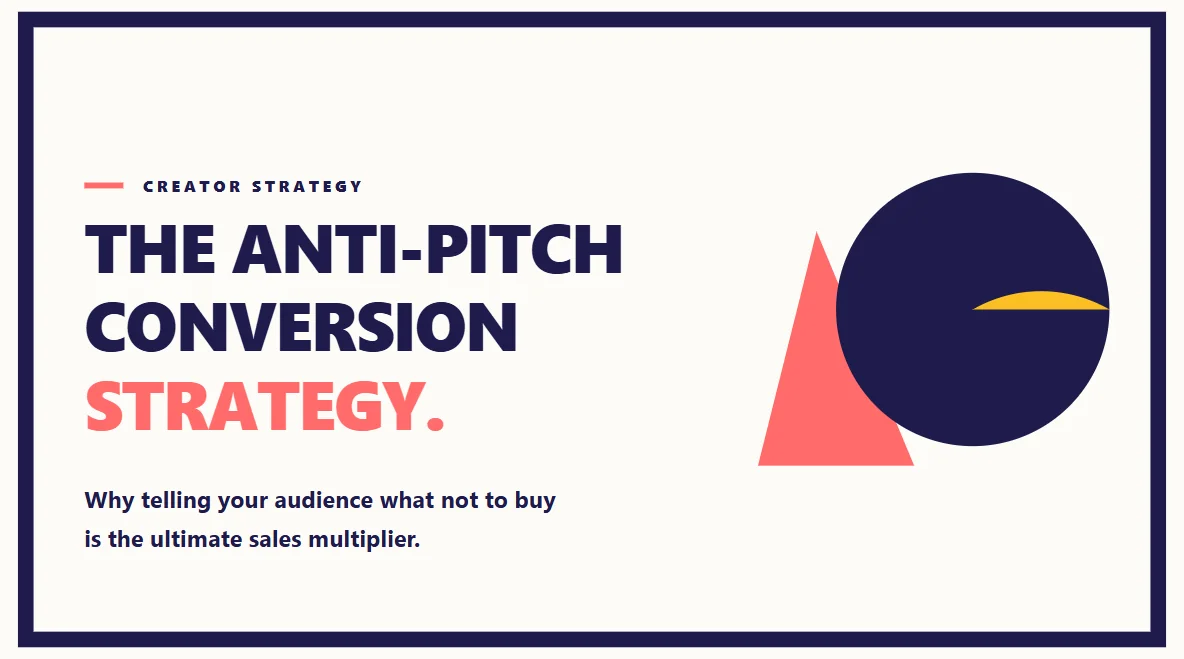
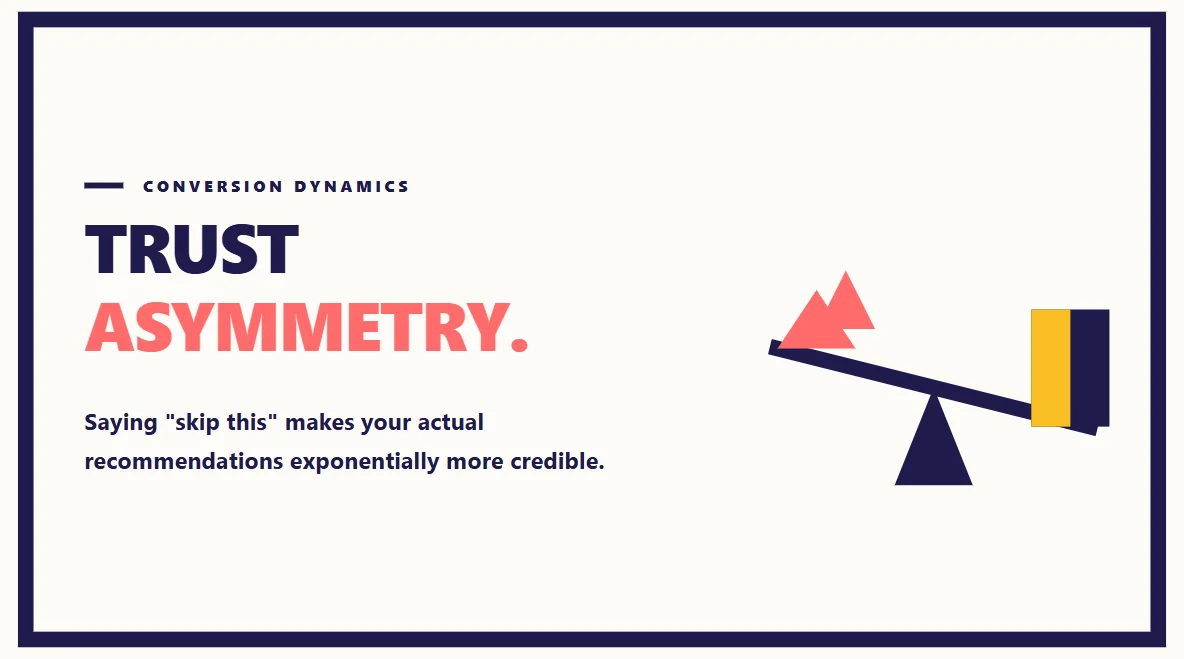
De-influencing creates an asymmetry in trust. When you openly tell people what NOT to buy, your actual recommendations become exponentially more credible.
Audiences in 2026 are highly resistant to traditional hard-selling tactics and scripted hype. Honesty and restraint are now treated as premium signals.
The anti-pitch strategy does not destroy demand; it filters and qualifies it. It ensures that only high-intent, well-informed buyers click the link.
High conversion rates happen when a buyer feels protected by the creator, rather than pressured by a salesperson.
Generating strong engagement signals on honest reviews tells the algorithm that the content is a valuable resource, amplifying its organic reach.
For years, the playbook for creators and brands was identical: Sell harder. Write better hooks. Inject false urgency. Make massive, life-changing promises. While that aggressive approach still captures fleeting attention, it has also created an epidemic of consumer fatigue. Modern audiences can smell a scripted pitch within two seconds, and the moment they do, their psychological resistance goes up and their wallet closes.
This is exactly why de-influencing has become the most powerful conversion strategy on social media. The moment your content stops feeling like persuasion and starts feeling like an honest, brutal filter, trust skyrockets. Ironically, the creator who confidently says, "This is not for everyone, skip it," almost always generates more revenue than the creator who screams, "Everyone needs this right now!"
Why Does De-Influencing Work So Well in 2026?
Because audiences have been over-trained to detect performance selling. They have been burned by too many sponsored videos, too many fake "must-have" Amazon finds, and too many influencers acting like a mediocre moisturizer changed their entire life. Consumers no longer trust excitement; they trust caution.
This creates a massive market opening for the Anti-Pitch Strategy. In a feed completely flooded with exaggerated, breathless hype, calm and honest restraint feels like a premium luxury.
The Psychology of Trust Asymmetry
Why do audiences trust an anti-pitch more than a classic promotion? Because honesty creates an asymmetry in risk. When a creator is willing to lose a potential commission by openly stating who should skip a product, what its exact flaws are, or why a cheaper alternative is better, the audience lets their guard down.
The recommendation suddenly feels earned, not bought. The creator transforms from a salesperson into a trusted advisor. Skepticism collapses. Conversion quality explodes.
Why Saying "Do Not Buy This" Increases Sales
It sounds counterintuitive, but telling people not to buy something actually reframes the entire transaction. Instead of backing the audience into a corner, you give them back their agency. You are helping them filter their choices.
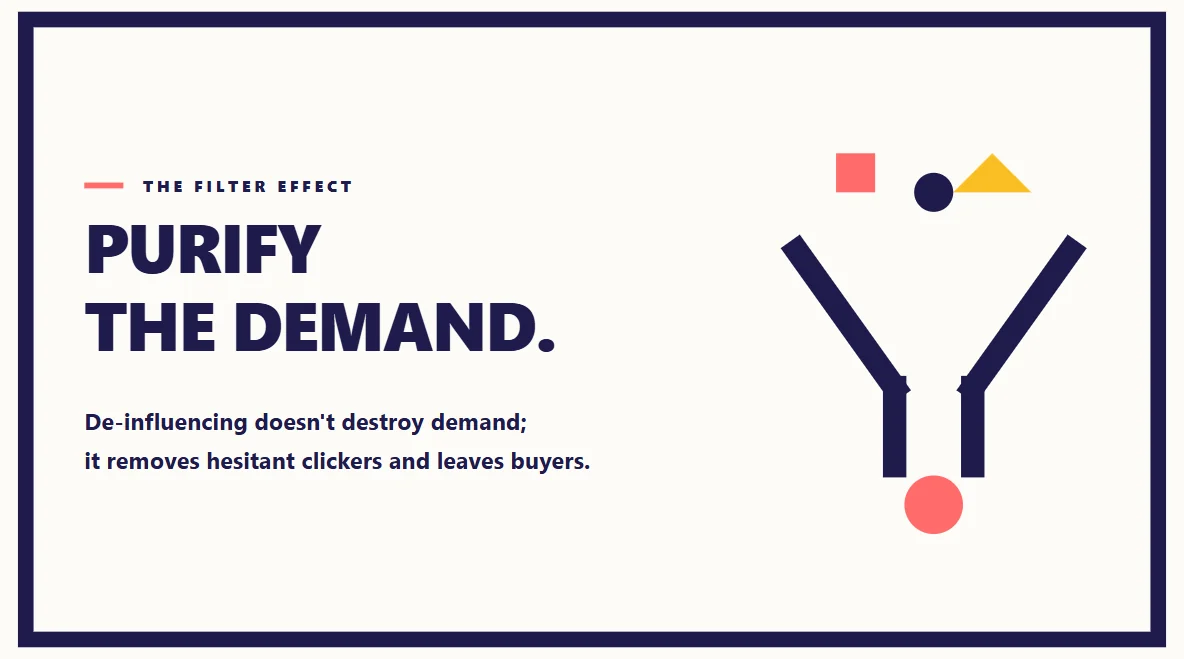
When people feel they are actively choosing a product rather than being aggressively pushed into it, they convert with zero internal resistance. De-influencing does not reduce demand; it purifies it. It strips away the hesitant clickers and leaves only the highly qualified buyers.
What Kind of Buyers Respond Best?
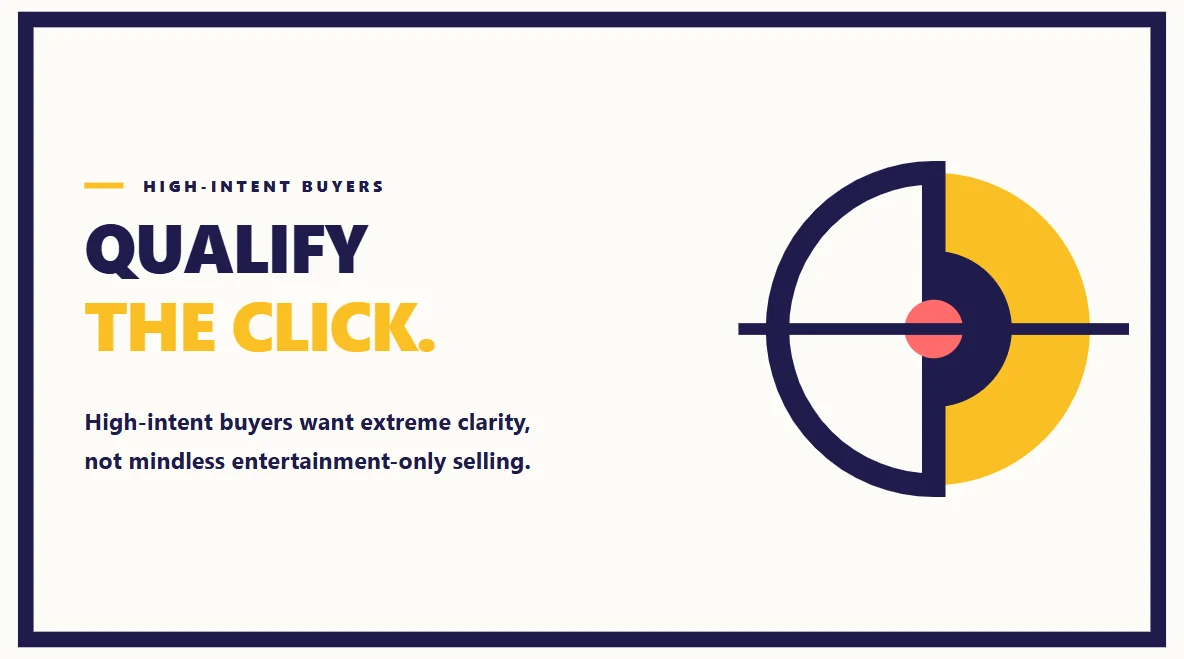
The Anti-Pitch strategy is a magnet for high-intent buyers. These are people who have the budget and the desire to buy, but they are cautious. They are actively seeking clarity, not pressure. They do not want entertainment-only selling; they want logistical help deciding if a product fits their exact use case.
When you speak to this demographic with brutal honesty, they convert at an astonishingly high rate, and more importantly, their refund rate is near zero.
Validating the Anti-Pitch Algorithmically
While de-influencing builds immense trust with humans, you still have to deal with the algorithm. If an honest review video does not immediately generate strong engagement signals, platforms like TikTok might falsely classify it as "boring" and stop distributing it. The most critical signal for an educational, anti-pitch video is the Save metric. A Save tells the algorithm: "This video is highly valuable, honest, and worth keeping as a reference."
To ensure their brutally honest reviews get the massive organic reach they deserve, top-tier creators often buy TikTok saves from premium networks like Fameviso during the first hour of posting. This deliberate injection of high-value algorithmic validation acts as a rocket booster. It proves to the moderation systems that the content is a deeply useful resource, forcing the algorithm to push the video to a much larger, high-intent audience who then engages naturally.
How Should Brands Use the Anti-Pitch Strategy?
Brands must lead with fit, not force. Instead of screaming generic benefits at the widest possible demographic, frame your marketing around who actually needs the product, what the realistic trade-offs are, and who should definitely not buy it.
This immediately separates your brand from the ocean of generic promotional noise. It makes your marketing feel human, confident, and unapologetically secure in its value.
The Golden Rule of De-Influencing
What actually works in the field? Specificity. Do not be performatively negative just for views. Be ruthlessly precise. Explain exactly who should wait, where the product falls short, and what the superior alternatives are.
When audiences feel that you are willing to lose a bad sale to protect them, they will blindly trust you on the good sales. Trust compounds; hype just fades.